
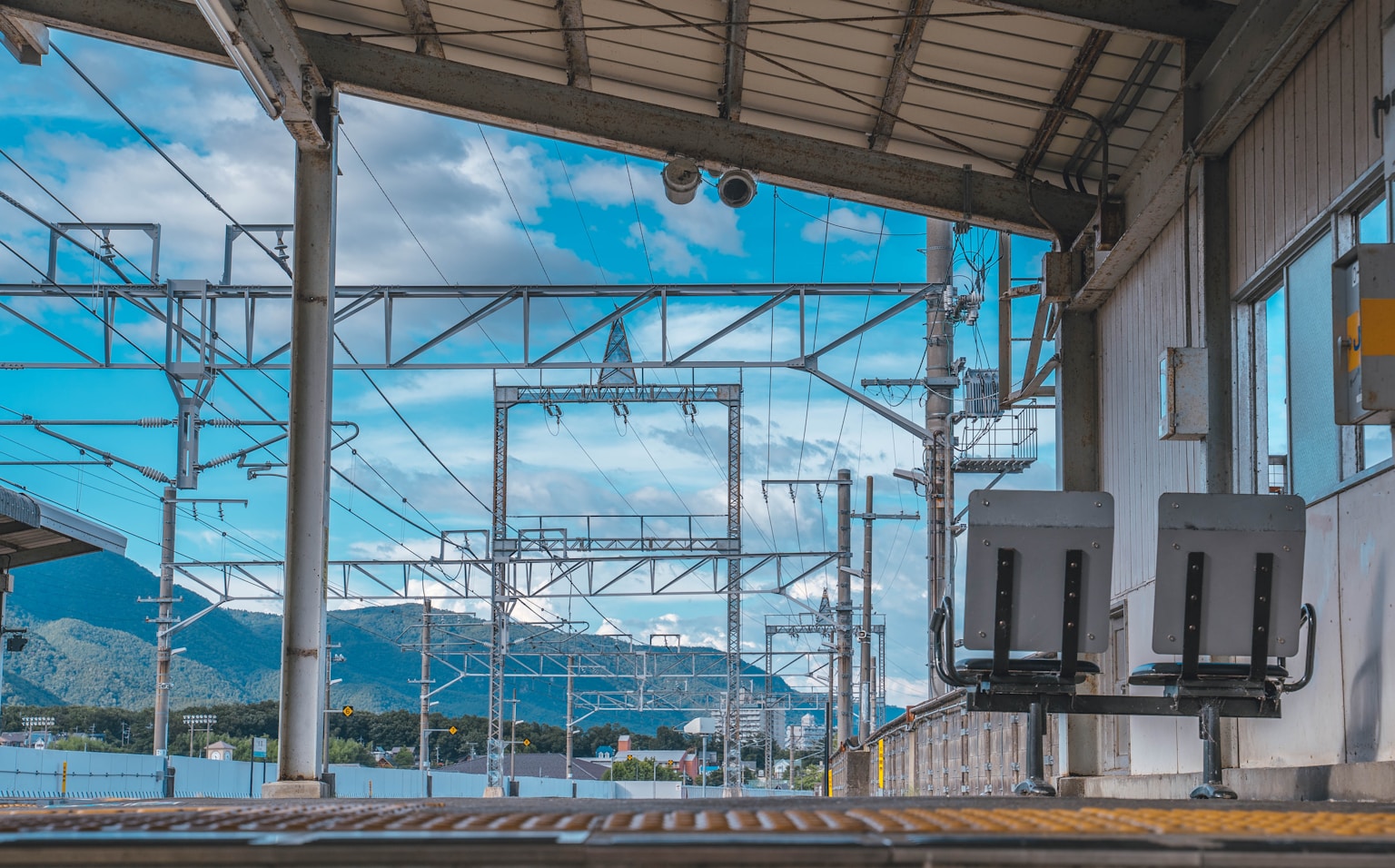
Why JR Trains Work So Well for Families in Fukuoka
Everything below comes from a local family that rides these lines regularly with young kids in tow — so the tips are the ones we actually lean on, not theory.
Kyushu is often called Japan’s “Train Kingdom,” and for good reason. The JR Kyushu network connects Fukuoka to beaches, volcanoes, hot springs, and historic cities.
Best of all, those trains are clean, punctual, and surprisingly fun for kids. From themed sightseeing trains with ball pits to Shinkansen bullet trains that make toddlers squeal, the rail system here is genuinely family-friendly in a way few regions can match.
But the ticketing rules, seat reservation system, and station logistics can feel confusing at first — especially when you’re juggling a stroller, luggage, and a hungry preschooler.
This guide breaks down everything you need for riding JR trains in Fukuoka with kids: fares by age, when to reserve seats, how to handle strollers, and how to survive Hakata Station with your sanity intact.
If you’re still deciding between trains and rental cars for your Kyushu trip, start with Getting Around Kyushu with Kids: Car vs Train for Family Travel to compare your options.
JR Ticket Rules for Kids: Fares by Age Made Simple
The most common question parents ask is: “Does my child need a ticket?”
The answer depends entirely on age — not height, not weight. JR uses strict age-based categories tied to the Japanese school year.
Age Categories and What You’ll Pay
- Infants and toddlers (ages 0–5): Free. Children under 6 ride at no charge, as long as they don’t occupy their own reserved seat. They sit on a parent’s lap in reserved cars, or take any open spot in non-reserved cars. The limit is 2 free children per paying adult — a third child requires a child ticket.
- Children (ages 6–11 / elementary school): Half price. Kids in elementary school need a “Kodomo” (child) ticket, which is 50% of the adult base fare plus 50% of any express surcharge.
- Adults (ages 12+): Full price. This includes middle school students and above.
Here’s the same rule set in one scannable table:
| Age group | Fare | Own reserved seat? | Key rule |
|---|---|---|---|
| 0–5 (infant/toddler) | Free | No — lap, or open non-reserved seat | Max 2 free children per paying adult |
| 6–11 (elementary) | Half (Kodomo ticket) | Yes, at half surcharge | 50% of adult base fare + 50% of express surcharge |
| 12+ (adult) | Full | Yes | Includes middle school students and up |
When It’s Worth Buying a Ticket for a Toddler
Even though your 3- or 4-year-old rides free, there are times when buying a child ticket (half price) makes the trip significantly easier:
- Long-distance rides (over 1 hour): Holding a sleeping toddler on your lap for a 2-hour Shinkansen ride to Kagoshima is exhausting. A child ticket guarantees their own reserved seat, which means they can nap while you eat your ekiben in peace.
- Peak travel periods: During Golden Week, Obon, and New Year holidays, non-reserved cars fill up fast. Without a ticket, your toddler is expected to sit on your lap or stand if adults need seats.
- Traveling with multiple kids: If you have two toddlers and one adult, only two ride free. The math changes quickly with larger families.
For shorter hops within the city — Hakata to Kashii, or Hakata to the airport — skip paper tickets entirely and use an IC card.
You tap through the gates and never have to figure out the fare machines. See our full walkthrough: Using IC Cards in Fukuoka with Kids: Easy Transport for Family Travel.
The JR Kyushu Rail Pass: Is It Worth It for Families?
 Planning to travel by train?Save money with the JR Kyushu Rail Pass (3 or 5 Days).
If you’re planning day trips or multi-city travel around Kyushu, the JR Kyushu Rail Pass can save your family a significant amount of money.
It also reduces the stress of buying individual tickets at every station — a real win when you’re managing kids and bags.
Pass Options and Family Pricing
The JR Kyushu Rail Pass comes in two versions:
- Northern Kyushu Pass (3 or 5 days): Covers Fukuoka, Kumamoto, Nagasaki, Saga, Oita, and everything in between. The 3-day pass costs around ¥11,000 for adults and ¥5,500 for children (ages 6–11). Kids under 6 don’t need a pass at all.
- All Kyushu Pass (3, 5, or 7 days): Adds Kagoshima and Miyazaki to the mix. The 3-day version runs about ¥17,000 for adults and ¥8,500 for children.
Both passes include unlimited rides on the Kyushu Shinkansen, Limited Express trains, and local JR lines.
They also include free reserved seat bookings up to a set number of times — typically 10 for a 3-day pass and 16 for a 5-day pass.
When the Pass Pays for Itself
A round trip from Hakata to Beppu on the Sonic costs about ¥6,470 per adult each way region depending, and day trips add up fast. Here’s how common round trips stack up against the 3-day Northern Kyushu Pass:
| Trip from Hakata (round trip, per adult) | Approx. fare |
|---|---|
| Hakata ⇄ Beppu (Sonic Limited Express) | ~¥12,940 |
| Hakata ⇄ Kumamoto (Kyushu Shinkansen) | ~¥10,260 |
| Hakata ⇄ Nagasaki (Kamome) | ~¥11,000 |
| 3-Day Northern Kyushu Pass (adult) | ~¥11,000 |
| 3-Day Northern Kyushu Pass (child 6–11) | ~¥5,500 |
The takeaway: a single Beppu round trip nearly equals the adult pass price. Add even one more day trip and the pass clearly wins.
For families doing two or more day trips, the pass is almost always the better deal.
The pass also removes decision fatigue. You don’t need to calculate fares, buy separate tickets, or worry about “wasting” a reserved-seat surcharge.
Just book your seats at the Midori-no-madoguchi counter and go. Compare current JR Kyushu Pass prices on Klook →
If you’re planning a multi-day Kyushu trip by rail, check our itinerary guide for route ideas: 7-Day Kyushu Family Itinerary: Fukuoka, Beppu, and Kumamoto by Train.
Reserved vs. Non-Reserved Seats: A Practical Guide for Families
On JR Limited Express trains (like the Sonic to Beppu or the Relay Kamome to Saga) and the Kyushu Shinkansen, cars are split into reserved (shitei-seki) and non-reserved (jiyū-seki) sections.
This choice matters more than you’d think when traveling with kids.
Why Reserved Seats Are Worth It for Families
- Sit together, guaranteed: You can book seats A, B, and C in the same row when reserving. With non-reserved seating, you might end up scattered across the car during busy periods.
- No platform scramble: Non-reserved passengers often queue 15–20 minutes before departure to secure seats. With a stroller and kids, that wait adds unnecessary stress.
- Luggage space planning: On the Shinkansen, you can specifically book the last-row seats with the oversized baggage area (more on this below).
- Naptime security: When your toddler falls asleep mid-ride, you won’t need to give up the seat.
The surcharge for reserved seats is typically ¥530 per person on top of the base fare and express charge.
For a family of three, that’s roughly ¥1,590 extra — a small price for guaranteed comfort on any ride longer than 45 minutes.
When Non-Reserved Is Fine
Non-reserved seats work well for short trips (under 30 minutes), off-peak travel, or when you’re boarding at the origin station (like Hakata) where the train is empty.
They’re also cheaper, and you can hop on any departure that day without being locked to a specific time — useful when toddler meltdowns delay your schedule.
Stroller-Friendly Tips for JR Trains
Navigating trains with a stroller is doable in Fukuoka, but it requires some planning depending on the train type.
Shinkansen (Bullet Train) Stroller Strategy
The Kyushu Shinkansen has a specific rule for oversized luggage. If your suitcase dimensions total over 160 cm (length + width + height), you must reserve a “Seat with Oversized Baggage Area.”
That’s the last row of designated cars, which has a storage space behind the seats.
Here’s the family hack: strollers are technically exempt from the reservation requirement.
But the space behind the last row is realistically the only place to store a folded stroller securely without it sliding around.
We strongly recommend booking the oversized baggage seats anyway. You’ll have your stroller right behind you, plus room for a suitcase or two.
This is non-negotiable advice if you’re traveling with both a stroller and large luggage.
How to book: At the JR ticket counter (Midori-no-madoguchi), say “ōgata nimotsu tsuki no seki” or simply show the staff this phrase on your phone: 特大荷物スペースつき座席. You can also book through the JR Kyushu online reservation system.
Local and Rapid Trains: Stroller Survival
On commuter lines like the Kagoshima Main Line or Chikuhi Line, there are no reserved seats and cars are smaller. A few pointers to keep things smooth:
- Board at the end of the train. The first and last cars are usually less crowded, and there’s more floor space near the doors for a stroller.
- Fold if you can. During morning rush (7:30–9:00 AM) and evening rush (5:30–7:00 PM), an open stroller will block the aisle. If your child can sit in a seat or be carried briefly, fold the stroller and hold it between your legs.
- Use the priority seats area. The space near priority seats usually has more standing room and is understood to be for passengers with strollers, wheelchairs, or small children.
- Elevators exist at most JR stations in Fukuoka. Hakata, Tenjin (subway connection), Kashii, Chihaya, and Kokura all have elevators. Smaller rural stations may only have stairs, so check the station map on the JR Kyushu website before your trip.
For more on getting around Fukuoka with strollers and small children, see Fukuoka with Toddlers & Babies: Best Stroller-Friendly Spots, Nursing Rooms, and Easy Family Ideas.
Themed JR Trains Kids Will Love
One of the best things about JR Kyushu is the fleet of sightseeing trains designed to make the ride itself an attraction.
These aren’t just trains with a cartoon sticker on the side — they have play areas, themed interiors, and special snacks sold onboard.
Aso Boy! (Kumamoto–Aso Route)
The Aso Boy! train features a wooden ball pit play area, a family compartment with panoramic windows, and a “Kuro” dog mascot that appears on everything from seats to souvenir cups.
It’s the single most kid-friendly train in Kyushu and worth building a day trip around.
Reservations are strongly recommended — the family compartment books up fast on weekends and holidays. Book Aso Boy! seats and Kumamoto day-trip activities on Klook →
We have a full ride guide with seat tips and bento advice: Riding the “Aso Boy!” Train with Kids: Seats, Bento & Ball Pit Guide.
Other Family-Worthy Sightseeing Trains
- Yufuin no Mori (Hakata–Yufuin–Beppu): A retro-styled green train with large windows and a lounge car selling local sweets. The ride through the mountains is gorgeous and takes about 2 hours 15 minutes from Hakata. Kids enjoy the stamp rally onboard.
- Kawasemi Yamasemi (Kumamoto–Miyaji): A cedar-and-cypress lined sightseeing express toward Aso, with a kids chair, a multipurpose toilet with a nappy-changing table, and an onboard buffet counter. The run takes about 1 hour 40 minutes.
- Sonic (Hakata–Beppu/Ōita): Not a “themed” train per se, but the tilting limited express with its blue metallic exterior and spacious seats is a hit with kids who love speed. The 2-hour ride hugs the coast for part of the journey.
One train families still ask for is gone: SL Hitoyoshi no longer appears in JR Kyushu’s D&S sightseeing line-up. Locomotive 58654 now sits in the plaza in front of Hitoyoshi Station, where the city moves it under compressed air on scheduled open days roughly once a month.
All sightseeing trains require reserved seats. Book at the Midori-no-madoguchi counter at Hakata Station, or through the JR Kyushu online booking system.
During peak seasons, book at least a few days in advance — the Aso Boy! and Yufuin no Mori can sell out a week ahead.
Surviving Hakata Station with Kids
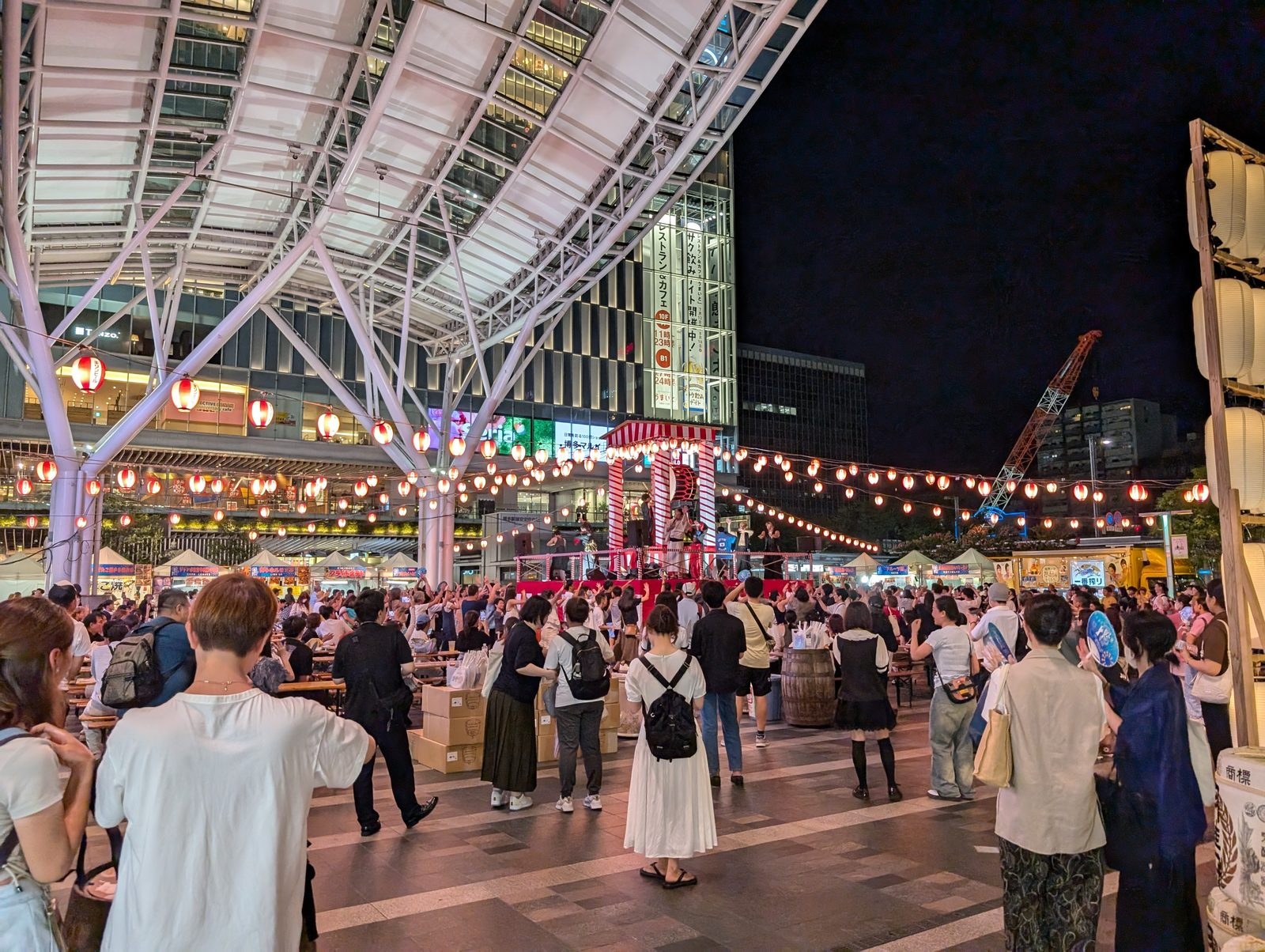
Hakata Station is Fukuoka’s main rail hub and the starting point for most JR journeys in Kyushu.
It’s big, busy, and can feel overwhelming with kids in tow. Here’s how to make it work.
Finding the Ticket Counter (Midori-no-madoguchi)
The JR ticket counter is on the main concourse level, near the central gates. Look for the green signage that says “みどりの窓口.”
Lines can be long during peak hours, especially before 10 AM and around 3–5 PM. If you’re buying a rail pass or reserving seats for the next day, come in the evening when it’s quieter.
Tip: If you already have a rail pass, you can also reserve seats at the ticket machines (some have English support), though the counter staff are more helpful when you need specific seats like the oversized baggage area.
Stroller Storage and Coin Lockers
Hakata Station has coin lockers on multiple floors. Small lockers (¥400) fit a daypack; medium lockers (¥500) fit a carry-on suitcase; large lockers (¥700) fit a full-size suitcase.
They’re located near the Chikushi Gate (south side) and the main concourse.
If all coin lockers are full — which happens frequently during holidays — there’s a staffed luggage storage service on the first floor near the Chikushi exit.
For a full breakdown of luggage options, see Using Coin Lockers in Fukuoka with Kids: A Family-Friendly Guide to Luggage Storage.
Eating at Hakata Station Before Your Train
Trying to time a meal with a train departure and a toddler’s hunger schedule is a real challenge. Here are the quickest options:
- Ekiben (station bento boxes): Sold at kiosks on the Shinkansen platform and inside the main concourse. Kids usually go for the tamagoyaki (rolled egg) bento or a simple onigiri set. Buy these before you go through the gates — platform options are more limited.
- Hakata Deitos underground food court: Located directly beneath the station, with quick-serve ramen, udon, and curry shops. Most have counter seating that’s tight for strollers, but a few spots near the edges have table seating. Meals take 15–20 minutes.
- AMU Plaza Hakata (connected to the station): Floors 9 and 10 have sit-down restaurants with kids’ menus, but budget 45–60 minutes. Better for when you have time between trains.
For a detailed guide to morning meals with kids near the station, check Best Family Breakfast Spots in Hakata: Easy Morning Options Before Trains, Flights, and Day Trips.
Practical Tips for Smooth JR Travel with Kids
After dozens of family train trips across Kyushu, here are the small things that make the biggest difference:
- Bring snacks — more than you think you need. Vending machines on platforms sell drinks, but solid food options disappear once you’re on local trains. Pack onigiri, crackers, and a few emergency treats. For ideas on what to grab, see Best Kid-Friendly Snacks to Buy in Fukuoka: Convenience Stores, Hakata Classics, and Easy Travel Treats.
- Use the toilets before boarding. Shinkansen and Limited Express trains have onboard restrooms, but local/rapid trains do not. Hakata Station’s restrooms near the gates are clean and have baby-changing tables.
- Download the JR Kyushu app. It shows real-time train positions, delays, and platform numbers. The English interface is basic but functional for checking departure times.
- Travel mid-morning or early afternoon. The sweet spot is 10:00 AM–2:00 PM when commuters are gone and kids are still energized. Avoid the 7:30–9:00 AM and 5:00–7:00 PM rush windows.
- Carry a lightweight blanket or large towel. Kids fall asleep on trains constantly. A blanket keeps them comfortable and also works as a seat cover for messy snacks.
- Know the last train times. Evening Shinkansen services from Kumamoto and Kagoshima back to Hakata end earlier than you might expect (around 9:00–9:30 PM for the last departures). Double-check return times before heading out on day trips.
Best Day Trips from Hakata Station by JR Train
One of the biggest advantages of staying near Hakata Station is the easy access to day trips across Kyushu by JR train. Here are the most popular family-friendly options with approximate travel times:
- Dazaifu: 40 minutes (JR + Nishitetsu transfer at Futsukaichi). A relaxed temple visit with street food — see Dazaifu Tenmangu with Kids: A Relaxed Half-Day Culture Trip from Fukuoka.
- Uminonakamichi: 30 minutes by JR from Hakata. A massive seaside park perfect for toddlers and young kids.
- Beppu: 2 hours on the Sonic Limited Express. Hot springs, sand baths, and family-friendly resort hotels.
- Kumamoto: 35 minutes on the Kyushu Shinkansen. Castle, Kumamon Square, and great food.
- Nagasaki: 1 hour 20 minutes on the Kamome. History, trams, and Huis Ten Bosch nearby.
For a complete list of family day trip options with logistics, check Best Day Trips from Fukuoka with Kids: Easy Family Ideas for Culture, Coast, and Fun.
Doing two or more of these as overnighters? Basing yourself near Hakata Station keeps every line within a short walk. Compare family-friendly hotels near Hakata Station on Agoda →
If a Beppu hot-spring stay is on your list, family resorts there book up early on weekends. Check Beppu onsen hotels for families on Agoda →
Quick Reference: JR Family Travel Cheat Sheet
- Kids 0–5: Free (no seat in reserved cars; lap or open seat in non-reserved)
- Kids 6–11: Half price (Kodomo ticket)
- Ages 12+: Full adult fare
- Reserved seat surcharge: ¥530/person
- Strollers on Shinkansen: Book oversized baggage seats (last row)
- IC cards: Best for local/rapid trips within Fukuoka
- Rail Pass: Worth it for 2+ day trips outside Fukuoka
- Hakata Station toilets: Near the gates, with baby-changing tables
- Best travel window: 10:00 AM–2:00 PM
FAQ: JR Trains in Fukuoka with Kids
Do toddlers need a ticket on JR trains in Fukuoka?
No. Children ages 0–5 ride free as long as they don’t take their own reserved seat, with up to 2 free children per paying adult.
Are JR Kyushu trains stroller-friendly?
Yes. Most Fukuoka stations have elevators, and on the Shinkansen you can book the last-row oversized-baggage seats to stow a folded stroller right behind you.
Is the JR Kyushu Rail Pass worth it for a family?
For two or more day trips outside Fukuoka, yes — a single Hakata–Beppu round trip already nearly equals the 3-day adult pass price.
Top Things to Do in Fukuoka Instant confirmation for most tickets
Not sure where to begin? This free guide helps you pick the right Kyushu trip for your family — from a Fukuoka family who actually lives here.
- ✅A simple “which trip suits us?” chooser — by days, ages & interests
- ✅Snapshots of all 7 prefectures — what’s actually worth it with kids
- ✅Instant PDF download — name your price (free), no spam
Onsen, rail, or a full itinerary? It points you to the right deep-dive guide.
Doing Kyushu by rail with little ones? This guide turns the timetable maze into a stroller-friendly plan — from a family that rides these lines for real.
- ✓The fun trains, ranked — Sonic, Yufuin no Mori, Aso Boy, Shinkansen with kids
- ✓Stroller & luggage flow — which cars, which doors, where the elevators are
- ✓Does the JR Pass pay off? — honest break-even math for family routes
Instant PDF · written by locals · stops the platform panic