
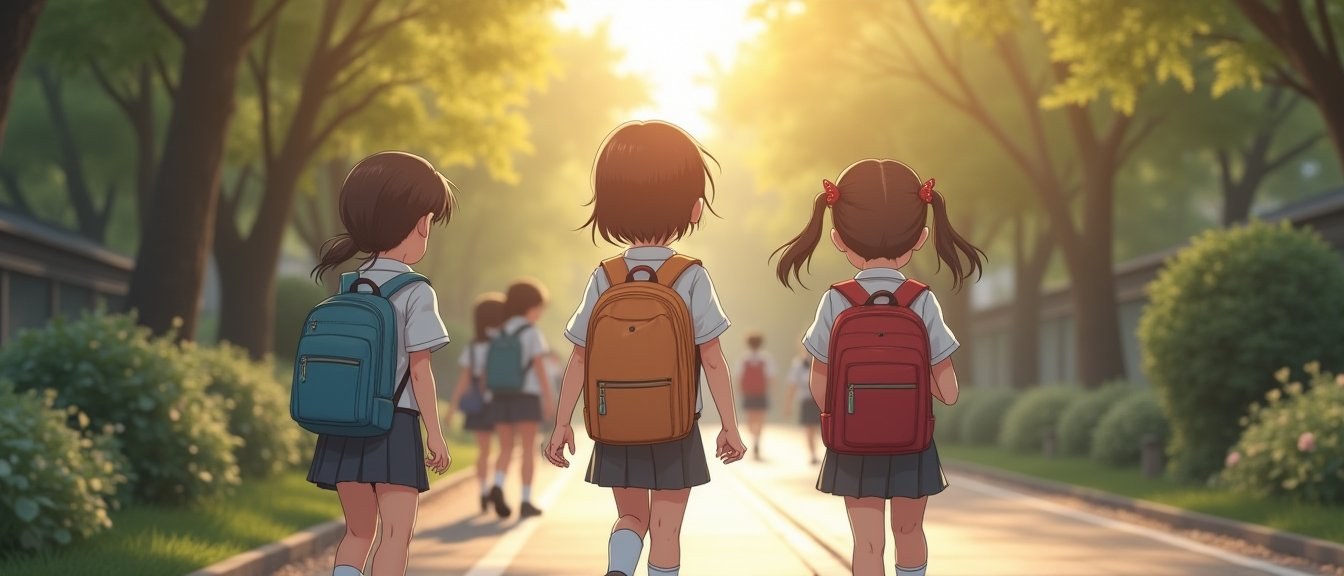
Enrolling your kid in a Japanese public school in Fukuoka is straightforward once you know the order of operations.
From the outside the steps look opaque — but each one is simple as long as you tackle them in the right sequence.
This guide walks through the full process: ward office registration, school assignment, and the document checklist.
It also covers language-support arrangements and exactly what to expect in your child’s first week.
Public school is essentially free — you pay only ~¥10–15K/year for materials and lunch, and instruction is in Japanese.
Assignment is by your residential address — you don’t choose the school.
Because where you live decides where your child enrolls, it pays to pick the right ward first. Our guide to the best Fukuoka neighborhoods for families covers which areas suit school-age kids before you sign a lease.
Eligibility

- Any foreign family with a registered address in Fukuoka City can enroll kids in the local public school
- Visa status doesn’t matter — work, spouse, dependent, student visas all qualify
- Compulsory education ages: 6–15 (elementary 1–6 + junior high 1–3); upper secondary (high school) is a separate application
- Foreign kids are not legally required to attend, but enrollment is welcomed and free
Step 1: Register your address at the ward office

Move into your apartment first, then go to the ward office (区役所) within 14 days of arrival.
Just landed and still without a local line? A prepaid Japan eSIM keeps you online for ward-office bookings and school phone calls before your home internet is installed. Get a Japan travel eSIM on Klook and activate it the moment you land.
If your apartment isn’t ready yet, a serviced apartment buys you time to register and house-hunt with a fixed address. Compare monthly-friendly apartment-hotels in Fukuoka on Agoda so you can complete registration from day one.
What to bring
- Residence card, passport, and your lease/rental contract
What you’ll receive
- A Juminhyo (resident certificate) listing all family members
- This triggers My Number issuance (separate mailing within ~2 weeks) — see our Fukuoka address registration & My Number card guide for the full walkthrough
- Hours: Mon-Fri 8:45–17:15 (closed weekends/holidays)
Step 2: Visit the education section (kyoiku-ka)
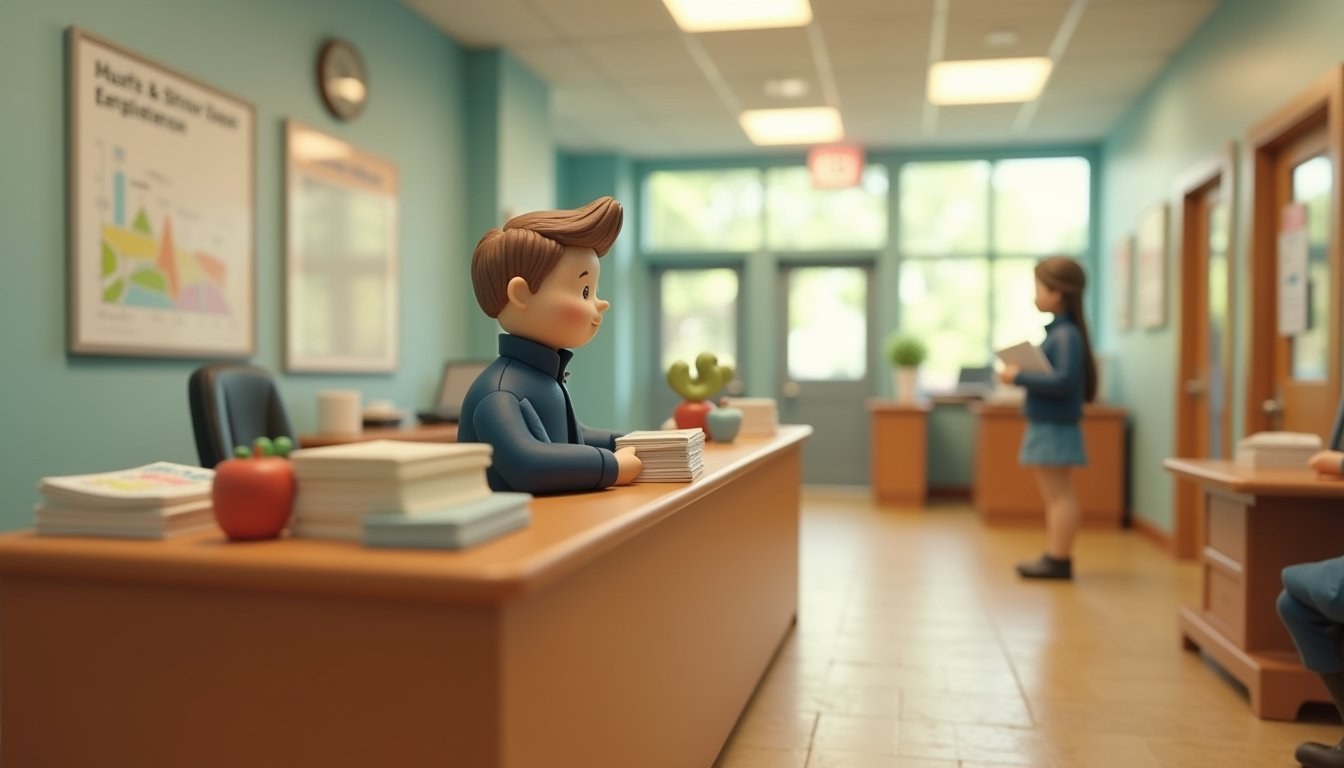
At the ward office, ask for 教育課 (kyoiku-ka, education section). They’ll determine your school assignment based on your address.
What to bring
- Juminhyo, passport for the child, and any prior school records (translated if possible)
- If your kid has special needs, mention it here — they may suggest an assessment
What you’ll receive
- A school assignment letter (就学通知書, shugaku tsuchi-sho)
- Process takes 1–2 visits; allow 2–4 weeks total
Step 3: Visit the assigned school

- Call ahead to schedule a meeting with the principal or vice-principal
- Bring: shugaku tsuchi-sho, prior records, and the child’s medical records (vaccinations especially)
- The school will explain the start date, supplies needed, and any Japanese-language support arrangements
- Many schools run a “Japanese as Second Language” (日本語指導, nihongo shidou) support program — ask explicitly
Step 4: Buy supplies
Budget for a one-time starter kit when your child begins elementary. Here’s the typical cost breakdown at a glance:
| Item | Cost | Notes |
|---|---|---|
| Randoseru (school backpack) | ¥30–80K | Required for elementary; lasts all 6 years |
| Indoor shoes (uwabaki) | ¥1–2K | Slip-on gym shoes |
| PE clothes | ¥3–5K | School-specified design |
| Notebooks / textbooks | ~¥2–5K | Textbooks free; you buy basic stationery |
| Lunch bag, water bottle, name tags | ¥3–5K | Everyday essentials |
| Total initial outlay | ¥50–100K | Depending on grade level |
Step 5: First week and beyond
- School lunch (kyushoku) is typically included; sometimes there are bring-your-own days
- Cleaning duty (souji) — kids clean the classroom together; bring bandanas/aprons if requested
- PTA participation is expected; foreign families are usually welcomed warmly
- Most schools assign a designated “Japanese tutor” for the first 6–12 months for foreign students
Kids settle faster when they make local friends and start learning their way around the city. Browse family-friendly Fukuoka activities on Klook for low-stress weekend outings during those first adjustment weeks.
Japanese language support
How it works
- Fukuoka City schools run nihongo shidou programs for foreign children
- A specialist teacher visits weekly; intensive 1-on-1 or small group
- Free at public schools
Quality varies by ward
- Hakata, Chuo, and Sawara wards have stronger programs due to higher foreign-resident populations
- Confirm the support level at your assigned school before deciding — it can be a deciding factor between two nearby neighborhoods
Use this ward-by-ward snapshot to shortlist where to house-hunt if language support is your priority:
| Ward | Nihongo shidou strength | Foreign-resident density | Best for |
|---|---|---|---|
| Hakata | Strong | High | Families wanting the most established support |
| Chuo | Strong | High | Central living with reliable programs |
| Sawara | Strong | Moderate–high | Quieter areas with solid support |
| Higashi / Minami / Nishi / Jonan | Moderate | Lower | Confirm level school-by-school first |
Common challenges and solutions
- Communication with teachers: PTA notes are in Japanese; use translation apps or ask other parents
- Field trip permissions: forms are paper and Japanese; schools often help foreign families fill them
- Lunch food allergies: report in writing; most schools accommodate but some require bring-from-home
- Holiday alignment: the Japanese school year is April–March, not September–June; mid-year transfers are common but disruptive
Mid-year transfer specifics
- Allowed any time — not bound by the April start
- Apply at the ward office 2–4 weeks before your desired start
- Transfer documents from the previous school (English OK, but translated helps)
- Vaccination record translation may be required
Junior high vs elementary
- Elementary (shogakko): walking distance to school; group walks; minimal homework in the first 2 grades
- Junior high (chugakko): bicycles common; club activities (bukatsu) eat afternoons; academic pressure ramps up
- Foreign kids entering at junior high level have the hardest time — the language gap is severe by then
When to choose international school instead
- Stay length is under 3 years
- Kid is already in middle school (Grade 6+) without a Japanese background
- Exit university is non-Japanese
- Sibling is at international school (consistency)
- Special-needs support requirement
Weighing both routes? Our side-by-side international schools vs public schools in Fukuoka comparison breaks down cost, curriculum, and language fit.
FAQ
Can foreign children enroll without any Japanese ability?
Yes. Public schools accept foreign children regardless of Japanese level.
Most also provide free nihongo shidou support during the first 6–12 months to help kids catch up.
How much does it cost to enroll?
Tuition is free. Budget ~¥10–15K/year for materials and lunch.
Add a one-time ¥50–100K for supplies (mostly the randoseru) when starting elementary.
Can we transfer mid-year?
Yes. Transfers are allowed at any time.
Apply at the ward office 2–4 weeks before your desired start date with documents from the previous school.
Related family-life guides
- International Schools vs Public Schools in Fukuoka
- Fukuoka Address Registration & My Number Card Guide
- Living in Fukuoka with Kids: Complete Expat Guide
- Best Neighborhoods in Fukuoka for Families
A relaxed, ready-to-use plan from a Fukuoka family who actually lives here — instant PDF, name your price (free).
- ✅A gentle day-by-day Fukuoka plan — ramen, parks, one easy day trip
- ✅Tap-to-open Google Maps for every stop, plus where to stay & family tips
- ✅Instant PDF download — no spam, yours to keep
Planning the whole island? The full 7-day Kyushu itinerary is inside.
Want the whole trip mapped out? This is our complete 7-day Kyushu loop, done for you — the exact route a Fukuoka family runs with their own kids.
- ✓Day-by-day plan — what to do, in what order, at a kid-friendly pace
- ✓Named hotels & booking links — where to sleep each night, no rabbit-holes
- ✓Packing & prep checklists — arrive sorted, not scrambling
Instant PDF · written by locals · hours of planning, done