
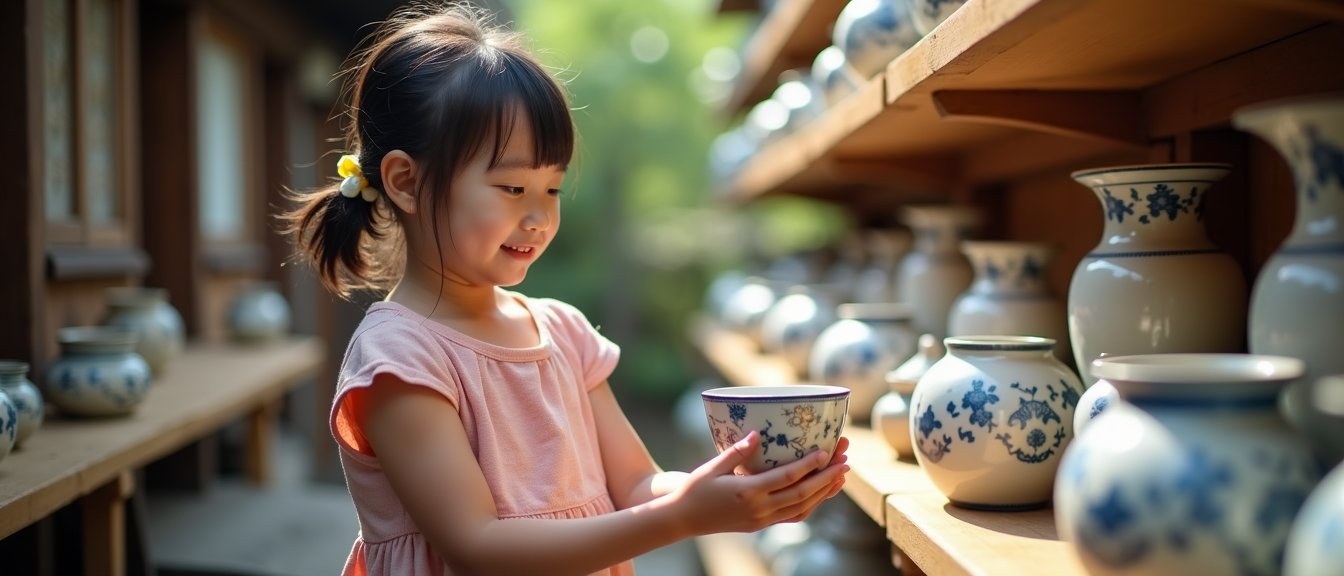
For many travelers to Japan, the allure of Saga Prefecture lies in its world-class ceramics. The towns of Arita and Imari are legendary.
They produce porcelain that has graced European palaces for centuries. For parents traveling with toddlers or curious elementary schoolers, though, the phrase “pottery town” can sound less like a cultural excursion and more like a financial liability.
The image of a toddler loose in a shop full of delicate, expensive porcelain is the stuff of nightmares. Can you actually enjoy Arita and Imari with children? Is it worth the stress?
The answer is yes—but you need a strategy. This isn’t a place where you can let the kids run wild.
With the right planning, it can be a fascinating day trip. Before you dive into the specifics of pottery hunting, read our regional overview first: The Ultimate Family-Friendly Guide to Saga with Kids: Low Stress, High Adventure. It sets the stage for why Saga is a hidden gem for families.
Here is your survival guide to navigating the fragile beauty of Arita and Imari without breaking the bank (or the plates).
Arita vs. Imari with Kids: Quick Comparison
Short on time? This table sums up which town fits your family best before you read the details below.
| Town | Best for | Stroller-friendly? | Top kid spot |
|---|---|---|---|
| Arita | Space to run, easy browsing | Yes (at Porcelain Park) | Arita Porcelain Park, Kouraku Kiln |
| Imari (Okawachiyama) | Scenic hillside walk & photos | No (cobblestones, steps) | Outdoor village stroll, porcelain bridge |
The Reality Check: Assessing the “Bull in a China Shop” Risk
Let’s be honest: traditional Japanese pottery shops are often small, narrow, and stacked floor-to-ceiling with breakables.
In Arita and Imari, you will find shops where plates worth $500 sit on open shelves just inches from the ground—perfect toddler height.
If you are traveling with a child in a “grab everything” phase, or a runner who doesn’t watch where they go, manage your expectations. You likely won’t be able to leisurely browse high-end galleries while your child stands quietly.
That doesn’t mean you have to skip the towns entirely. Both Arita and Imari offer outdoor experiences, wider spaces, and specific activities that are surprisingly kid-friendly.
Arita with Kids: Treasure Hunting and Palaces
Arita is the more “spread out” of the two towns and offers a few attractions that are excellent for families.
1. Arita Porcelain Park
This is the single best spot in Arita for families. It is a bizarre and wonderful theme park.
It features a full-scale reconstruction of the Zwinger Palace from Dresden, Germany. Why? Because Dresden is Arita’s sister city.
For kids, the appeal is simple: space. The massive courtyard lets children run and burn off energy safely, far from fragile shelves.
There is also a small mini-golf course and a sake/shochu brewery on-site (for the parents). The shop here is large, with wide, stroller-friendly aisles—a rarity in this region.
The park makes an easy half-day base, so it pays to sleep nearby and start early before the tour buses arrive. Compare family-friendly hotels around Arita & Imari on Agoda to lock in a room with space for the kids and easy car parking.
2. “Treasure Hunting” at Kouraku Kiln
If you want to buy pottery but are terrified of your kids breaking a $200 plate, head to Kouraku Kiln for their famous “Treasure Hunting” experience.
You are given a basket and a set time to fill it with as much pottery as you can fit from crates of unsold inventory.
The vibe is industrial and relaxed—it feels like a warehouse. You still need to be careful, but the atmosphere is less “hushed museum” and more “digging for gold.”
Older kids (ages 7+) often love the gamified hunt for the coolest cup or bowl to take home. To pair it with other hands-on family activities across the region, browse Saga & Kyushu experiences on Klook and reserve ahead so the day runs smoothly.
If you are planning a multi-day trip across the island and wondering how to fit this in, check our routing advice in Kyushu Family Itineraries: The Complete Guide to Planning Your 3 to 7-Day Trip.
Imari with Kids: The Village of Secret Kilns
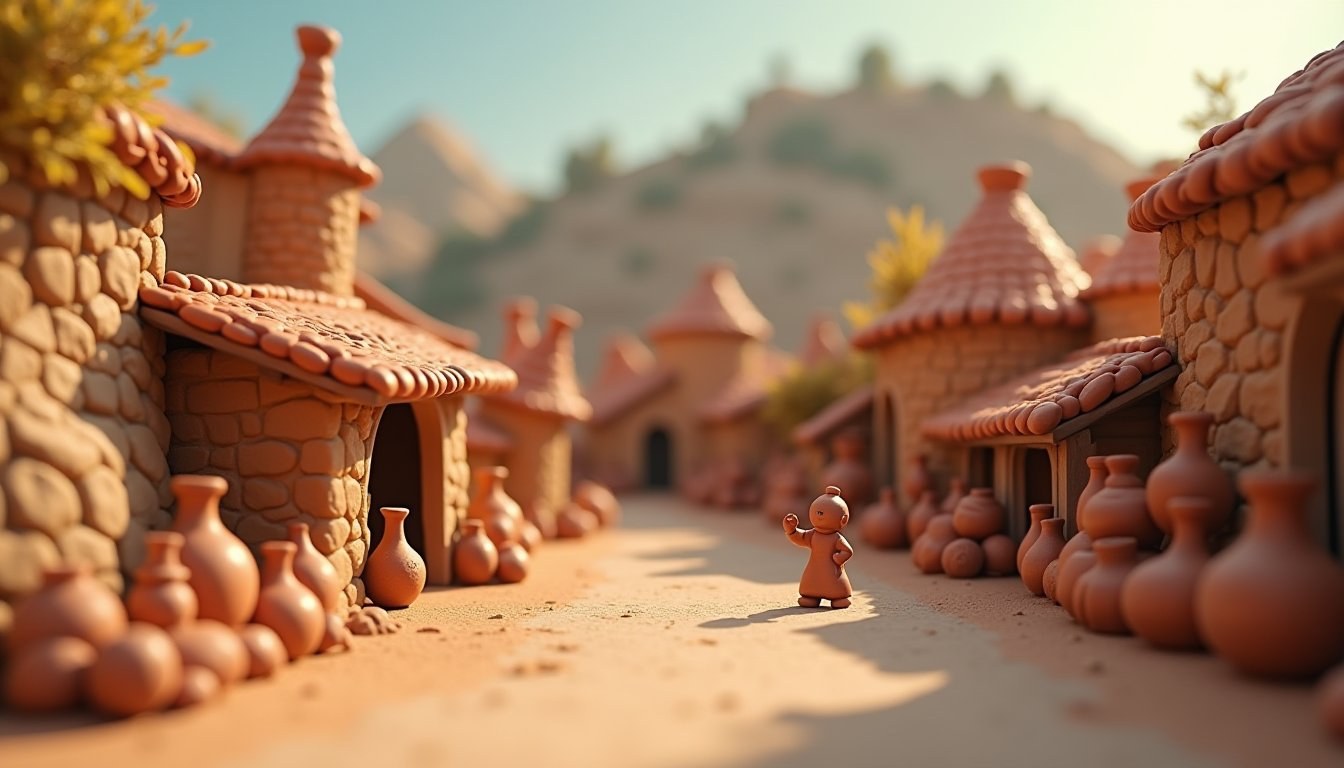
Imari—specifically the Okawachiyama village—is incredibly atmospheric. Known as the “Village of Secret Kilns,” it is tucked into the mountains.
Steep, narrow streets are lined with old houses and tall chimneys, giving the whole village a step-back-in-time feel.
The Good News
It is an outdoor museum. The walk itself is beautiful, surrounded by mountains and nature.
There is a lovely bridge decorated with porcelain tiles that kids enjoy looking at, and the sound of summer wind chimes is magical. It is a great place for a family hike.
The Challenge
The shops here are tiny. Many are essentially the front rooms of people’s homes.
Strollers are virtually impossible to use due to the cobblestones, steps, and cramped interiors.
Strategy for Imari: Treat it as a scenic walk and take turns entering shops. One parent stays outside with the kids exploring the streams or kiln chimneys, while the other browses quickly—then swap roles at the next shop.
Practical Survival Tips for Parents
1. Ditch the Stroller
In the town centers (especially Arita’s Uchiyama district and Okawachiyama in Imari), sidewalks can be narrow or non-existent.
Inside shops, a stroller is a liability—one wrong turn of the wheels could knock over a vase.
- Recommendation: Use a baby carrier. If you have a stroller, leave it in the car or store it. For storage options at major hubs before you transfer to these smaller lines, read Using Coin Lockers in Fukuoka with Kids: A Family-Friendly Guide to Luggage Storage.
2. The “Hands in Pockets” Rule
For children old enough to understand, establish the “Museum Rule” before you enter: hands in pockets or clasped behind the back.
Make it a game. “We look with our eyes, not our fingers.”
3. Seek Out “Outlet” Corners
Many kilns have an “outlet” or bargain section. These areas are less preciously arranged, with items stacked in crates or on sturdy tables rather than delicately balanced on artistic displays.
These are the safer zones for families to browse without holding your breath.
4. Logistics: Getting There
Arita and Imari are accessible by train, but connections can be infrequent compared to the city.
The “Limited Express Midori” from Hakata Station takes you directly to Arita. For a deep dive on train travel here, including seat reservations for families, see JR Trains in Fukuoka with Children: Seats, Tickets, and Family Travel Tips.
5. Souvenir Alternatives
If buying ceramics is just too stressful with current toddlers, consider other local crafts or sturdy items. You don’t have to go home empty-handed.
For inspiration on what else to buy in the region, check out 10 Best Fukuoka Souvenirs to Buy: Kid-Friendly Snacks & Traditional Crafts—many of these suggestions apply to the wider Kyushu area.
Frequently Asked Questions
Is Arita or Imari better with young kids?
Arita. It is more spread out, and Arita Porcelain Park gives toddlers a huge open courtyard to run in, far from fragile shelves.
Can we use a stroller?
At Arita Porcelain Park, yes—aisles are wide and paths are flat. In Okawachiyama (Imari), no; the cobblestones, steps, and tiny shops make a baby carrier far easier.
What is the most kid-friendly activity?
For ages 7 and up, the “Treasure Hunting” basket experience at Kouraku Kiln is a hit. For toddlers, the open courtyard and mini-golf at Arita Porcelain Park work best.
How do we get there from Hakata?
Take the “Limited Express Midori” from Hakata Station directly to Arita. Reserve seats in advance when traveling with kids, as connections can be infrequent.
Conclusion: Is It Worth It?
If you are a pottery enthusiast, absolutely—just adjust your pacing. Don’t try to hit 20 shops.
Pick one or two experiences, like Arita Porcelain Park or the Kouraku Kiln treasure hunt, where the kids can be themselves.
If you just want a general day trip and aren’t attached to buying plates, Okawachiyama village in Imari offers a stunning, timeless landscape—perfect for family photos, even if you never buy a single tea cup.
Safe travels, and may all your porcelain make it home in one piece!
 Saga: Hidden Gems & Pottery
Not sure where to begin? This free guide helps you pick the right Kyushu trip for your family — from a Fukuoka family who actually lives here.
- ✅A simple “which trip suits us?” chooser — by days, ages & interests
- ✅Snapshots of all 7 prefectures — what’s actually worth it with kids
- ✅Instant PDF download — name your price (free), no spam
Onsen, rail, or a full itinerary? It points you to the right deep-dive guide.