
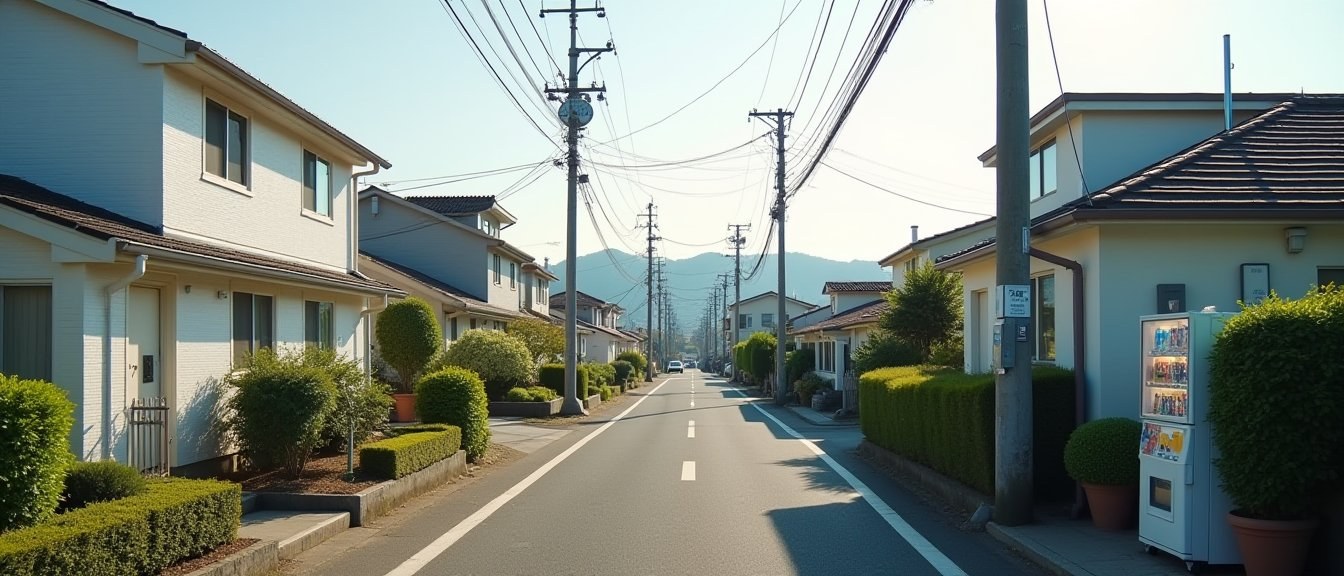
The neighborhood you pick in Fukuoka shapes your family’s daily rhythm more than the apartment itself.
Which clinic answers the phone in English. Whether your six-year-old can safely walk to the park. How many subway transfers stand between you and Hakata Station.
These add up fast when you’re raising kids here.
We’ve lived in Fukuoka as a family of four for several years, with our kids in the local school system and friends scattered across most of the city’s residential zones.
This guide is the same conversation we have with every family who messages us asking “where should we live in Fukuoka with kids?”
Pair it with our full Fukuoka with kids guide and the FIS application timeline so the school decision and the neighborhood decision stay in sync.
Below we cover seven neighborhoods (plus one commuter option), ranked across the eight criteria that actually matter when you’re raising a family — not the criteria a single 25-year-old expat would care about.
Why Neighborhood Choice Matters More for Families with Kids
Fukuoka is small by Japanese standards — about 1.67 million people on the city’s own August 2026 estimate.
That compactness fools newcomers into thinking neighborhood choice is low-stakes. It isn’t.
The right neighborhood means a 5-minute stroller walk to a playground, a pediatric clinic with an English-speaking receptionist, and a subway that hits Hakata or the airport in under 20 minutes.
The wrong one means a 25-minute bus-transfer battle, school commutes that swallow your evenings, and weekend grocery runs only possible by car.
Here’s what actually matters when you’re filtering with kids in mind:
- Rent reality — both 1LDK (one bedroom + LDK) starter sizes and 3LDK family-sized units
- School access — proximity to Fukuoka International School (FIS), the local public school district (gakku), and Japanese preschools (yochien, hoikuen) — if an international school is on the table, check the annual fee comparison before you settle on a neighbourhood
- Pediatric medical access — clinics with English-speaking staff, plus distance to Fukuoka Children’s Hospital
- Daily-use parks — the playground you’ll use 5 days a week, not just the famous park you visit on Sundays
- Transit — walking distance to subway, and minutes to Hakata Station and Fukuoka Airport
- Errand-friendliness — supermarket density, drugstores, and the nearest big-box for diapers and weekend bulk runs
- Pedestrian safety — violent crime is essentially zero everywhere in Fukuoka, but traffic and crosswalk design vary a lot
- Foreign-family density — having other expat kids in the local school matters more than first-time arrivals expect
Quick Comparison Table: Fukuoka Family Neighborhoods at a Glance
| Neighborhood | 1LDK rent | 3LDK rent | Int’l school | Pediatric care | Parks | To Hakata | Expat density |
|---|---|---|---|---|---|---|---|
| Nishijin & Momochi | ¥75–95k | ¥160–220k | ★★★ (FIS 15 min) | ★★★ | ★★★★ beach + parks | 15 min subway | ★★★★ high |
| Ropponmatsu & Ohori | ¥80–100k | ¥170–230k | ★★ (FIS 25 min) | ★★★ | ★★★★★ Ohori Park | 10 min subway | ★★★ moderate |
| Yakuin & Hirao | ¥80–95k | ¥160–210k | ★★ (FIS 25 min) | ★★★★ best in city | ★★★ small parks | 10 min subway | ★★★ moderate |
| Fujisaki & Befu (Sawara/Jonan) | ¥60–80k | ¥120–170k | ★★★ (FIS 10 min) | ★★★ | ★★★★ large parks | 15 min subway | ★★ growing |
| Nishi-ku (Imajuku, Meinohama) | ¥55–75k | ¥110–160k | ★★★ (FIS 15 min) | ★★ | ★★★★★ huge + beach | 20–25 min subway | ★★ low–mod |
| Minami-ku (Ohashi, Takamiya) | ¥55–75k | ¥110–155k | ★ commute heavy | ★★★ | ★★★ adequate | 15–20 min Nishitetsu | ★ low |
| Hakata & Higashi-ku | ¥70–90k | ¥140–190k | ★ commute heavy | ★★★ | ★★ limited | 5 min walk | ★★ low–mod |
| Itoshima (commuter) | ¥50–70k | ¥90–140k | ★ 45 min | ★★ | ★★★★★ beach/nature | 40 min JR + drive | ★★★ growing |
Rent ranges are indicative mid-2026 asking rents for unfurnished family units, not official statistics — older inland stock sits at the bottom of each band and new-build next to a station well above the top. For a published benchmark, LIFULL HOME’S ward averages ran ¥116,500 (1LDK) and ¥252,400 (3LDK) in Chuo-ku against ¥76,600 and ¥191,000 in Nishi-ku in September 2026; those count only units within a 10-minute walk of a station, which is why they sit above our bands. International-school proximity is measured against Fukuoka International School (FIS) at 3-18-50 Momochi, Sawara-ku. Pediatric-clinic stars are our own read on English-speaking availability and clinic density within 1 km, not an official ranking.
Nishijin & Momochi: The Easiest Landing for First-Time Expat Families
If you’re new to Japan and arriving with kids, this is the neighborhood we send you to first.
Nishijin and Momochi run along the coast on the west side of central Fukuoka.
They hold the city’s biggest concentration of expat families, the best in-city beach park, and the closest residential cluster to Fukuoka International School.
Why It Works for Kids
- Momochi Seaside Park puts a real beach a 10-minute stroll from most apartments. Supervised swimming runs only in the summer season (11 July–1 September in 2026, 9:30–17:30) and only along the eastern stretch; outside that window it’s wading and sand play.
- Fukuoka Tower, the Fukuoka City Museum, and the Fukuoka City Public Library are all walkable in under 15 minutes. (Marine World is not nearby — it sits across the bay in Higashi-ku — and the city science museum is over in Ropponmatsu.)
- Streets are wider than central Fukuoka, with bike lanes and a lower car density — this is where kids learn to ride safely.
- The local elementary schools take in more foreign and returnee children than most of the city, so a new arrival with no Japanese is not a first for the staff. No public ranking exists, so read that as what families here consistently report rather than a statistic.
Schools & Preschools
Fukuoka International School (3-18-50 Momochi, Sawara-ku) runs all three IB programmes — PYP, MYP and DP — from age three through Grade 12, and it is a 15-minute commute from here. FIS runs no school bus, which is precisely why the distance between your front door and Momochi matters so much.
Several yochien around Nishijin and the Sawara border offer some English exposure, and Fukuoka City waives fees for ages 3–5 at licensed preschools with no income test (meal costs still apply), so the choice comes down to fit and commute rather than price.
The public elementary schools here are unusually used to foreign families — see our foreign-family guide to local public schools for the enrollment paperwork order.
Pediatric Clinics with English Support
Multiple pediatric clinics are within walking distance.
The cluster near Fukuoka Tower has at least two with English-speaking front desks. Fukuoka Children’s Hospital, though, sits right across the city on Island City in Higashi-ku (5-1-1 Kashiiteriha) — roughly half an hour by car via the urban expressway, not a quick hop from the west side.
For specific clinic names, phone numbers, and walk-in policies, see our English-speaking pediatric clinics roundup.
Transit & Daily Errands
Nishijin Station (Kuko/Airport subway line) reaches Hakata in about 13 minutes and Fukuoka Airport in roughly 18, with no transfer either way.
PRALIVA, built directly onto Nishijin Station, plus the Nishijin shopping street and MARK IS Fukuoka Momochi handle daily errands. Sidewalks are stroller-friendly throughout.
Rent Snapshot
1LDK: ¥75,000–¥95,000. 3LDK: ¥160,000–¥220,000.
Inland older buildings run noticeably cheaper than the tower mansions facing the bay.
Our Take
The default right answer for first-time families landing in Fukuoka.
You pay a slight premium for the location and expat density, but the soft-landing factor is genuine.
Flying in to scout the area? Compare family-friendly Momochi hotels on Agoda → and pre-book a Klook Fukuoka Airport private transfer so you don’t drag jet-lagged kids and strollers through the subway on arrival night.
Ropponmatsu & Ohori: Green Space and Café Culture for Walkable Family Life
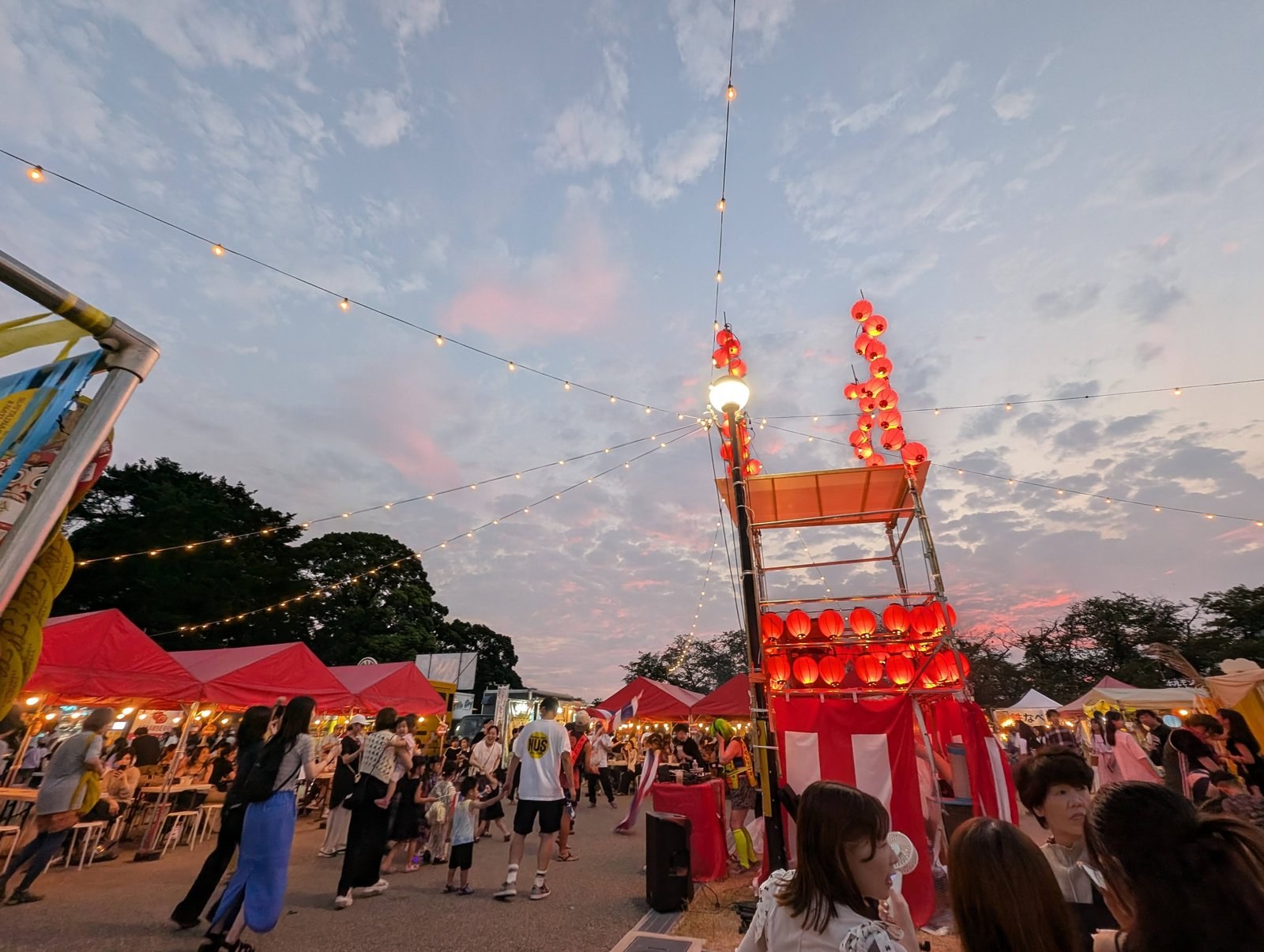
Ropponmatsu and the Ohori Park area are the pick for families who want the cultural amenities of central Fukuoka without losing daily access to green space.
Ohori Park — Fukuoka’s central pond and park, loosely modeled on West Lake in Hangzhou — is the city’s premier daily-use family park.
Why It Works for Kids
- The 2 km loop around Ohori Park is split into walking, jogging and cycling lanes, so bikes and scooters get their own outer track instead of dodging strollers. There is a children’s playground, a boathouse renting rowboats and swan boats year-round (from ¥800 per 30 minutes), and the kid-friendly Fukuoka Art Museum.
- Ropponmatsu has a quieter, residential feel anchored by the Ropponmatsu 421 complex — the Fukuoka City Science Museum and its dome theatre on floors 3–6, a Tsutaya book-and-café on 2F and a supermarket downstairs. There is no library in the building (the city’s main one is over in Momochi), and the science museum closes on Tuesdays.
- The neighborhood feels distinctly more “established Japanese family” than expat-heavy Momochi.
Schools & Preschools
FIS is 25 minutes by car or subway+walk — manageable but a real daily commitment.
Local public elementary schools are strong, and several reputable private Japanese kindergartens are nearby.
Pediatric Clinics
Multiple pediatric clinics, including some that use phone-interpreter services for English.
The Ohori area has one of the densest concentrations of small specialty clinics in the city.
Transit & Daily Errands
Ohori-Koen Station (Kuko line) is about 9 minutes from Hakata and Ropponmatsu Station (Nanakuma line) about 12 — both direct, no transfer.
Daimaru and Iwataya are a few stops away. The café scene is unmatched — useful when toddler mornings demand serious coffee.
Rent Snapshot
1LDK: ¥80,000–¥100,000. 3LDK: ¥170,000–¥230,000.
Premium units fronting Ohori Park itself climb significantly higher.
Our Take
Best for families who want daily green space and a quieter neighborhood feel.
Slightly more Japanese-family-oriented than expat zones, which can be a plus or minus depending on your kids’ age and language goals.
On a scouting visit? Browse Ohori Park hotels on Agoda → — one night lakeside is the fastest way to feel whether the rhythm fits your family.
Yakuin & Hirao: Best Pediatric Care and the Safest Streets for Independent Kids
Yakuin is the quiet success story of Fukuoka family neighborhoods.
It’s a residential pocket that consistently ranks among the city’s safest, with an unusually high density of pediatric and family clinics.
Hirao, just south, extends the same character at slightly more affordable rents.
Why It Works for Kids
- Lowest pedestrian risk and traffic density of any central neighborhood — genuinely safe for elementary-age kids to walk independently.
- Small but well-loved local parks tucked between residential blocks.
- Walking distance to Kego Park and the Tenjin shopping district when you want a “big city” outing.
Schools & Preschools
FIS is 25 minutes away.
The local public schools have a strong academic reputation, and well-regarded private preschools cluster around Yakuin Station.
Pediatric Clinics — the Best in the City
If medical access is your top criterion, Yakuin wins.
Clinics are unusually thick on the ground here, including several with English-speaking staff or phone interpretation. We have not found an official per-square-kilometre ranking, so treat “densest” as our impression rather than a published figure.
Specialty clinics (allergy, dermatology, orthodontics) are also walkable.
Cross-reference our English-speaking pediatric clinics list before signing a lease — the post includes names and Google Maps links so you can plot them against your shortlist.
Transit & Daily Errands
Yakuin Station on the Nanakuma line reaches Hakata in about 7 minutes, and Nishitetsu Yakuin next door puts you on the Tenjin–Omuta line.
Daily errands are easy — Hirao has a strong supermarket cluster, and Yakuin’s main streets are dense with drugstores and small specialty shops.
Rent Snapshot
1LDK: ¥80,000–¥95,000. 3LDK: ¥160,000–¥210,000.
Hirao runs about 10% cheaper than Yakuin for equivalent age and size.
Our Take
The ideal choice for families with younger kids, a child with ongoing medical needs, or anyone who prioritizes a quiet, walkable life over expat density.
Visiting to check the clinics in person? Compare Yakuin and Hirao hotels on Agoda → and book the kids a Marine World aquarium ticket on Klook so they actively buy into the move.
Fujisaki & Befu: The Smart Mid-Budget Pick for International-School Families

Inland from the coast — Fujisaki in Sawara-ku, and Befu just over the boundary in Jonan-ku — is where the math starts working in your favor.
From Fujisaki you are about 10 minutes from Fukuoka International School, a little more from Befu, and your rent drops noticeably compared to Momochi.
The neighborhood has been quietly absorbing foreign families for the past five years.
Why It Works for Kids
- Closest residential cluster to FIS — many families specifically choose Sawara to keep the school commute under 15 minutes door to door.
- Large neighborhood parks plus easy access to the Muromi River walking paths.
- A residential, lower-density feel that’s easier on jet-lagged toddlers.
Schools & Preschools
FIS is about 10 minutes from Fujisaki by car or bus and a little longer from Befu — and because the school runs no bus service, that gap is one you drive twice a day.
The local public elementary schools are accustomed to bilingual students and report a smoother transition for foreign kids than the city center.
If you’re still mapping out the entry timeline, our FIS application guide walks through the K and grade-1 deadlines that drive the lease decision.
Pediatric Clinics
Multiple pediatric clinics in the Befu and Fujisaki areas.
English support is less consistent than in Momochi or Yakuin, so phone interpretation fills the gap: Fukuoka City runs a free Medical Interpreting Call Center on 092-733-5429, 24 hours a day in around 20 languages, and AMDA’s national line (0120-339-266) covers weekday consultations.
Transit & Daily Errands
Fujisaki is on the Kuko line — Hakata in about 15 minutes, the airport in about 20. Befu is a different line entirely: the Nanakuma subway, roughly 15 minutes to Hakata direct, but no through service to the airport.
Sunny, Coop, Trial and Maxvalu all sit within a short walk of Fujisaki Station, and the Jonan Ward Office is beside Befu Station. This is one of the easier neighborhoods to live in without a car.
Rent Snapshot
1LDK: ¥60,000–¥80,000. 3LDK: ¥120,000–¥170,000.
You get visibly more space per yen than central Fukuoka.
Our Take
If you’re committed to FIS and budget matters, Sawara is the most efficient choice in the city.
Expat density is lower than Momochi, but growing fast.
Coming to tour FIS in person? Find Sawara-area hotels on Agoda → so you can walk the actual school commute at 8 a.m. before you commit.
Nishi-ku (Imajuku, Meinohama): Big Parks, Beach Access, and the Best Value Family Space
Push west along the Kuko line and you reach Nishi-ku — Meinohama, then Shimoyamato and Imajuku on the JR Chikuhi line that the subway trains run through onto.
Here 3LDK rents drop into territory that buys real breathing room.
The tradeoff is a longer commute, but for families prioritizing space and outdoor life, it’s a strong contender.
Why It Works for Kids
- Easy access to Imazu tidal flats, Odo Park, and several large open-space parks where kids can actually run.
- Closer to the Itoshima coastline for weekend beach mornings — pair it with our Itoshima day-trip guide for the first weekend.
- Most family-friendly apartments here come with usable balconies, parking, and storage — luxuries in central Fukuoka.
Schools & Preschools
FIS is 15 minutes by car.
Public schools are calmer, smaller cohorts, with a friendly attitude toward foreign families but fewer bilingual classmates.
Pediatric Clinics
Adequate clinic density; English support is patchy.
Most families pair a local clinic for routine care with a Momochi or Tenjin clinic for English-required visits.
Transit & Daily Errands
Meinohama Station is the terminus of the Kuko line — Hakata in about 19 minutes, with JR Chikuhi trains carrying on west to Shimoyamato and Imajuku.
AEON Marina Town covers everyday shopping. One thing to know before you picture outlet weekends: the Marinoa City mall next door closed in August 2024, and the site is being rebuilt as Mitsui Outlet Park Fukuoka, due to open in spring 2027.
Rent Snapshot
1LDK: ¥55,000–¥75,000. 3LDK: ¥110,000–¥160,000.
Our Take
The best space-per-yen choice if you can absorb a slightly longer commute.
Families with two or more kids tend to love Nishi-ku within six months of moving in.
Want to test-drive the lifestyle on a weekend? Book a Klook Itoshima coastal day tour → from your hotel and see whether the Nishi-ku-to-beach rhythm actually clicks for your kids.
Minami-ku (Ohashi, Takamiya): Affordable, Quiet, and Best for Japanese-Track Families
Minami-ku — anchored by Ohashi and Takamiya along the Nishitetsu line — is where many local Japanese families raise kids.
Rents are reasonable, the neighborhoods are calm, and daily life is straightforward.
The catch: it’s the least convenient zone for international-school families.
Why It Works for Kids
- Quiet residential streets, strong sense of community, and stable local schools.
- Several decent neighborhood parks, plus ABURAYAMA FUKUOKA — the farm-and-forest park on Minami-ku’s own hillside, relaunched under that name in April 2023 — a short drive away. Nokonoshima Island Park is a proper outing from this side of town, though: cross the city to Meinohama, then a 10-minute ferry and a 13-minute bus.
- A genuine Japanese childhood experience — useful if you want your kids fully immersed in the local school system.
Schools & Preschools
FIS is a 35–45 minute commute and not practical for daily school runs.
Public schools are well-regarded; private Japanese options are plentiful.
Pediatric Clinics
Adequate clinic coverage with limited English support.
Best suited to families who already have basic Japanese or who can rely on phone interpretation.
Transit & Daily Errands
The Nishitetsu line reaches Tenjin from Ohashi in about 6 minutes by express — genuinely quick — but Hakata Station means changing to the subway at Tenjin, which pushes the door-to-door total to around 20.
Shopping at Ohashi centres on OHASHI HILL, the complex that opened in front of the station in April 2025 with a Don Quijote and several clinics, plus the supermarkets scattered through Ohashi and Takamiya.
Rent Snapshot
1LDK: ¥55,000–¥75,000. 3LDK: ¥110,000–¥155,000.
Our Take
Choose Minami-ku if your kids will be in the Japanese school system and you don’t need international-school access.
Otherwise, the commute math doesn’t work.
Hakata & Higashi-ku: Maximum Transit Convenience, Limited Family Vibe
Hakata Station and the surrounding wards (including Higashi-ku to the north) make sense for families whose work or travel patterns demand short commutes.
Think frequent business trips, Shinkansen-heavy schedules, or a partner working at Hakata HQ offices.
Why It Works (and Doesn’t) for Kids
- 5-minute walk to Hakata Station; Fukuoka Airport is two subway stops and 5 minutes away (10–15 minutes by taxi).
- Less green space and fewer daily-use parks compared to western Fukuoka.
- Higashi-ku has Hakozaki and Najima with more residential character and access to Uminonakamichi Seaside Park.
- Fukuoka Children’s Hospital is in Higashi-ku — a real advantage for families with ongoing pediatric care needs.
Schools & Preschools
FIS commute is heavy (35–45 minutes).
A handful of English-immersion preschools operate in Hakata-ku, but there is no international school in the ward itself.
Pediatric Clinics
Multiple clinics with mixed English support.
The presence of Fukuoka Children’s Hospital is the big win.
Rent Snapshot
1LDK: ¥70,000–¥90,000. 3LDK: ¥140,000–¥190,000.
Our Take
Worth it only if your work or medical needs require it.
For most families, the family-friendliness gap versus Momochi or Yakuin isn’t worth the convenience.
Flying in to test the trade-off? Compare Hakata Station family hotels on Agoda → — two nights here tells you fast whether the convenience outweighs the missing parks.
Itoshima: The Commuter Beach-Town Option for Outdoorsy Families
Technically outside Fukuoka City, but worth covering: Itoshima has become the destination for outdoorsy families who don’t mind a real commute.
Surfing, organic farms, lower density, and rents that buy you a small house instead of an apartment.
Why It Works for Kids
- Beach within 10 minutes of most homes; abundant outdoor playgrounds and nature programs.
- Growing community of remote-working expat families, particularly around Ikisan and Chikuzen-Maebaru.
- Quieter, slower pace — closer to a small-town childhood than a city one.
Schools & Practical Realities
FIS commute is roughly 45 minutes and requires a car or train + transfer.
Only realistic if one parent does the school run consistently.
Public schools are small and welcoming. Pediatric coverage is adequate for routine care; serious cases route into Fukuoka City.
Rent Snapshot
1LDK: ¥50,000–¥70,000. 3LDK and small houses: ¥90,000–¥140,000.
Our Take
The right choice for families who value outdoor life over city convenience and have at least one remote-working parent.
Test-drive it with a long weekend before committing.
Want to feel it before signing a lease? Book a Klook Itoshima coastal day tour → or pair it with our DIY Itoshima itinerary for a self-driven trial run.
How to Decide: A Practical Family Filter
If you’re staring at this list and still not sure, here’s the quick decision tree we walk families through:
- Kids at Fukuoka International School? → Start with Momochi/Nishijin or Sawara. Anything else and the commute will dominate your week.
- Want a soft landing with other expat families nearby? → Momochi/Nishijin, no contest.
- Daily green space your top priority? → Ohori or Ropponmatsu.
- Medical access or younger kids needing frequent clinic visits? → Yakuin or Hirao.
- Budget-stretched but committed to FIS? → Fujisaki, or Befu just over the Jonan-ku line.
- Maximum space per yen and outdoorsy weekends? → Nishi-ku or Itoshima.
- Kids going fully Japanese-track? → Minami-ku or wherever the local school you want is zoned.
- Heavy business travel out of Hakata? → Hakata or Higashi-ku, accepting the family-vibe tradeoff.
FAQ: Living in Fukuoka with Kids
Do we need a car in Fukuoka with kids?
Not in Nishijin, Momochi, Yakuin, Ohori, or Sawara — subway and bus coverage handle daily life, and taxis are cheap for occasional trips.
In Nishi-ku, Minami-ku, and Itoshima, a car becomes increasingly useful and is effectively required in Itoshima.
How early do we need to apply for international school?
FIS uses rolling admissions rather than a single deadline: applications are accepted at any point in the school year, up until early April, and places are limited. Priority runs foreign passport holders first, then dual nationals, then Japanese returnees, then Japanese students, with siblings prioritised inside each band.
So the practical rule is not “hit a deadline” but “apply as early as you can and get the acceptance in writing” — planning your neighborhood around a confirmed place is much safer than the reverse.
Our FIS application guide walks through the paperwork.
Where do most expat families with young kids actually end up?
Nobody publishes data on this, so the split below is only what we see among the families we know:
- 40% Momochi/Nishijin
- 20% Sawara
- 15% Yakuin/Hirao
- 15% Ohori/Ropponmatsu
- 10% spread across Nishi-ku, Itoshima, and Higashi-ku
Are there English-speaking pediatricians in Fukuoka?
Yes — clinics in Momochi, Yakuin, and parts of Tenjin have English-speaking front desks, and any clinic in the city can be bridged through Fukuoka City’s free Medical Interpreting Call Center (092-733-5429, 24 hours, around 20 languages).
Fukuoka Children’s Hospital runs its own International Medical Support Center — call 092-692-3312 (English, weekdays 9:00–17:00) ahead of a visit.
Our English-speaking pediatric clinics roundup lists names, phone numbers, and which clinics accept walk-ins.
What about safety — are some neighborhoods better than others?
Violent crime is rare across the whole city, and no residential ward stands out as one to avoid.
The variable is pedestrian and traffic safety.
Yakuin, Hirao, and Sawara have the calmest streets; central Hakata and parts of Tenjin have more car traffic and require closer supervision for younger kids.
What’s the realistic timeline from decision to move-in?
Plan on 8–12 weeks once you’ve picked the ward.
That covers viewing trips, lease signing (most agencies want a Japanese guarantor or guarantor-company), the ward-office run — move-in notification, National Health Insurance, child allowance and school enrollment, counters open weekdays 8:45–17:15 — and utility set-up.
Our Fukuoka family relocation checklist sequences the order so school deadlines don’t collide with lease dates.
Final Word
There’s no single “best” Fukuoka neighborhood for families.
Only the one that aligns with your school, your medical needs, your budget, and the kind of childhood you want your kids to have here.
The good news: it’s a small city, and even the “wrong” choice rarely turns into a disaster.
If you can, spend 5–7 days actually walking the neighborhoods on your shortlist before signing a lease — what looks identical on a map feels very different at 7 a.m. on a school morning.
Building your scouting itinerary? Start with our 3-day Fukuoka family itinerary, then compare family-friendly hotels across Fukuoka on Agoda → so you can base yourself in two different wards across the trip and compare them back-to-back.
A relaxed, ready-to-use plan from a Fukuoka family who actually lives here — instant PDF, name your price (free).
- ✅A gentle day-by-day Fukuoka plan — ramen, parks, one easy day trip
- ✅Tap-to-open Google Maps for every stop, plus where to stay & family tips
- ✅Instant PDF download — no spam, yours to keep
Planning the whole island? The full 7-day Kyushu itinerary is inside.
Want the whole trip mapped out? This is our complete 7-day Kyushu loop, done for you — the exact route a Fukuoka family runs with their own kids.
- ✓Day-by-day plan — what to do, in what order, at a kid-friendly pace
- ✓Named hotels & booking links — where to sleep each night, no rabbit-holes
- ✓Packing & prep checklists — arrive sorted, not scrambling
Instant PDF · written by locals · hours of planning, done