
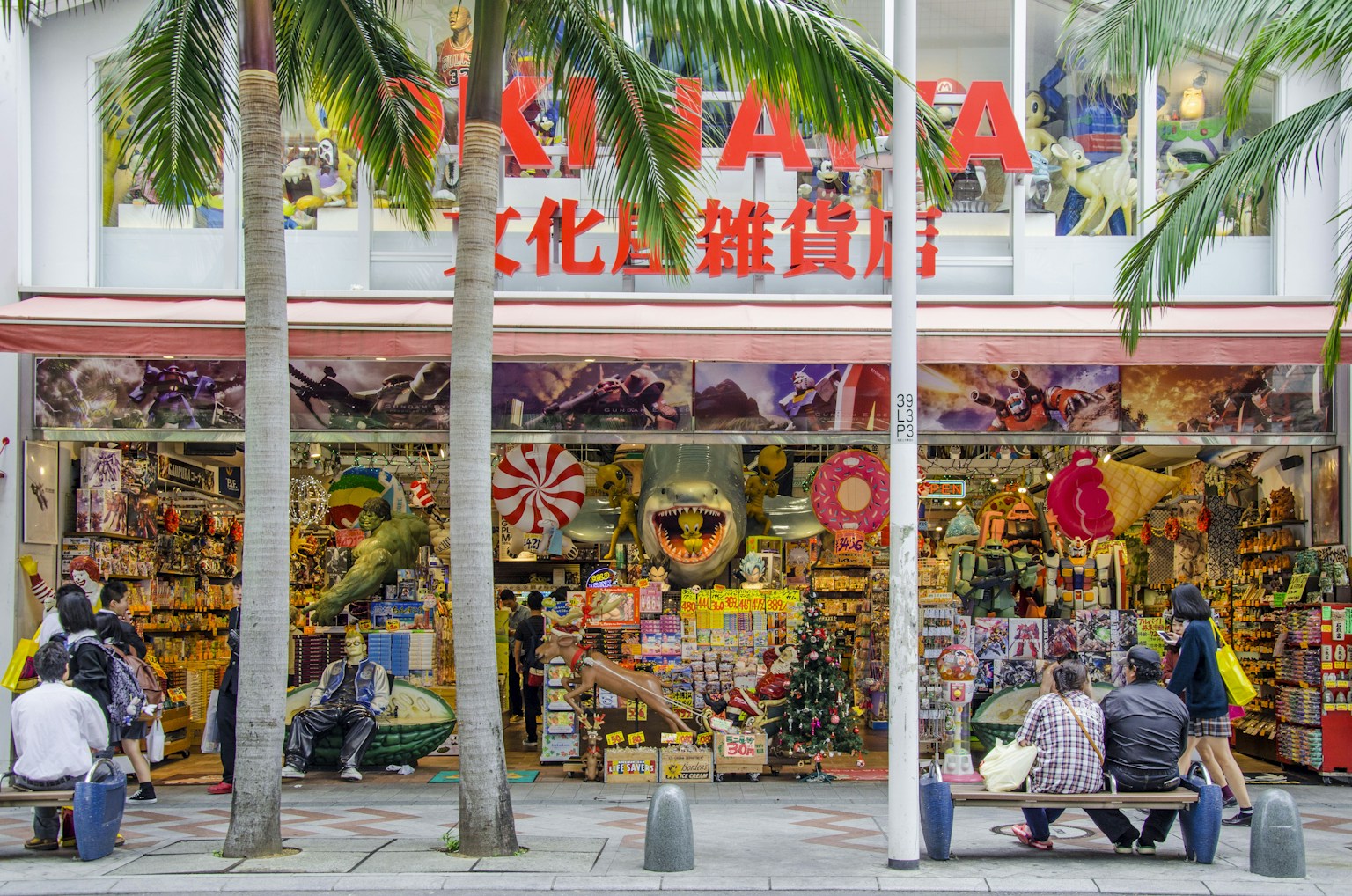
Okinawa might be the easiest place in Japan to feed a picky child. The island’s food culture is a mash-up of Japanese comfort food and American diner staples — which means burgers, tacos, mild noodles, and ice cream are all considered local specialties here.
We’ve eaten our way across the island with kids in tow, from market counters in Naha to soba shops near the aquarium. This guide covers the foods your kids will actually eat, the specific places worth your limited meal slots, and the survival tips that make restaurant meals calmer — think of it as the food chapter of our complete Okinawa family trip planner.
Is Okinawa Good for Eating Out with Kids? (Quick Answer)
Yes — Okinawa is arguably Japan’s most kid-friendly food destination. Local staples like taco rice, Okinawa soba (mild pork-broth noodles), pork tamago onigiri, and Blue Seal ice cream are naturally child-friendly, portions are generous, and casual shokudo diners welcome families. Budget roughly ¥2,500–4,000 for a family lunch, and expect tatami seating more often than high chairs.
The Five Okinawan Foods Kids Actually Eat
Forget forcing bitter goya on a toddler. These five have a near-perfect hit rate with children:
- Taco rice — seasoned taco meat, cheese, and lettuce over rice. Basically a deconstructed taco bowl, invented in Okinawa.
- Okinawa soba — thick wheat noodles in a mild, slightly sweet pork broth. Zero spice, easy to slurp.
- Pork tamago onigiri — a warm rice sandwich with Spam and fluffy egg. Perfect stroller-walk breakfast.
- Blue Seal ice cream — Okinawa’s own brand, with kid-magnet flavors like Blue Wave and Okinawan salt cookie.
- A&W burgers and root beer — the American chain is still going strong in the US, but Okinawa is the only part of Japan that has it, since 1963. Kids treat the frosted-mug root beer like a science experiment.
Family Food Experiences Compared
If you only have a few meal slots to play with, here’s how the big ones stack up:
| Experience | Cost guide | Best age | Stroller OK? | Time needed |
|---|---|---|---|---|
| Kishimoto Shokudo (Okinawa soba, Motobu) | Soba ¥950 (large) / ¥800 (small); juushii rice ¥350 | 2+ | Tight inside; park it at the door | 45 min |
| King Tacos Kin Main Store (taco rice birthplace) | Taco rice with cheese & vegetables around ¥700–800 (very large portions — one plate feeds a parent plus a small child) | 3+ | Yes (casual diner) | 45 min |
| Makishi Public Market (Daiichi Makishi Kosetsu Ichiba) (Naha market eat-up floor) | Meals from ~¥1,000; browsing free | 4+ | Yes, elevator to 2F | 60 min |
| Pork Tamago Onigiri Makishi Market Store (breakfast onigiri) | Standard onigiri ¥480; specialty fillings cost more (July 2025 prices) | 1+ | Takeaway — eat anywhere | 30 min |
| Blue Seal Ice Cream Makiminato Flagship (flagship ice cream parlor) | Single scoop around ¥400; kids' sizes and sundaes available | Any | Yes, retro diner seating | 30 min |
Okinawa Soba: The Easy Noodle Win
Okinawa soba is the single safest order on the island. The broth is gentle, the noodles are soft enough for toddlers to manage, and most shops will bring a small empty bowl for sharing without being asked.
The classic stop is Kishimoto Shokudo, a soba shop in Motobu that has been making noodles since 1905. It sits about ten minutes’ drive from Churaumi Aquarium, which makes it the natural lunch pairing for aquarium day — just plan around Wednesdays, when it’s closed.
- Hours: 11:00–17:00, closed Wednesdays — arrive before noon; they close early once the soba sells out
- Price: Soba ¥950 (large) / ¥800 (small); juushii rice ¥350
- Address: 沖縄県国頭郡本部町渡久地5
Kid tip: order one soba and one juushii (Okinawan seasoned rice) and split both. The rice buys you time when the noodles are too hot.
Taco Rice and Okinawa’s American Side
Taco rice was invented in Kin Town next to the US base in 1984, when Matsuzo Gibo piled taco filling onto rice at his shop Parlor Senri (long since closed) to feed hungry young marines cheaply. He went on to found King Tacos, and King Tacos Kin Main Store is the chain’s original store, minutes from where the dish was born. Portions are enormous — one plate genuinely feeds a parent plus a small child.
- Hours: 10:30–21:00, open daily
- Price: Taco rice with cheese & vegetables around ¥700–800 (very large portions — one plate feeds a parent plus a small child)
- Address: 沖縄県国頭郡金武町金武4244-4
For the full retro-America experience, hit an A&W drive-in anywhere on the island. Root beer comes in a frosted mug with free refills when you dine in, and the Mozza Burger (mozzarella cheese sauce, beef patty, bacon, tomato, lettuce) is a reliable picky-eater order. If your kids start asking why a Japanese island runs on tacos and root beer, we unpack how base-town diners shaped Okinawa’s American food heritage in a dedicated deep-dive.
Around Mihama American Village in Chatan you’ll find both, plus a boardwalk of casual eateries where a loud toddler bothers exactly no one. It’s our pick for the lowest-stress family dinner zone on the island. Basing further up the coast instead? Our rundown of where to eat with kids along the Onna resort strip covers the beach-hotel belt’s family tables.
Makishi Public Market: Naha’s Family Food Adventure
Makishi Public Market (Daiichi Makishi Kosetsu Ichiba) is the one “foodie” stop that works with kids. The ground floor is a wet market — bright purple sweet potatoes, whole fish, stalls piled with tropical fruit like mango and pineapple, pig faces (older kids find these hilarious; warn sensitive ones) — and the second floor is an eat-up food court.
The system — locals call it mochiage — is fun in itself: buy fish or meat downstairs, carry it up, and a 2F restaurant cooks it for a per-person fee (commonly around ¥550 for up to three dishes; sashimi is sliced free at the fish stall). Or just order simple grilled fish and soba sets upstairs.
- Hours: 8:00–22:00 (varies by shop); last orders 19:45 for market food cooked downstairs, 20:00 in the 2F diners; closed the 4th Sunday of the month except in December
- Access: 10 minutes on foot from Makishi monorail station, through the covered (rain-proof, stroller-friendly) arcades
A minute’s walk from the market, the Makishi Market branch of Pork Tamago Onigiri Makishi Market Store serves the breakfast your kids will request every remaining morning of the trip. Expect a queue from opening; it moves fast, and watching the onigiri assembled to order is part of the show.
Blue Seal and Dessert Stops
Blue Seal is Okinawa’s home-grown ice cream brand — “Born in America, raised in Okinawa,” as the slogan goes. Branches are everywhere, but the flagship Blue Seal Ice Cream Makiminato Flagship in Urasoe is worth a detour. The 1963 original was demolished and rebuilt from the ground up, reopening in July 2024 with American-diner styling crossed with Okinawan hana-block screens, a second-floor exhibit on the brand’s history, and a drive-thru — rare for an ice cream shop, and a lifesaver with a sleeping baby in the car.
- Price: Single scoop around ¥400; kids' sizes and sundaes available
- Hours: 10:00–22:00, open daily (in-store last order 21:30; drive-thru last order 20:45)
Also look for sata andagi (Okinawan doughnut balls) at markets — cheap, hand-sized, and not too sweet. For the flavors worth queuing for and the other sweets that reliably win kids over, see our guide to Blue Seal and the Okinawan sweets kids love. If your family rates food experiences highly, they scratch the same itch as fruit picking across Kyushu: edible, hands-on, and photogenic.
Eating Around Churaumi Aquarium
 Top Things to Do in Okinawa
 Instant confirmation for most tickets
Aquarium day needs a food plan, because Okinawa Churaumi Aquarium sits in rural Motobu where options thin out after 17:00. Inside the aquarium, Café “Ocean Blue” (8:30–18:00; drinks and desserts only until 10:00) sits beside the giant Kuroshio Sea tank. Note that the nine seats right against the glass are now paid seating — ¥1,000 per person for 50 minutes, signed up for on the day at the café entrance, with no advance booking. The food is beside the point (the Churaumi seafood curry is ¥2,200 including the drink bar), but toddlers stay hypnotized by whale sharks long enough for you to finish a coffee.
- Aquarium hours: 8:30–18:30 (last entry 17:30); 8:30–20:00 Apr 25–May 6 and Jul 18–31, 8:30–21:00 through August; no scheduled closing days through March 2027
- Tickets: Adults ¥2,180, high school ¥1,440, elementary/junior high ¥710, under 6 free
- Parking: Free (Ocean Expo Park lots, approx. 1,900 spaces; north lot P7 is closest to the aquarium)
Buying discounted aquarium tickets in advance means you skip the ticket-window queue with hungry kids in tow — you can book Churaumi Aquarium tickets on Klook before you fly. Then do soba at Kishimoto for lunch and you’ve solved the whole day.
Restaurant Survival Tips for Parents
A few patterns we’ve learned the hard way:
- Tatami beats high chairs. Many Okinawan shokudo have zashiki (floor seating) instead of high chairs — babies can sit or nap beside you. It works the same way zashiki and private-room dining works in Fukuoka, so read that guide if the format is new to you.
- Eat early. Popular soba shops sell out by 14:00; family restaurants get crowded from 18:00. An 11:30 lunch and 17:30 dinner is the calm window.
- Konbini are your safety net. Every Lawson and FamilyMart stocks banana, yogurt, plain onigiri, and baby-friendly bread — and if you’d rather cook, our guide to Okinawa supermarkets and konbini for self-catering families maps out where to buy the rest. No meal gamble ever needs to be high-stakes.
- Baby food: pharmacies (look for “drug store” signs) carry pouches and formula; more logistics like this are in our Kyushu with a baby itinerary, and the shopping side is identical in Okinawa.
- Allergies: pork stock is in nearly everything, including soba broth. Carry a written allergy card in Japanese; big chains like A&W publish allergen charts, and our full walkthrough of eating in Okinawa with food allergies covers safe orders and how to word the card.
Combining Okinawa with a Kyushu Food Trip
Plenty of families fly Okinawa–Fukuoka (about 1 hour 50 minutes) and turn one trip into two food cultures. Okinawa covers your casual, American-tinged comfort food; Kyushu covers the refined end.
If that’s your plan, our guides to Michelin-starred restaurants in Fukuoka that welcome families and booking a private kaiseki experience with kids show how far the other extreme can go — yes, even with a five-year-old at the table.
Frequently Asked Questions
Is Okinawan food kid-friendly?
Yes — more so than almost anywhere in Japan. Signature dishes like taco rice, Okinawa soba, and pork tamago onigiri are mild, familiar-flavored, and portioned generously. The American food heritage means burgers, fries, and ice cream also count as “local food,” so picky eaters always have an out.
Do restaurants in Okinawa have high chairs?
Casual chains and mall food courts usually do; traditional shokudo often don’t. Instead, many offer zashiki floor seating where babies and toddlers sit on tatami beside you. If a high chair is essential, aim for American Village, shopping-mall restaurants, or family chains.
What is taco rice and will my kids eat it?
Taco rice is seasoned taco meat, shredded cheese, and lettuce served over white rice — an Okinawan invention created in the base town of Kin in 1984. It’s mild, cheesy, and rice-based, which puts it near the top of the kid-acceptance charts. Ask for salsa on the side if your child dislikes tomato.
Is Okinawa soba spicy?
No. The broth is a gentle pork-and-bonito stock with no chili, and the thick wheat noodles are soft and easy to chew. The spicy element (koregusu, chili-infused awamori) sits in a bottle on the table and only goes in if you put it there.
Where can I buy baby food in Okinawa?
Drug stores (Drug Eleven is by far the biggest chain here, with Daikoku Drug and Tsuruha also present) and San-A supermarkets carry Japanese baby food pouches, jars, formula, and snacks at low prices. Convenience stores fill gaps with bananas, yogurt, and plain rice balls. Naha and Chatan have the densest coverage; stock up before heading to rural Motobu or the northern coast.
Can I bring a stroller to Makishi Public Market?
Yes. The surrounding shopping arcades are covered and flat, and the rebuilt market has an elevator to the second-floor food court. Aisles on the ground floor are narrow at busy times, so midweek mornings are the easiest stroller window.
What should a picky eater order in Okinawa?
Safest bets in order: plain Okinawa soba (ask for noodles and broth only), taco rice without salsa, A&W mozzarella burger, pork tamago onigiri with just Spam and egg, and Blue Seal vanilla. Every tourist-area menu has photos, so kids can point at what they want.
How much does a family meal cost in Okinawa?
Cheaper than mainland resort areas. A soba-shop lunch for two adults and two kids runs ¥2,500–3,500; taco rice dinners similar; market meals slightly more. Budget ¥400–500 per ice cream stop — realistically a daily line item in Okinawa’s heat.
 Where to Stay in Okinawa
Which island, how many days, and when to go — the free guide that gets your Okinawa plan started, from a Fukuoka family who travels Japan’s south with kids.
- ✅A “which Okinawa trip suits us?” chooser — by days, ages & whether you’ll drive
- ✅Main island vs the outer islands — what’s actually worth it with kids
- ✅Instant PDF download — name your price (free), no spam
Beaches, ferries, or the aquarium? It points you to the right deep-dive guide.