
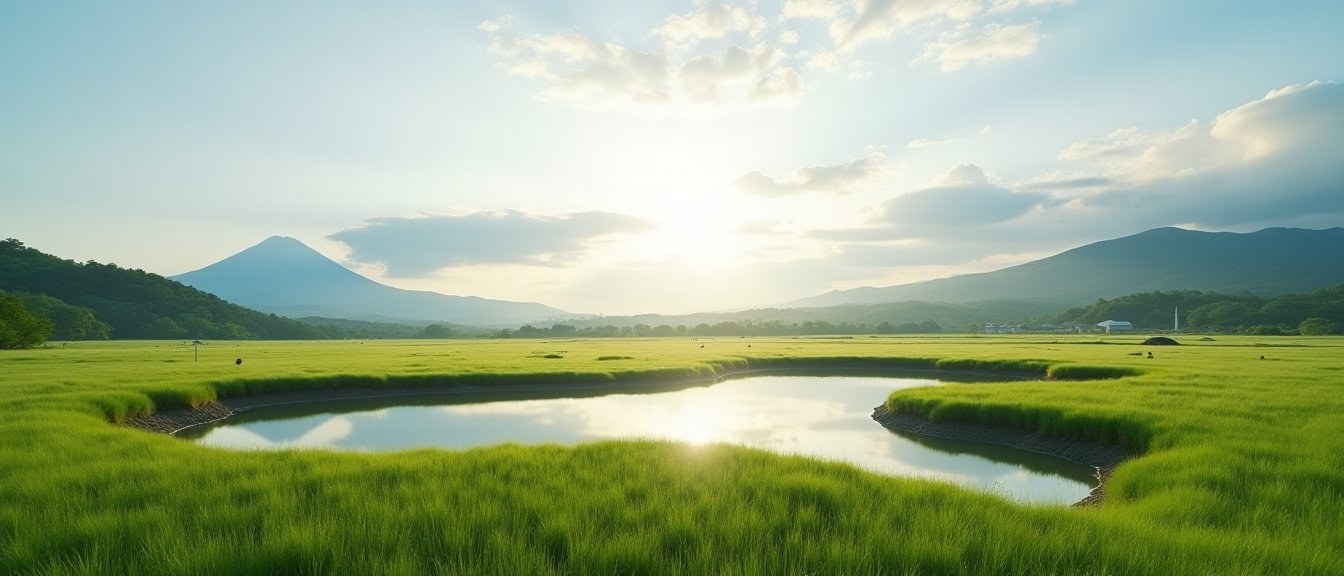
Kyushu’s rainy season — tsuyu — typically opens around June 7 and runs through roughly mid-July.
The Japan Meteorological Agency announces it within a 3-day window each year, but the actual feel arrives faster.
Humidity jumps, mountain forecasts turn hourly, and outdoor activities start cancelling 24 hours ahead rather than the morning of.
This guide is what to do with the narrow, beautiful window before that switch flips.
For a family with kids aged roughly 4–10, three or four clear days in late May to early June is enough for the experiences that get washed out the moment the season changes.
That means a real outdoor horse ride at Aso’s Kusasenri Grasslands, the open-air Takachiho Amaterasu Railway trolley over its iron bridge, and the Kuju Flower Park rose peak that lasts about ten days a year.
Plan the trip backwards from the JMA tsuyu announcement, not toward a fixed week.
If your dates are locked, build in rain backups — covered later in this piece.
Quick answer: Takachiho Gorge itself stays open through the rainy season — the paved rim walk works with ponchos in light rain, and only the famous rowboat suspends when the river rises. For a family in June, time your outdoor days (Aso horse riding, the trolley) to the JMA tsuyu forecast and keep indoor backups like Yokagura and Aso Farm Land on standby.
The clear-weather window: what actually depends on weather

Here is how each spot on this itinerary holds up as the weather turns, with the indoor swap to make on a wet morning:
| Spot | Weather dependency | Rain-day alternative |
|---|---|---|
| Aso horse riding (Kusasenri) | High — grasslands turn slick and rides cancel in meaningful rain (light drizzle sometimes still runs) | Aso Farm Land indoor dome |
| Takachiho Amaterasu Railway trolley | High — open-air; light rain is miserable for kids and it cancels on heavy rain or wind warnings | Takachiho Gorge rim walk + Yokagura |
| Takachiho Gorge walking path | Medium — paved and railed, fine in light rain with ponchos | Same path works; only the rowboat suspends when the river rises |
| Kuju Flower Park | Medium — functional in light rain, but photos and kid attention span both collapse | Aso Farm Land or Cuddly Dominion |
| Aso Cuddly Dominion | Low — most enclosures covered, dog show is indoor | Already an all-weather pick |
| Aso Farm Land | Low — large indoor dome and many covered areas | The genuine all-weather Aso backup |
The gorge rowboat is its own separate story — see our Takachiho without the boat family plan for the rain-season workaround.
Day 1: Aso — Kusasenri horses + Kuju Flower Park
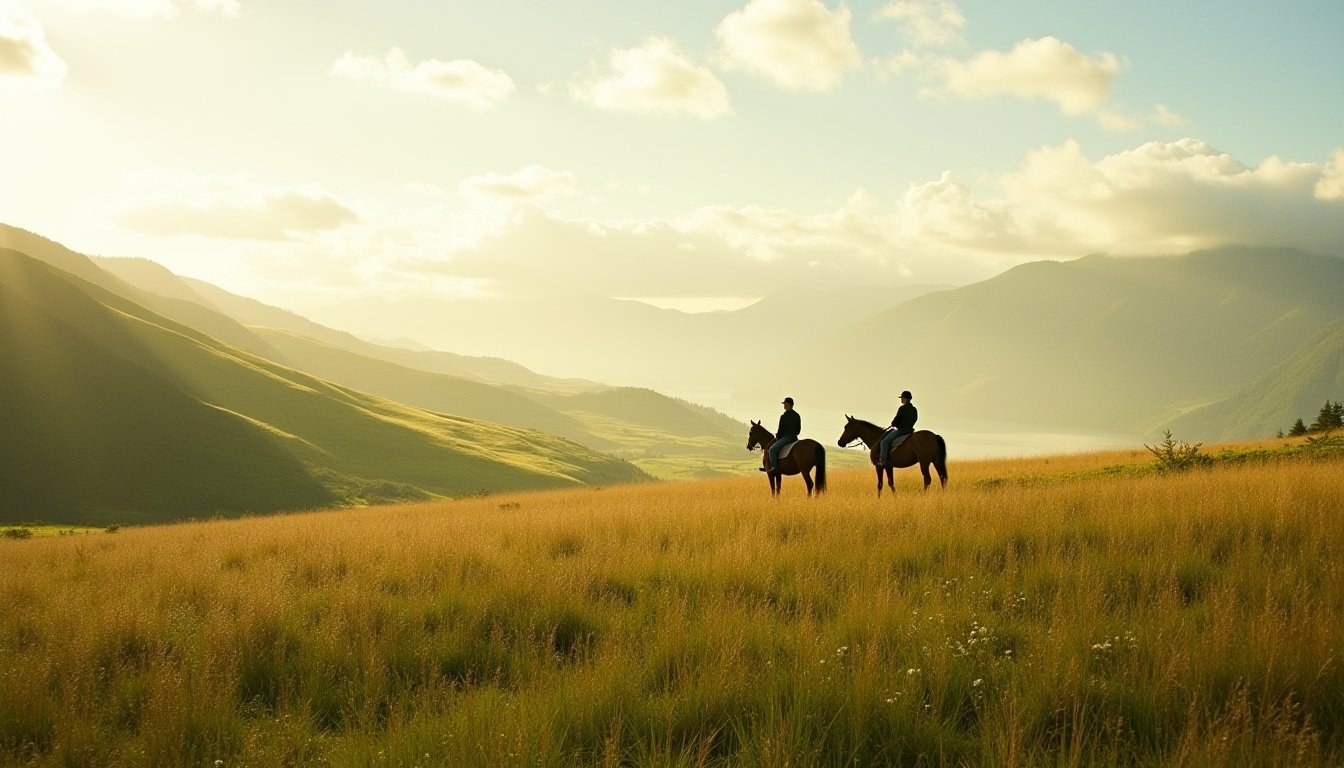
Drive up from Fukuoka or Kumamoto in the morning — 2.5 hours from Hakata, 90 minutes from Kumamoto Station.
Park at the Aso Volcano Museum lot; it sits right on the rim of the Kusasenri Grasslands.
The horse ride at Kusasenri
Two operators rotate on the grasslands. Both offer 5-minute lead-rides for small children (typically ages 3–7, weight under 30 kg) at around ¥1,500–2,000.
Older kids and adults can take a 25-minute Aso trail ride at around ¥6,000–8,000.
No reservation is needed in low season, but expect a 15–30 minute queue on weekends. Wear closed-toe shoes — sandals are turned away.
For the youngest kids, the experience is less about riding and more about meeting the horse.
A pony lead-ride lasts 5 minutes, but the kid will remember it. Bring a backup adult shirt — small children sometimes cry during the dismount, and you do not want that to be the photo you keep.
Lunch at the Volcano Museum
Akaushi (red beef) bowls are the local item, with decent kid food too (curry rice, udon).
It is a reasonable indoor space if a quick weather change blows through.
Afternoon: Kuju Flower Park
The June bloom rotation runs poppies through about June 5, then roses peaking around June 10–20, then lavender opening late June.
The roses are the standout if your trip lands right — a textured pink-and-cream patchwork roughly the size of a soccer field.
Two hours is plenty with kids; one hour if motivation is flagging.
Where to stay in Aso
Stay overnight in the Aso valley to keep Day 2 short.
Our Aso family accommodation guide covers the specific picks.
For a one-night transit stop, the Kamenoi Aso review is the easiest default.
Day 2: Aso → Takachiho — the trolley day
Drive 90 minutes south from Aso to Takachiho (Route 325 — mountain switchbacks, beautiful but slow with kids).
Aim to arrive at Takachiho Amaterasu Railway Station by 14:00 for the late-afternoon trolley.
The Amaterasu Railway trolley
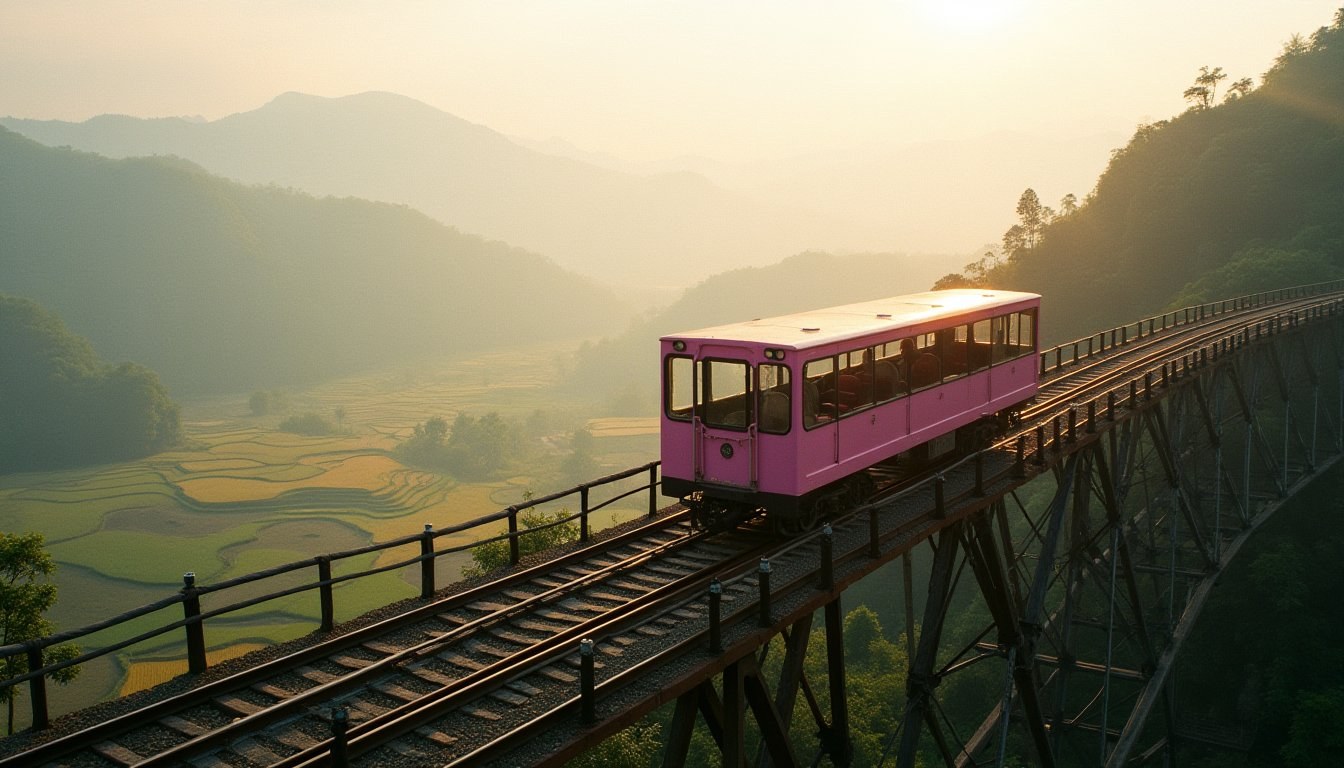
The Amaterasu Railway trolley (officially the Grand Super Cart) is the pink-roofed open-air cart that runs on the abandoned JR Takachiho Line.
The 30-minute ride passes through a tunnel lit with disco lights, then crawls onto the Takachiho Iron Bridge.
At 105 meters above the rice terraces, it was the tallest railway bridge in Japan when it was built.
The conductor stops the cart mid-bridge so families can blow bubbles and take photos.
For most 3–10 year-olds, this is the single most memorable thing in the whole town.
Tickets are sold same-day at the station — arrive 60 minutes early on weekends, because Saturday and Sunday departures sometimes cap out.
While ticketing is walk-up only, you can lock the rest of the day by pre-booking Takachiho and Miyazaki activities in advance.
Takachiho Gorge rim walk
After the trolley, walk the upper rim of Takachiho Gorge.
The paved path is stroller-friendly with stair sections near the viewpoints — a baby carrier works better than a stroller for kids under 2.
Allow 60–90 minutes for the full loop with school-aged kids.
Where to stay in Takachiho
Stay overnight in Takachiho. For dinner, ask the ryokan for a Yokagura-night meal plan.
Our Takachiho Yokagura family guide covers the 20:00 dance performance prep.
Day 3 (optional): Aso outdoor extras + the drive out
If you have a third clear day before driving home, two add-ons pay off in good weather:
- Aso Shrine and Monzen-machi shopping street. Light walking, ice cream stops, a few traditional kid-friendly shops. About 90 minutes.
- Aso Farm Land or Aso Cuddly Dominion. Half-day each. Pick one by kid age — Farm Land for 2–6 year-olds, Cuddly Dominion for 5–10 year-olds. The Cuddly Dominion family guide goes deeper.
Drive home via Kurokawa Onsen for a halfway lunch and an onsen-street walk.
It is about 4 hours total to Fukuoka from Takachiho with a 90-minute Kurokawa stop.
Tsuyu has started already — switch to backups
If you read this past June 7 and the rainy season is officially open, do not cancel. Re-shape instead:
- Replace Day 1 horse ride with Aso Farm Land — indoor dome, covered petting zoo, large play area. Works in any weather.
- Replace Day 2 trolley with the Takachiho Gorge walking path + Yokagura. The walking path tolerates light rain with ponchos, and Yokagura is indoor.
- If the rain is heavy, exit to Fukuoka and use our Fukuoka rainy day with kids backup list. teamLab, Marine World, Anpanman Museum, KidZania — none weather-dependent.
- If the rain is medium, Aso Cuddly Dominion is the underrated all-weather animal day. Most enclosures are covered.
Our Kyushu typhoon and rainy-season family guide covers the broader framework if your whole trip might land in the wet window.
How to read the weather forecast like a local
Japanese weather apps update mountain forecasts far more aggressively than coastal ones.
Aso and Takachiho often have hourly precipitation forecasts that swing wildly between morning and afternoon. Three practical rules:
- Check the 3-day forecast the night before. If the percentages climb every refresh, the day is going to be worse than first stated. If they drop, the rain often misses entirely.
- Plan the outdoor day for the morning slot, indoor for afternoon. Mountain Kyushu rain in June tends to build through the day. A 9:00–13:00 outdoor block + 14:00–17:00 indoor block survives most forecasts.
- The JMA tsuyu announcement is a useful reading. Posted at
jma.go.jpand widely covered. “Tsuyu-iri” (rainy season has begun) tells you the next 4–6 weeks tilt wet; “Tsuyu-ake” (end) tells you it just flipped. Plan against these announcements, not calendar dates.
What to pack for marginal-weather days
- Lightweight rain ponchos for everyone — about ¥200 each at any convenience store. Buy on arrival rather than packing from home.
- Change of socks per kid per day. Wet socks are the single most common reason a day ends early.
- Quick-dry shoes for parents. Saves the trip if a sudden shower catches you on a 90-minute gorge walk.
- One indoor backup per outdoor day. Pin it on Google Maps in advance — Aso Farm Land, Cuddly Dominion, Aso Milk Factory, etc. The 10-minute search for an indoor pivot in a downpour is the difference between a good day and a bad one.
Frequently asked questions
When does tsuyu actually start? JMA-declared northern Kyushu tsuyu has averaged June 4 (earliest) to June 14 (latest) over the past decade. Plan early-June trips with rain awareness; plan mid-May trips with confidence.
Is the Aso horse ride really safe for a 4-year-old? Yes — lead-rides have a guide walking next to the horse at all times, the horse moves at walking pace, and helmets are provided. The risk is closer to “kid gets startled and cries” than “kid falls off.”
Can we do this trip by train? Aso is reachable via the Aso Boy! sightseeing train from Kumamoto, but the grasslands and Takachiho both require a car or local bus from there. With kids, a rental car is significantly easier — book a Fukuoka rental car and see our Aso family drive itinerary.
 Not Driving? Private Driver to Takachiho
What about Kuju Flower Park in late June or July? Lavender opens late June. Once tsuyu is fully established the gardens become hit-or-miss — beautiful on a clear morning, washed out on a heavy day. Worth a same-week weather check rather than a fixed booking.
Final thought
These specific spots matter in this specific window because they share one trait: the wet version of the day does not work.
The trolley with kids in ponchos is no fun. The grassland horse ride in mud is unsafe. The rose field after two days of rain is brown.
The only fix is timing — and the late-May-to-early-June window is the last clean shot before tsuyu. Take it if you can. The indoor Kyushu month is still ahead.
Miyazaki: Myths & Coastlines Yufuin Private Stays
Not sure where to begin? This free guide helps you pick the right Kyushu trip for your family — from a Fukuoka family who actually lives here.
- ✅A simple “which trip suits us?” chooser — by days, ages & interests
- ✅Snapshots of all 7 prefectures — what’s actually worth it with kids
- ✅Instant PDF download — name your price (free), no spam
Onsen, rail, or a full itinerary? It points you to the right deep-dive guide.
Doing Kyushu by rail with little ones? This guide turns the timetable maze into a stroller-friendly plan — from a family that rides these lines for real.
- ✓The fun trains, ranked — Sonic, Yufuin no Mori, Aso Boy, Shinkansen with kids
- ✓Stroller & luggage flow — which cars, which doors, where the elevators are
- ✓Does the JR Pass pay off? — honest break-even math for family routes
Instant PDF · written by locals · stops the platform panic