
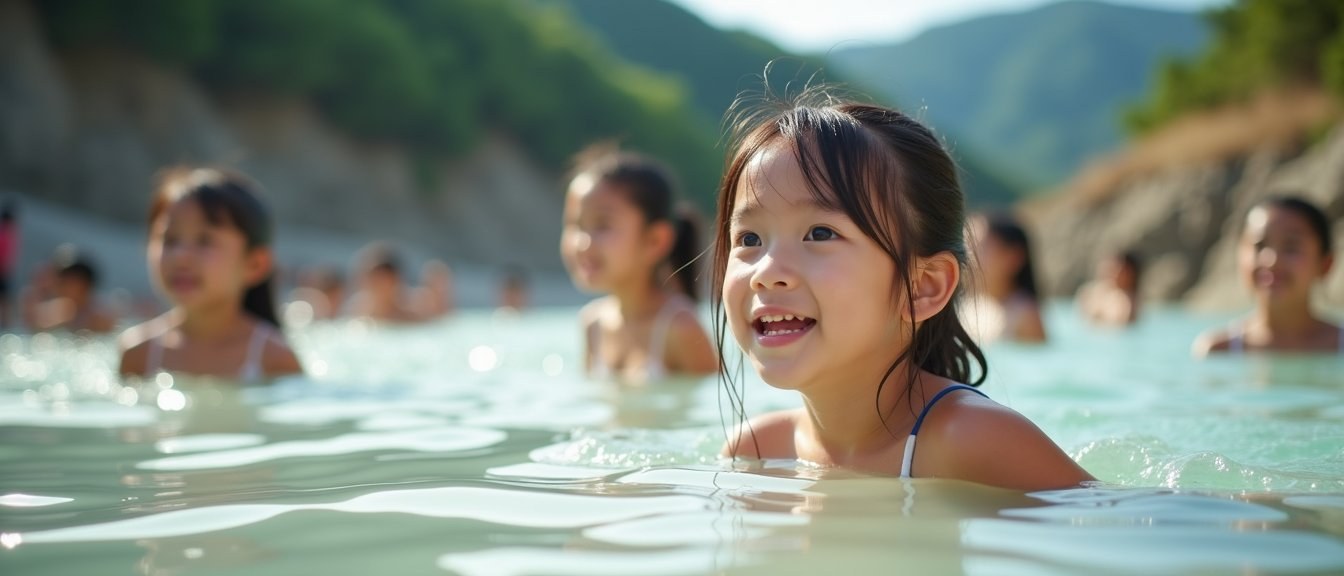
Beppu’s sand bath (sunaburo) is one of the most unusual hot-spring experiences in Japan. Instead of soaking in water, an attendant buries you up to the neck in hot, mineral-rich black sand warmed by underground geothermal steam.
It sounds intense, but it’s actually one of the gentler Beppu onsen rituals. With a little preparation, school-age kids can absolutely join in. And unlike a naked communal bath, the yukata makes it far less intimidating for shy 8-to-10 year olds.
This guide explains Beppu’s sand bath venues, current 2026 prices, the official age rules, what to wear, and the step-by-step flow. By the end you’ll know exactly whether to add a sand bath to your Beppu family day.
Planning the whole Beppu trip, not just the sand bath? This article zooms in on the sand bath specifically. For the full day-by-day plan, start with our complete Beppu with Kids family guide, then come back here for the venue details.
It also pairs well with the broader Kyushu onsen guide for families, which covers tattoo rules, baby etiquette, and private-bath alternatives across the region.
What Is a Sand Bath (Sunaburo)? A Quick Primer
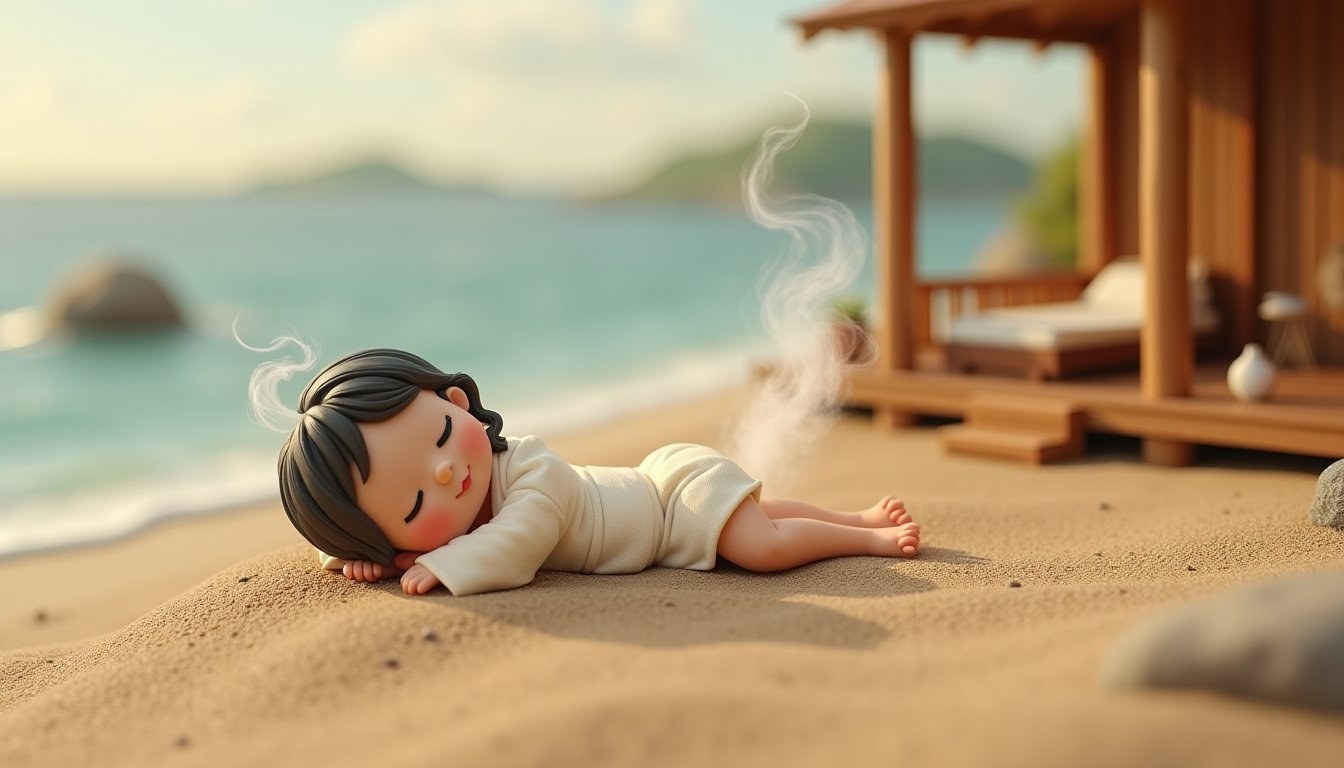
A sand bath is a traditional Japanese therapy unique to a handful of onsen towns. Hot spring water — or, at one Beppu venue, geothermal steam — heats a bed of fine, dark sand. Beppu’s tourism association puts the usable range at roughly 40-50°C (104-122°F), warm enough to sweat in but well short of sauna heat, and it differs from venue to venue.
You change into a light cotton yukata, lie down on the sand, and staff shovel warm sand over your body until only your head is exposed. You stay buried for roughly 10 to 15 minutes.
That’s the sweet spot for adults, and short enough that most kids who can sit through a regular onsen soak can handle it too.
Unlike a standard onsen where the heat comes from water, a sand bath applies even pressure plus warmth, which is said to boost circulation more than a regular bath. For families, two practical differences matter most:
- You stay clothed in a yukata, so it feels less exposing than a naked communal bath — useful if older kids are shy.
- It’s time-limited and sequential (sand → shower → hot spring soak), so it’s easier to pace with children than an open-ended onsen visit.
Beppu’s Sand Bath Venues: Takegawara vs Sand SPA
Beppu has two headline public sand baths, plus a third, quieter option that matters if your children are under six (we come back to it in the age section). The two main ones have very different vibes, and the right pick depends on your kids’ ages and your tolerance for queueing.
Takegawara Onsen (Beppu city center)
Takegawara is the historic one — a municipal bathhouse founded in 1879, with the present 1938 building and its sweeping karahafu gabled roof. Beppu City lists it as a 10-minute walk from JR Beppu Station.
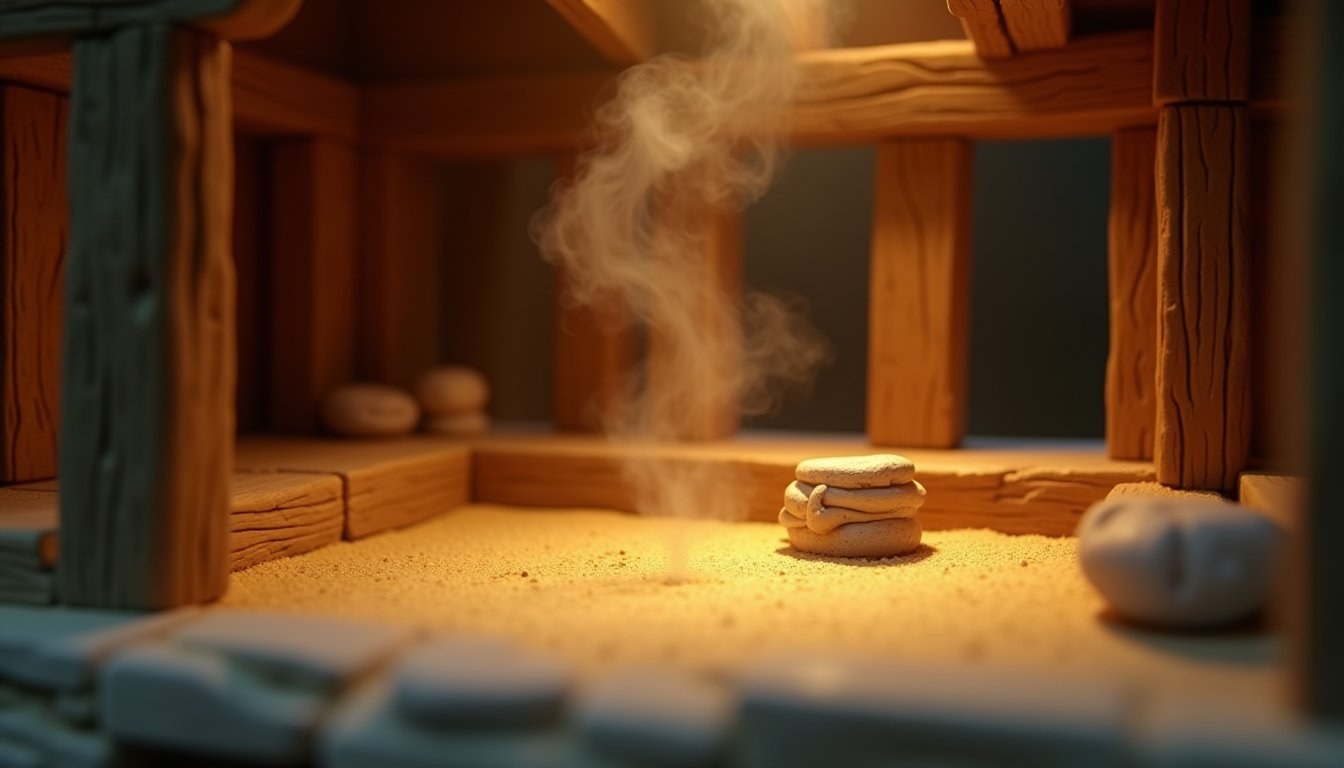
The sand bath here is indoors, in a dim, atmospheric hall that feels like stepping back a century. It takes only eight people at a time, and the city’s own page warns that you may be kept waiting while the sand is prepared or when it is busy — so budget for a queue at weekends and late morning.
- Best for: Kids old enough to wait patiently and enjoy the old-building atmosphere. The sand bath is age 6 and over only.
- Watch for: No reservations of any kind — Beppu City states that neither phone nor online booking is accepted for the municipal sand bath, so you turn up at the desk. There is no car park, and towels and toiletries are sold rather than included (Beppu City official page).
Beppu Beach Sand Bath “Sand SPA” (Shoningahama)
This is officially the Beppu Beach Sand Bath (別府海浜砂湯), and it reopened in 2025 under the name Sand SPA as part of the new TKP SHONIN PARK on Shoningahama, in northern Beppu. Access is easier than older guides suggest: about 4 minutes by train from Beppu Station to Beppu University Station, then a 3-minute walk — or drive, and use one of the 104 free parking spaces.
The bath looks straight out over Beppu Bay, so on calm days you hear the waves while you’re buried, and an attendant still covers you by hand with the traditional long-handled joren hoe. The rebuild added a sea-view grand bath, a free foot bath, a bar, ramps and barrier-free access, a nursing room and a baby changing bed, and signage in English, Korean and Chinese. Beppu’s tourism association also lists it as tattoo-friendly — which is why it is the easier of the two venues with children in tow.
- Best for: Families with kids aged 6 and over, first-time sand bathers, and anyone who would rather reserve a time slot than queue.
- Watch for: It closes on two irregular days a month, so check the dates before you travel. Rain is not a problem — the official site says it opens as usual on rainy days and only closes for severe weather such as a typhoon (Sand SPA official page).
One name to un-learn: Beppu’s beach sand bath is not called Saraku. Sunamushi Kaikan Saraku is a completely different sand bath in Ibusuki, Kagoshima — the other end of Kyushu, several hours away. If a blog or a map pin attaches that name to Beppu, it has confused two prefectures.
Quick comparison table
| Feature | Takegawara Onsen | Sand SPA (Beppu Beach Sand Bath) |
|---|---|---|
| Vibe | Historic, dim, indoor hall (1938 building) | Airy, coastal, rebuilt in 2025 |
| Access from Beppu Station | ~10 min walk | ~4 min by JR to Beppu University Stn, then 3 min walk |
| Stroller access | Limited (1938 building, no car park) | Barrier-free with ramps; 104 free parking spaces |
| English signage | Minimal | English, Korean and Chinese |
| Reservations | None accepted; walk-in only, 8 people at a time | Book a slot online; same-day possible but may involve a wait |
| Price (2026) | ¥1,500 (age 6+) | Adult ¥2,500 / child 6-12 ¥1,800 (sand bath + grand bath) |
| Best for | Kids 6+ who can wait | Kids 6+, first-timers, families who want a set time |
Once you’ve picked a venue, it’s worth locking in a nearby base — the hotels around Beppu Station and the Kamegawa beach area book up fast in peak season. Compare family-friendly Beppu hotels near both sand baths on Agoda →
Sand Bath Prices, Tickets, and Booking
The 2025 rebuild changed this, so ignore older guides quoting a flat ¥1,500 for both: the two venues are now priced quite differently, and only one of them takes bookings.
- Takegawara Onsen sand bath: ¥1,500 per person, age 6 and over (a ten-visit sand bath ticket is ¥13,500). The ordinary baths are a separate, much cheaper ticket — ¥300 for adults, ¥100 for children, free below school age.
- Sand SPA (Beppu Beach Sand Bath): ¥2,500 for adults and ¥1,800 for children aged 6-12, covering the sand bath and the grand bath. Grand bath only is ¥1,500 adult / ¥1,000 child 6-12. A yukata, bath towel and face towel are lent free.
- Children’s pricing: Sand SPA has a genuine child rate for ages 6-12; Takegawara charges the flat ¥1,500 whatever the age. Neither offers a lap-infant rate, because under-6s are not admitted to either sand bath at all.
Booking: Sand SPA asks you to reserve a slot in advance on its official site — same-day reservations are accepted, but you may have to wait. Takegawara accepts no reservations at all, by phone or online, so you go to the desk in person and take your turn.
Both venues take cards and cashless payment as well as cash. If you are walking in at Takegawara, arriving near opening or well before the 21:30 last entry gives you the best odds of a short queue.
Because the sand baths themselves can’t be pre-booked, families who want a guaranteed Oita experience often pair the walk-in sand bath with a reservable Beppu activity. Browse pre-bookable Beppu & Oita day-tours and onsen passes on Klook →
Is the Sand Bath Safe for Kids? (Age Limits and Physical Requirements)
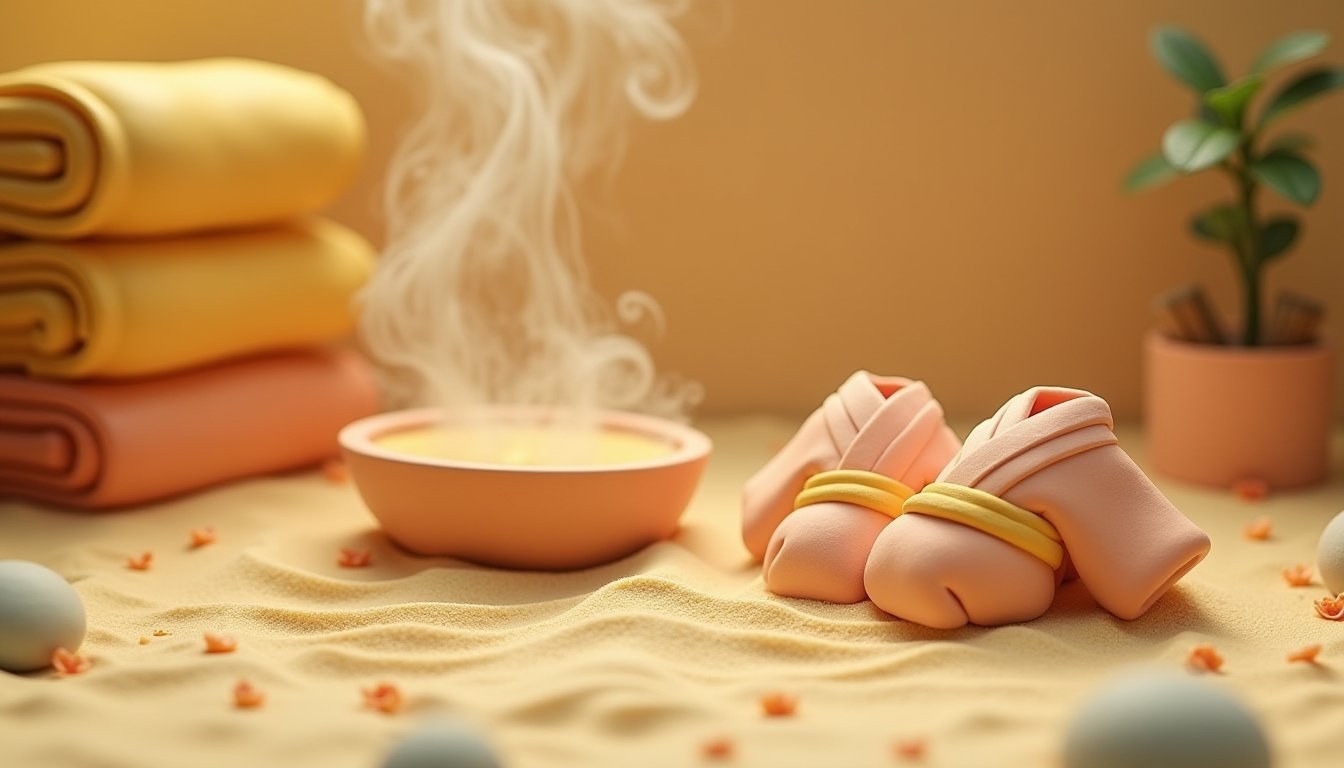
This is the question we get asked the most, and in Beppu it now has a published answer rather than a judgement call at the desk.
- Minimum age — Takegawara: Beppu City states the sand bath is available from age 6. There is no discretion below that.
- Minimum age — Sand SPA: the child rate runs from 6 to 12, and Beppu’s tourism association notes that pre-school children of 5 and under cannot use it.
- What that means in practice: if your child turns 6 before the trip, both venues are open to you. If not, neither is — pick the alternative below rather than turning up and being refused at the counter.
- Medical exclusions: Sand SPA’s published terms rule out anyone a doctor has told not to bathe, anyone unwell or pregnant, acute illness, serious heart disease, respiratory or kidney failure, bleeding disorders and skin conditions, anyone with a pacemaker or internal metalwork such as fracture-fixation bolts, and anyone who has been drinking.
- Heat tolerance: the sand is hot but not burning, and it is adjustable — if it feels too warm you wiggle a hand or foot free to let the heat escape, and staff will dig you out early if a child asks. That is a normal request, not a fuss. If your child happily sits in a 40°C onsen, they will be fine.
Under 6 and still set on a sand bath? Hyotan Onsen in Kannawa runs a self-service sand area: there is no attendant, so you cover each other, and you set the temperature by how deep you dig. Its published price list rents sand-bath yukata to children from age 0 (¥540, adults ¥840) on top of bathing admission of ¥1,160 for adults, ¥400 for ages 7-12 and ¥280 for ages 4-6, with under-3s free. There is no time limit in the sand.
For younger kids and babies, a private kashikiri onsen in Beppu is a much better match. You get the hot-spring experience at a temperature and duration you control, with no time pressure from other bathers.
If your trip dates are fixed and you want to lock in a ryokan or hotel with a bookable private family bath, the easiest way is to filter by “private onsen” on a hotel aggregator. Check Beppu hotels with private family baths on Agoda →
What to Wear and What to Bring for a Family Sand Bath Visit
Sand baths are a bit gear-heavy compared to a normal onsen. Here’s our family packing list, refined over two visits:
- Swimwear or underwear under the yukata: Both venues provide a cotton yukata. Most people wear nothing underneath (it’s cleaner), but modesty-conscious older kids can keep on underwear or a swimsuit. Avoid anything that will stain from the minerals.
- Hair tie or shower cap: Long hair gets sandy. Tie it up high or use a thin shower cap — Takegawara sells a hair cap at the desk for ¥50.
- Towels: the inclusions run opposite to what you might expect. Sand SPA lends the sand-bath yukata, a bath towel and a face towel free. Takegawara sells rather than lends — its own towel is ¥350, a bath towel ¥1,200, a shampoo and soap set ¥100, and the hairdryer and coin lockers are ¥100 each. Bring your own for Takegawara.
- Water bottle: Drink before and after. The sand bath dehydrates you fast.
- Flip-flops or slip-on shoes: Easier than laces when you’re shuttling between changing room and sand pavilion.
- Diapers and changing supplies: Bring your own. Sand SPA is listed with a baby changing bed; Takegawara is not, so plan changes around the visit there.
- Bags: Sand SPA takes larger bags at the front desk; Takegawara has ¥100 coin lockers.
Breastfeeding: Sand SPA has a dedicated nursing room — useful if a younger sibling is tagging along while an older child does the sand bath. Takegawara does not list one, though the women’s changing area is private enough for a quick feed.
If you plan to stay nearby, many family hotels in Beppu like Suginoi have proper nursing rooms and private family baths you can use before or after.
Suginoi in particular is a self-contained resort with a kids’ pool, buffet, and bay-view bath. It’s popular enough that summer and Golden Week dates routinely sell out two to three months ahead — if your trip lands in those windows, book early or you’ll be priced into the leftovers. Check Suginoi Hotel rates and availability on Agoda →
Step-by-Step: What Actually Happens During a Sand Bath
If you’ve never done it, here’s exactly what to expect from arrival to exit. Sand SPA puts the whole visit at about an hour; allow more at Takegawara if you have to queue.
- Reserve, or buy at the counter. At Sand SPA you book a slot on the official site first and check in at your reserved time; staff there work in English. At Takegawara you buy at the desk and wait your turn.
- Change into the yukata in the gendered locker room. Lock your clothes away. Bring only your face towel into the bath area.
- Walk to the sand pavilion and lie down. An attendant guides you to a dug-out spot and helps you lie flat. Then they shovel warm sand over your body — starting at the feet, ending at the shoulders. Your head stays out on a small wooden pillow.
- Stay buried for up to 15 minutes. That is the cap at Sand SPA. You’ll feel the weight first, then gradually the heat. If it gets too warm (especially for a child), free a hand or foot to let heat escape, or call a staff member over to dig you out early. This is normal and fine.
- Sit up, brush off the sand, and walk to the shower area. Rinse thoroughly — sand gets everywhere.
- Soak in the onsen bath to finish. At Sand SPA the sea-view grand bath is included in the sand bath ticket, has no time limit, and can only be used after the sand — not before. At Takegawara the ordinary baths are a separate ¥300 ticket. Either way this is a standard naked onsen, so plan accordingly with older kids and mixed-gender family groups.
- Dress, rehydrate, and leave. You’ll feel pleasantly tired, like after a warm bath plus light exercise.
Sand Bath Hours, Closures, and Weather Considerations
Both venues keep irregular hours, so always check the official site or call ahead — especially if the sand bath is the main reason for your Beppu detour.
- Takegawara Onsen: ordinary baths 6:30-22:30; the sand bath runs 8:00-22:30 with last entry at 21:30, and that cut-off can move earlier when it is busy. Closed the third Wednesday of each month — the following day if that Wednesday is a public holiday.
- Sand SPA (Beppu Beach Sand Bath): hours shift with the season — 8:00-20:00 in April and May (last entry 19:00), 8:00-22:00 from June to the end of October (last entry 21:00), and 8:00-18:00 from November to the end of March (last entry 17:30). Closed on two irregular days a month.
- Closures: searches like “beppu beach sand bath closed” usually turn up either one of those two monthly closure days or the venue’s pre-2025 schedule. Sand SPA states it operates as normal in rain and only closes for severe weather such as a typhoon, so drizzle is not a reason to cancel.
If you arrive to find it closed, don’t panic — Beppu has plenty of indoor backups. Our rainy day Beppu guide for families covers covered arcades, indoor hot springs, and kid-friendly museums that work as fallbacks.
Combining the Sand Bath with Other Beppu Family Activities
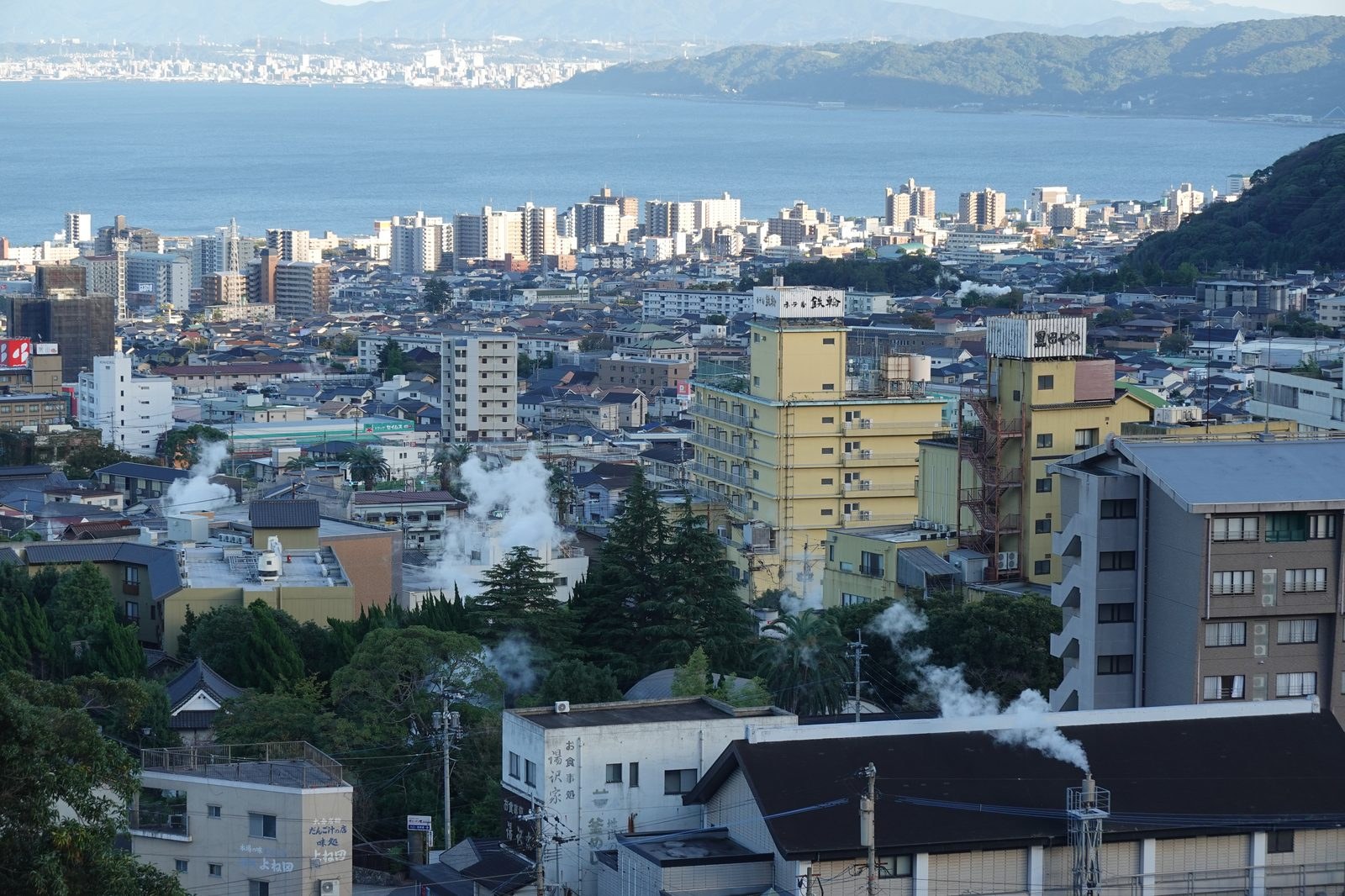
Sand SPA reckons the whole sequence — sand, shower, soak — at about an hour, which makes it an easy half-morning or half-afternoon block to slot into a wider itinerary. Here’s how our family typically chains it with other Beppu stops:
- Morning sand bath + Hells (Jigoku) tour: take the first Sand SPA slot at 8:00, be out by around 9:30, then drive the ~20 minutes to the Beppu Hells (Jigoku) circuit with kids. Lunch near Kannawa.
- Afternoon sand bath + Suginoi pool: Visit Takegawara at 14:00 (lighter crowd than morning), then head up the hill to Suginoi for the family pool and dinner buffet.
- Day-trip from Fukuoka: If you’re basing in Fukuoka, see our Beppu day trip from Fukuoka itinerary for the realistic 1-day pacing with sand bath included.
For families who want the experience without the queueing logistics, pre-booked Oita activity passes and small-group day tours can be a clean alternative. See bookable Beppu & Oita tours and onsen passes on Klook →
Beppu Sand Bath FAQ for Families
Is the Beppu sand bath worth the price for kids?
For kids aged 6 and up, yes — it’s a genuinely novel experience you can’t replicate at home or in most other onsen towns. Takegawara’s ¥1,500 or Sand SPA’s ¥1,800 child ticket is fair next to most paid attractions, and the Sand SPA price also buys the grand bath. Under-6s are not admitted at either venue, so book a private family onsen for them instead.
If you’re still on the fence, bundling the sand bath with a Klook-bookable Beppu activity gives you a guaranteed reservable backup if the walk-in queue is too long. Browse Beppu activity passes on Klook →
Can babies or toddlers join the sand bath?
Not at the two main venues. Takegawara is age 6 and over by rule, and Sand SPA does not admit pre-school children of 5 and under. The one exception is Hyotan Onsen’s self-service sand area, which rents sand-bath yukata from age 0 and lets you control depth and temperature yourself. Otherwise use a private kashikiri onsen.
Do we need to book ahead?
It depends on the venue. Sand SPA asks you to book a slot on its official site; same-day slots are accepted but can mean waiting. Takegawara takes no bookings at all, so arrive near opening or well before the 21:30 last entry.
Where should we stay near the Beppu sand baths?
Suginoi Hotel (resort feel, family pool, bay view) and the cluster of hotels around Beppu Station are the two easiest bases for families. Compare Beppu family hotels on Agoda →
Stay in the Loop: Kyushu Family Travel Newsletter
If you’d like more honest, kid-tested guides like this — itineraries, hotel reviews, and seasonal “what’s actually open with kids” updates — join our free Kyushu Family Travel newsletter. We send 1-2 emails a month, no spam, easy unsubscribe.
 Oita & Beppu: Hot Springs & Fun
Not sure where to begin? This free guide helps you pick the right Kyushu trip for your family — from a Fukuoka family who actually lives here.
- ✅A simple “which trip suits us?” chooser — by days, ages & interests
- ✅Snapshots of all 7 prefectures — what’s actually worth it with kids
- ✅Instant PDF download — name your price (free), no spam
Onsen, rail, or a full itinerary? It points you to the right deep-dive guide.
Onsen with kids is a maze of rules. This done-for-you playbook removes the guesswork — written by a Fukuoka family who soaks here year-round.
- ✓Family-bath & private (kashikiri) ryokan — baby-OK, tattoo-friendly, named picks
- ✓Babies & toddlers — water-temp tactics, cribs/baby-bath rentals, what to pack
- ✓Etiquette, made simple — exactly what to do so nobody stares
Instant PDF · written by locals · skip hours of forum-digging