
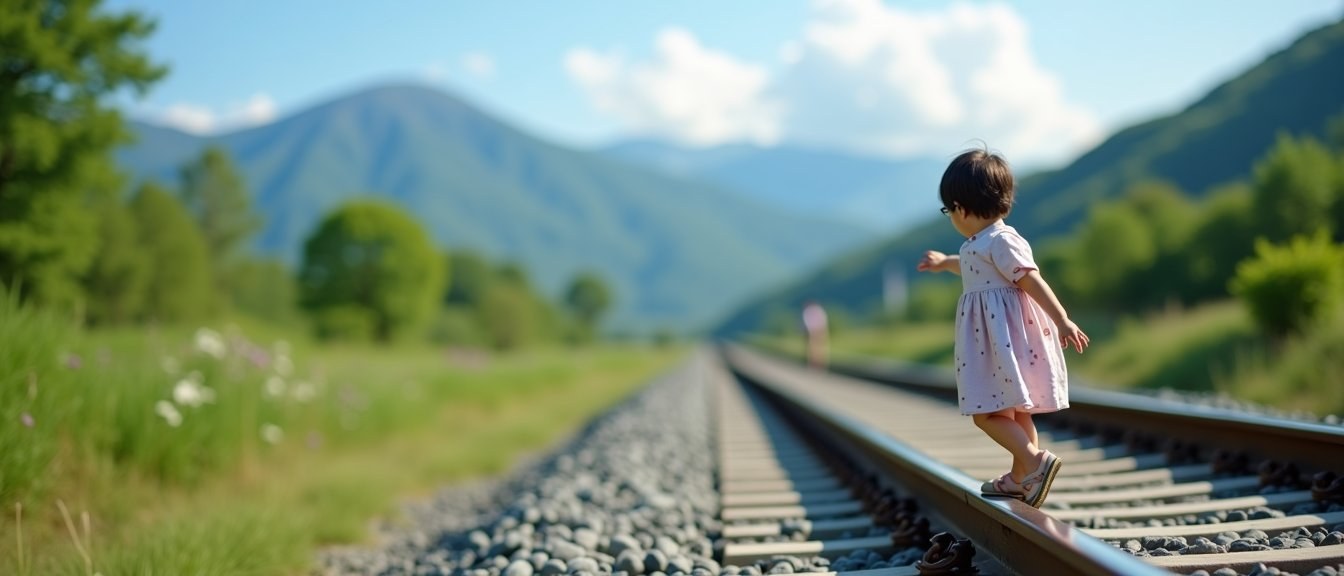
Planning a family trip to Japan can be daunting. Balancing the needs of active children with a wish to see cultural sights is hard work.
Kyushu, the southernmost of Japan’s four main islands, offers the perfect solution.
It is compact, incredibly welcoming to families, and easy to cross by rail.
This 7-day itinerary spends three nights in Fukuoka, two in Kumamoto, and two in Beppu — Japan’s onsen superstar. Every leg runs by train, including the high-speed Shinkansen.
No rental car, no driving on the left, no stress.
Quick Answer: The 7-Day Kyushu Family Route at a Glance
Spend Days 1-3 in Fukuoka (Hakata rooftop trains, Ohori Park, teamLab, Dazaifu), Days 4-5 in Kumamoto (castle, Kumamon Square, vintage trams), and Days 6-7 in Beppu and Oita (Hells, sand baths, African Safari Jungle Bus).
All three legs run on a JR Kyushu Rail Pass, so no car is needed.
| Days | Base | Nights | Family Highlights |
|---|---|---|---|
| Days 1-3 | Fukuoka | 3 | Hakata Station, Ohori Park, TeamLab, Dazaifu Shrine |
| Days 4-5 | Kumamoto | 2 | Kumamoto Castle, Kumamon Square, Suizenji Garden, vintage trams |
| Days 6-7 | Beppu & Oita | 2 | Jigoku Hells, sand baths, African Safari Jungle Bus |
This guide is built for “slow travel.” We have added buffer time for tantrums, naps, and playground breaks so parents can enjoy the trip as much as the little ones.
If you are just starting to plan, read our overview in Kyushu Family Itineraries: The Complete Guide to Planning Your 3 to 7-Day Trip to understand the lay of the land before diving into this specific route.
Why Train Travel in Kyushu is Perfect for Families
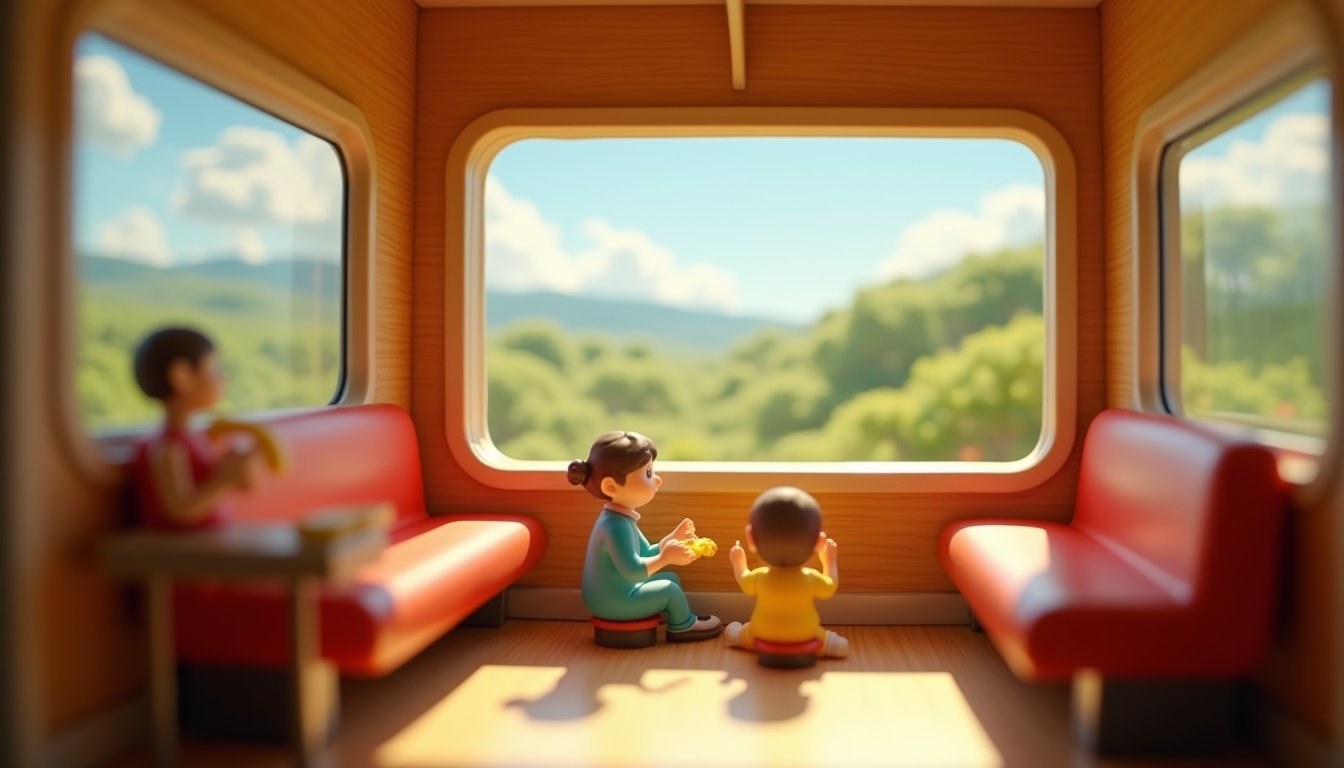
Before we look at the daily schedule, it is worth noting why we chose a train-based itinerary.
Kyushu is home to some of the most unique “design trains” in Japan.
From the wooden interiors of the “Yufuin no Mori” to the futuristic blue metallic “Sonic,” the trains here are attractions in their own right.
For parents, train travel offers freedom. You aren’t stuck behind a steering wheel.
You are free to hand out snacks, play card games, or walk to the restroom with your toddler.
Train Legs on This Route at a Glance
| Leg | Train | Journey Time | JR Kyushu Rail Pass |
|---|---|---|---|
| Fukuoka Airport → Hakata Station | Subway (Kuko Line) | About 5 minutes | Not covered |
| Hakata → Kumamoto | Kyushu Shinkansen | 30-40 minutes | Covered |
| Kumamoto → Beppu (via Kokura or Hakata) | Shinkansen + Sonic limited express | About 3 hours with transfer | Covered |
| Beppu → Hakata (departure day) | Sonic limited express | About 2 hours | Covered |
Most importantly, the JR Kyushu Rail Pass (available for 3, 5, or 7 days) is excellent value.
It covers the Shinkansen between Fukuoka and Kumamoto, plus the express trains to Oita and Beppu — exactly the route above.
Because Fukuoka, Kumamoto, and Beppu all sit in the northern half of the island, the cheaper Northern Kyushu version usually covers this loop. The All Kyushu version only pays off if you add Kagoshima or Miyazaki.
Check JR Kyushu Rail Pass prices and reserve yours on Klook before you fly — ordering ahead is cheaper than buying at the station and saves queueing on arrival day.
Navigating the stations is generally straightforward, but there are nuances when traveling with strollers and luggage.
For a deep dive into ticket machines, seat reservations, and platform safety, we recommend JR Trains in Fukuoka with Children: Seats, Tickets, and Family Travel Tips. It covers the logistics that keep transit days smooth.
Days 1-3: Fukuoka – The Gateway to Kyushu

Your journey begins in Fukuoka, the largest city in Kyushu and the main entry point for international flights.
Fukuoka is often cited as the most livable city in Japan.
For families, the airport, main station (Hakata), and shopping districts all sit within a 15-minute subway ride of each other.
Day 1: Arrival and Settling In
Most families arrive via Fukuoka Airport. Unlike Tokyo, the transfer is tiny — you can be at your Hakata hotel in under 15 minutes.
See Getting from Fukuoka Airport to Hakata and Tenjin with Kids: The Complete Family Guide for step-by-step directions through the terminals with luggage and strollers.
Landing with kids is much calmer when your phone works at the gate.
Sort a Japan eSIM or pocket Wi-Fi on Klook before departure and skip the airport counter queue.
Spend your first afternoon exploring the Hakata Station area.
The building itself, JR Hakata City, is a huge complex with a rooftop garden (Tsubame-no-Mori Hiroba).
The rooftop has a mini-train for kids to ride and a deck for watching real trains arrive.
It’s a low-stress way to let the kids burn off energy after a flight while you get your bearings.
Where to stay: base yourself near Hakata or Tenjin Station for elevator access and easy Shinkansen connections.
Compare family rooms in Hakata on Agoda — filter for “free cancellation” so plans stay flexible.
Day 2: Parks, Play, and Ramen
On your first full day, focus on the city’s green spaces.
Ohori Park is the “Central Park” of Fukuoka — completely flat and paved, so it is ideal for strollers.
You can rent swan boats, visit the playground, or simply walk around the large pond.
For lunch, you cannot visit Fukuoka without trying Tonkotsu (pork bone) ramen.
Some shops are cramped and counter-only, but many major chains have table seating and kid-sized bowls.
In the afternoon, head to the seaside Momochi area for Fukuoka Tower, or visit TeamLab Forest for an immersive digital art experience kids adore.
Skip the ticket line — book teamLab Forest tickets on Klook, where timed-entry passes save you queueing with restless toddlers.
For a full list of the best spots to fill your schedule, see Best Things to Do in Fukuoka with Kids: Top Attractions & Playgrounds.
If rain forces a rethink, the city guide in The Ultimate Family-Friendly Guide to Fukuoka with Kids lists indoor swaps such as Marine World and the science museum.
Day 3: A Cultural Side Trip to Dazaifu
Before leaving Fukuoka, take a short train ride (about 30 minutes) to Dazaifu Tenmangu Shrine.
This is one of the most important shrines in Japan, dedicated to the deity of learning.
Temples can bore young children, but the approach to Dazaifu is lined with shops selling Umegae Mochi (grilled rice cakes) and souvenirs.
That means plenty of distractions for small visitors.
There is also a small amusement park, Dazaifu Yuenchi, right next to the shrine.
Its retro rides suit smaller children and make a perfect bribe for good behavior during the sightseeing.
 Kid-Friendly Onsen Stays in Kyushu
Days 4-5: Kumamoto – Castles and Bears
On the morning of Day 4, board the Shinkansen (Bullet Train) from Hakata Station to Kumamoto.
This is a highlight for any child obsessed with transportation.
The Kyushu Shinkansen is spacious and fast — the journey takes only 30 to 40 minutes, barely enough time to finish a bento box!
Day 4: The Fortress and the Bear
Kumamoto is dominated by Kumamoto Castle, one of Japan’s premier castles.
Although damaged in the 2016 earthquake, the restoration work is impressive.
The main keep has been fully restored with elevators, making it surprisingly accessible for families.
The surrounding park offers plenty of space for kids to run around.
Just below the castle is “Sakura-no-baba Josaien,” a recreated historical town filled with food stalls — a great spot for lunch.
Afterward, head to Kumamon Square to meet Kumamon, the rosy-cheeked black bear mascot and global superstar.
Check the schedule in advance, as he performs on stage at set times. Entry to the square itself is free.
Day trips to Mount Aso, dolphin cruises, and castle-town tours all sell out in peak season.
Browse Kumamoto tours and tickets on Klook once your dates are fixed.
Where to stay: hotels around Kumamoto Station or the Shimotori arcade put the castle and tram lines within easy reach.
See family-friendly Kumamoto hotels on Agoda to lock in a central two-night base.
Day 5: Gardens and Trams
Kumamoto has a fantastic vintage tram network that crisscrosses the city.
Kids usually love the novelty of riding the streetcars.
Take the tram to Suizenji Jojuen, a magnificent traditional landscape garden.
It features a miniature Mt. Fuji and ponds full of koi fish that children enjoy watching.
If your family is feeling adventurous, Kumamoto is the gateway to Mount Aso, an active volcano.
Reaching the crater needs more travel time, so for a relaxed 7-day trip we stick to the city center.
If your trip falls in July or August, look up local summer evening hanabi celebrations near your dates — Kumamoto often hosts riverside displays that feel magical for kids.
For more on navigating this region, read The Ultimate Guide to Kumamoto with Kids: Nature, Volcanoes & History.
Days 6-7: Beppu & Oita – Steam, Sand, and Safaris
From Kumamoto, you traverse the island east to Oita Prefecture.
The most comfortable train route is the Shinkansen back to Kokura or Hakata, then the “Sonic” limited express.
The Sonic is a blue metallic train that tilts around curves while hugging the coastline. The ocean views are spectacular.
Beppu is the onsen superstar of Japan: the town sits on thousands of hot-spring vents and pumps out more thermal water than any other resort in the country.
Steam drifting from rooftops and street-corner drains is the first thing kids notice as you pull into Beppu Station.
If those ocean glimpses leave the kids itching for sand and water, pair this stretch with a half-day detour to one of the calm, shallow swimming bays scattered around the region before you head home.
Why Beppu Is Japan’s Onsen Superstar (and Why Kids Love It)
Plenty of Japanese towns have hot springs, but Beppu plays in a different league. It has more than 2,000 registered hot-spring sources and the largest volume of hot water of any onsen resort in Japan.
For families, that scale turns into variety you will not find elsewhere in one small town:
- Beppu Hatto (eight onsen districts): each area has its own character, from the steamy Kannawa lanes to the beachfront sand baths.
- The seven Hells: colorful boiling ponds you look at rather than bathe in — a perfect first onsen experience for toddlers.
- Jigoku-mushi steam cooking: in Kannawa, kids can drop eggs, corn, and vegetables into natural steam ovens and eat lunch they “cooked” themselves.
- Sand baths: historic Takegawara Onsen and the seaside baths bury you in warm volcanic sand, a gentle option for kids wary of hot water.
Beppu Station sits about 2 hours from Hakata on the Sonic, and local buses run from the station up to Kannawa in roughly 20 minutes. Staying near Kannawa puts the Hells and steam kitchens within walking distance.
For a neighborhood-by-neighborhood breakdown, read Where to Stay in Beppu with Kids, then check Kannawa ryokan availability on Agoda for your two nights.
Day 6: The Hells of Beppu — The Town’s Star Attraction
Beppu is famous for its “Jigoku” (Hells) — hot springs that are for viewing rather than bathing.
The “Hells Tour” is a classic tourist route linking the main sites in the Kannawa district.
You can see ponds of boiling blue water, bubbling red mud, and even crocodiles bred in the warm waters.
It is a geology lesson for older kids and a visual spectacle for younger ones.
Reserve a Beppu Hells Tour pass on Klook to skip multiple ticket counters and keep tired little legs moving between the seven sites.
In the afternoon, try a family-friendly onsen. Beppu offers sand baths where you are buried in warm volcanic sand — surprisingly relaxing.
You can also find private family baths (kashikiriburo) where you can bathe together without worrying about strangers.
Sand baths, steam-cooking workshops, and Michelin-listed day-trip bathhouses can all be pre-booked.
See Beppu and Oita onsen experiences on Klook to compare options for your afternoon.
Where to stay: a ryokan or hotel with a private onsen makes Beppu unforgettable for families.
Compare Beppu onsen stays on Agoda and book early — the best family rooms sell out fast.
Day 7: African Safari and Departure
For the grand finale, take a bus from Beppu Station to the African Safari, widely considered one of the best zoos in Japan for families.
The highlight is the “Jungle Bus,” a caged vehicle that drives through the animal enclosures.
Lions, bears, and giraffes come right up to be fed with tongs through the mesh.
It is a thrilling, safe, and memorable experience for children.
Book the African Safari Jungle Bus on Klook — seats are limited and securing them in advance guarantees the kids their face-to-face animal moment.
If your children prefer characters to carnivores, swap in Sanrio Harmony Land instead.
Grab Harmony Land passports on Klook for a shorter, gentler final day.
Depending on your flight, take the Sonic back to Hakata Station (about 2 hours) for a Fukuoka departure, or fly out of Oita Airport if you have a connection.
For a deeper look at the area, including Sanrio Harmony Land, read The Ultimate Guide to Oita with Kids: Hot Springs, Sanrio Characters, and Safari Adventures.
Practical Tips for Parents on this Route
Budget Snapshot: Typical Ticket Prices and Opening Hours
Use these approximate figures to budget the week. Prices and hours change often, so confirm on official sites or at booking.
| Item | Approx. Price (Adult / Child) | Typical Hours |
|---|---|---|
| JR Northern Kyushu Rail Pass (3-day / 5-day) | About ¥12,000 / ¥15,000 adult; children roughly half | — |
| JR All Kyushu Rail Pass (3 / 5 / 7-day) | About ¥20,000 / ¥22,500 / ¥25,000 adult; children roughly half | — |
| Kumamoto Castle | About ¥800 / ¥300 | 9:00-17:00 (last entry 16:30) |
| Kumamon Square | Free | Daytime; stage shows at set times |
| Beppu Hells combined ticket (7 sites) | About ¥2,400 / ¥1,000 | 8:00-17:00 daily |
| Beppu sand bath | Roughly ¥1,500 per person | Daytime; varies by bathhouse |
| African Safari (Jungle Bus extra) | About ¥2,600 / ¥1,500 admission | Around 9:00-17:00; shorter in winter |
Luggage Logistics
Trains are convenient, but hauling large suitcases and a stroller through ticket gates is not. Two services make it painless:
- Takkyubin (Luggage Delivery): Japan’s luggage forwarding service. Send your large bags from your Fukuoka hotel straight to Beppu, keeping only a small overnight bag for the Kumamoto leg.
- Coin Lockers: Every major station (Hakata, Kumamoto, Beppu) has them. If you arrive before check-in, stash your bags and explore hands-free.
Food on the Go: The “Ekiben”
One of the joys of Japanese train travel is the Ekiben (station bento).
At Hakata and Kumamoto stations, whole shops are dedicated to these lunch boxes.
- Tip: Let your kids choose their own bento. Many come in containers shaped like Bullet Trains or Hello Kitty — a great souvenir after the food is gone.
Strollers vs. Carriers
Fukuoka and Kumamoto are generally stroller-friendly, with elevators at all stations.
Beppu, however, is hillier and some older “Hells” have stairs.
- Recommendation: Bring a lightweight, foldable stroller for the cities. For a baby, a carrier is essential for crowded parts of Beppu or hiking Kumamoto Castle’s outer walls.
Booking Seats
Traveling with a large stroller that doesn’t fold well? Reserve the back row of seats in the train car.
The space behind the last row is designated for oversized luggage.
- Free reservations: With a JR Pass, seat reservations cost nothing. Visit the ticket office (“Midori no Madoguchi”) as soon as you arrive to book seats for the whole week.
Kyushu 7-Day Family Itinerary FAQs
Is 7 days enough for Fukuoka, Kumamoto, and Beppu?
Yes. With three nights in Fukuoka, two in Kumamoto, and two in Beppu, you move bases only twice and every transfer is under three hours.
That leaves whole afternoons free for parks, naps, and playgrounds rather than sitting on trains.
Do we need a JR Kyushu Rail Pass for this route?
For this exact loop it usually pays off. The pass covers the Hakata-Kumamoto Shinkansen, the Sonic to Beppu, and the return to Hakata.
Seat reservations are free with it. Compare the Northern Kyushu and All Kyushu versions against your dates before ordering.
How long does the train take from Kumamoto to Beppu?
Allow about three hours door to door. You ride the Kyushu Shinkansen north to Kokura or Hakata, then change to the Sonic limited express down the coast to Beppu.
Reserve seats together so the family is not split across carriages.
Why is Beppu called Japan’s onsen superstar?
Beppu has more than 2,000 hot-spring sources and the largest hot-water output of any Japanese onsen resort.
It packs eight onsen districts, the seven Hells, sand baths, and steam cooking into one walkable town — ideal for a two-night family stop.
Where should families stay in Beppu?
Beppu suits every budget. Business hotels beside Beppu Station are cheap and walkable, hillside resorts add ocean views and a five-star feel, and Kannawa ryokan put you next to the Hells.
Whichever tier you pick, filter for a private family bath (kashikiriburo).
Is Beppu suitable for strollers and toddlers?
Partly. The Hells are mostly paved but the town is hilly, and a few older sites still have steps.
Bring a carrier for the Kannawa district, keep the stroller for Fukuoka and Kumamoto, and use hotel shuttles or buses on the steeper stretches.
Related Guides
- Best Things to Do in Fukuoka with Kids: Top Attractions & Playgrounds
- Getting from Fukuoka Airport to Hakata and Tenjin with Kids: The Complete Family Guide
- The Ultimate Family-Friendly Guide to Fukuoka with Kids
- The Ultimate Guide to Kumamoto with Kids: Nature, Volcanoes & History
- Where to Stay in Beppu with Kids: A Family Guide to Oita’s Steam-City Hot Springs
- The Ultimate Guide to Oita with Kids: Hot Springs, Sanrio Characters, and Safari Adventures
- JR Trains in Fukuoka with Children: Seats, Tickets, and Family Travel Tips
 Top Things to Do in Fukuoka
 Instant confirmation for most tickets
Not sure where to begin? This free guide helps you pick the right Kyushu trip for your family — from a Fukuoka family who actually lives here.
- ✅A simple “which trip suits us?” chooser — by days, ages & interests
- ✅Snapshots of all 7 prefectures — what’s actually worth it with kids
- ✅Instant PDF download — name your price (free), no spam
Onsen, rail, or a full itinerary? It points you to the right deep-dive guide.
Onsen with kids is a maze of rules. This done-for-you playbook removes the guesswork — written by a Fukuoka family who soaks here year-round.
- ✓Family-bath & private (kashikiri) ryokan — baby-OK, tattoo-friendly, named picks
- ✓Babies & toddlers — water-temp tactics, cribs/baby-bath rentals, what to pack
- ✓Etiquette, made simple — exactly what to do so nobody stares
Instant PDF · written by locals · skip hours of forum-digging