
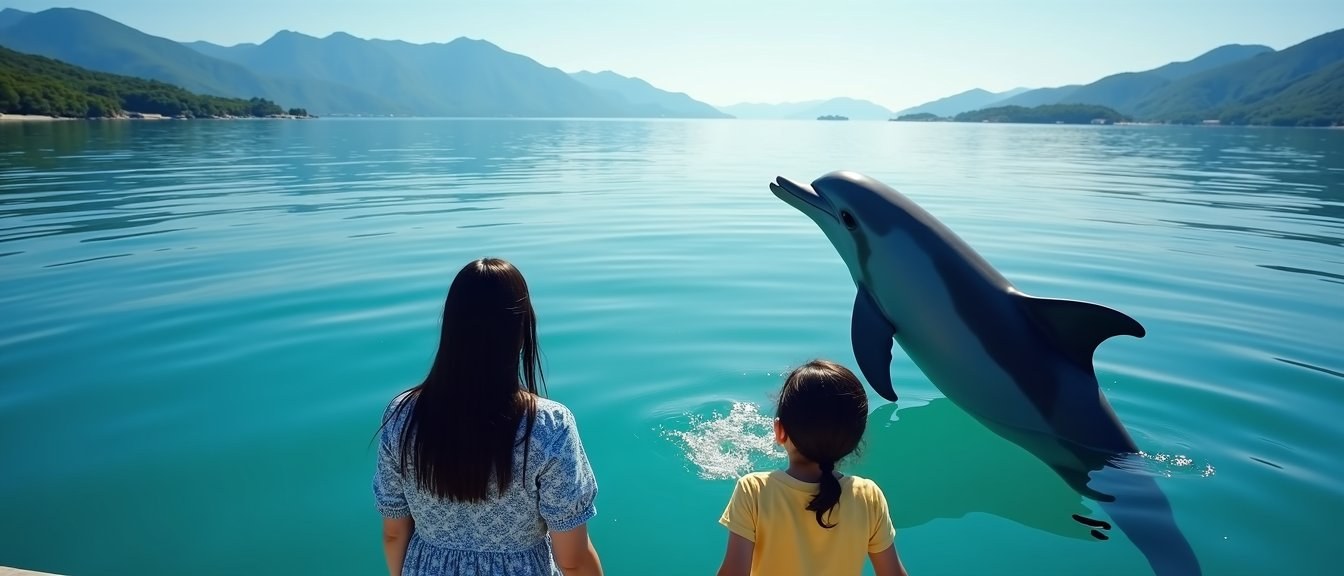
For families traveling through Kyushu, the promise of seeing wild dolphins is often a highlight of the itinerary.
In the beautiful Amakusa region of Kumamoto Prefecture, around 200 wild Indo-Pacific bottlenose dolphins live in the narrow straits all year round.
The encounter rate is an astounding 98%, making it one of the most reliable places in the world to see these creatures in their natural habitat.
However, for parents traveling with infants, toddlers, or young children prone to motion sickness, the excitement is often mixed with anxiety.
Is the boat ride too rough? Do they have life jackets for babies? What happens if my child needs to use the restroom?
In this guide, we break down everything you need to know about the Amakusa dolphin watching experience, so you can decide if it is the right activity for your family.
The Amakusa Experience: What to Expect
Unlike an aquarium show, this is a raw encounter with nature. The dolphins live in the Hayasaki Strait, where the currents are strong and the fish are plentiful.
Because they are wild, they are not trained to jump for food. Still, they are naturally curious and often swim alongside the boats, sometimes leaping out of the water simply to play.
The experience usually lasts about one hour. It typically takes 10 to 20 minutes to reach the dolphin point, then 30 to 40 minutes of viewing time, and finally the return trip to port.
If you are planning a broader trip, it helps to understand where Amakusa fits into your schedule.
For a full overview of the prefecture, we highly recommend reading The Ultimate Guide to Kumamoto with Kids: Nature, Volcanoes & History, which covers how to balance coastal trips like this with inland adventures.
Is the Boat Ride Safe for Babies?
This is the most common question we receive at Little Kyushu Adventures.
The short answer is yes, it is generally safe. But your comfort level will depend on the operator you choose and the weather conditions on the day.
1. Choosing the Right Boat Class
There are generally two types of boats available for dolphin watching in Amakusa. The table below makes the trade-off easy to see at a glance:
| Boat type | Capacity | Ride & comfort | Best for |
|---|---|---|---|
| Small fishing cruisers | 10–20 people | Faster and closer to the water; rocks significantly more, little shelter from spray or wind | Older kids (ages 5+) |
| Large pleasure boats | 50+ people | Much more stable; indoor air-conditioned seating, often proper onboard restrooms | Babies, toddlers & seasick-prone kids |
Recommendation for babies: If you are traveling with a baby under 2 years old, we strongly recommend booking a larger vessel.
The stability makes it easier to nurse or bottle-feed, and you have an escape route to an air-conditioned cabin if the baby gets overwhelmed by the sun or noise.
Larger boats are popular and often sell out on weekends and holidays, so it is worth securing your seats early. Check Amakusa dolphin watching tour availability and prices on Klook.
2. Life Jackets for Infants
Japanese maritime law requires all passengers to wear life jackets. Most major operators in Amakusa carry specific life jackets for children.
However, “infant” sizes (for babies under 10kg) can sometimes be bulky and uncomfortable for a baby who is not used to them.
- Tip: If you are baby-wearing, you usually cannot wear the carrier under the life jacket properly. You may be asked to hold the baby while you wear your jacket, or put the jacket over the carrier (which can be awkward). Check with the staff before boarding about the best way to secure your infant.
3. Noise Levels
The engines can be loud, especially on the smaller vessels. When the dolphins are spotted, multiple boats often converge on the same area.
The combination of engine noise, wind, and excited shouting from other tourists can be overstimulating for some toddlers. A pair of baby noise-canceling headphones is a great “hack” to keep your little one calm.
Dealing with Seasickness in Kids
The Hayasaki Strait is where the Ariake Sea meets the open ocean currents. While it is generally calmer than the open Pacific, there is often a swell.
Children who are perfectly fine in cars can still get seasick on boats, so a little preparation goes a long way.
Prevention Tips:
- Watch the Horizon: Encourage your children to look at the mountains in the distance rather than the water swirling immediately next to the boat.
- Fresh Air: If you are on a larger boat, stay on the deck. The fresh breeze helps regulate nausea better than the stuffy indoor cabin.
- Positioning: The back of the boat (stern) moves less than the front (bow). Try to secure seats near the rear and center of the vessel for the smoothest ride.
- Medication: Japanese drugstores sell excellent children’s motion sickness medicine (look for Kodomo no Yo-dome). It usually comes in chewable, grape-flavored tablets. Take this 30 minutes before boarding; it is too late once the nausea starts.
Logistics: Getting to Amakusa
Amakusa is a series of islands connected by five beautiful bridges. It sits roughly 90 minutes to 2 hours by car from Kumamoto City.
While there are buses, traveling with small children in this region is significantly easier with a private vehicle. The coastal drive is scenic, but it can be winding.
For help planning your route across the island, refer to our Kyushu Family Itineraries: The Complete Guide to Planning Your 3 to 7-Day Trip.
Many families pair the dolphins with a day in Kumamoto City on the way in or out. If you do, book your Kumamoto Castle tickets in advance on Klook to skip the queue with tired little ones.
Parking and Facilities
The main dolphin watching centers (such as the one at Itsuwa) have ample free parking. The reception centers usually function as Michi-no-Eki (Roadside Stations), meaning they are equipped with:
- Clean public restrooms (usually with a diaper changing table).
- Souvenir shops selling dolphin-themed toys.
- Restaurants or stalls selling soft-serve ice cream and grilled seafood.
What to Bring: A Packing List
When you are out on the water, you cannot run back to the car for supplies. Here is a checklist for parents:
- Sun Protection: The reflection of the sun off the water is intense. Apply high-SPF sunscreen on kids even on cloudy days, and bring hats with chin straps (so they don’t blow away).
- Layers: Even in summer, the wind on a moving boat can be chilly. Bring a light windbreaker for your child.
- Hydration: Bring water or barley tea. The salt air can be dehydrating.
- Plastic Bag: Just in case of seasickness, have a sturdy plastic bag and wet wipes ready in your pocket.
- Baby Carrier: Strollers are generally not allowed on the boats (or must be folded and left at the port). You will need to hold your baby or use a carrier.
Extending Your Trip: Where to Go Next?
After the dolphin watching, your kids might be tired. Amakusa has beautiful beaches, but if you are heading back toward the mainland, it is worth planning where to stay.
Amakusa itself has family-friendly seaside hotels and onsen ryokan with ocean views, many within easy reach of the dolphin ports. Compare family-friendly Amakusa hotels and prices on Agoda.
If you are looking for a unique place to stay that kids will absolutely love, consider driving toward the Aso region. It is a bit of a drive, but the dome houses are unforgettable.
You can read our full review here: Aso Farm Land Guide: The Ultimate Family Stay in Kumamoto’s Dome Hotels.
Alternatively, if you prefer a nature experience that involves less swaying on the sea and more rowing on calm water, you might enjoy the famous gorge in the neighboring prefecture.
Check out our guide on the Takachiho Gorge Day Trip from Kumamoto with Kids: Complete Family Guide.
Frequently Asked Questions
What is the best age for dolphin watching in Amakusa?
All ages are welcome, but children aged 4 and older tend to enjoy it most. Babies and toddlers are safe when you choose the larger, more stable boats.
How likely are we to actually see dolphins?
Operators in Amakusa report an encounter rate of around 98%, one of the highest in the world. Sightings are never fully guaranteed in the wild, but morning tours on calm seas give you the best odds.
Do we need to book in advance?
For weekends, holidays, and the larger family-friendly boats, yes. Booking online lets you compare boat sizes and lock in seats before they sell out.
Summary for Parents
- Age Suitability: All ages are welcome, but 4+ is the “sweet spot” for enjoyment.
- Baby Safety: Safe, but stick to larger boats for stability and shade.
- Best Time: Morning tours often have calmer seas than late afternoon.
- Duration: 1 hour total (approx. 30 mins viewing).
Dolphin watching in Amakusa is a magical experience. Seeing a pod of wild dolphins swimming freely with their calves is a powerful image that your children will remember for years.
With a little preparation regarding motion sickness and sun protection, it can be a highlight of your Kyushu family adventure.
Related Guides
- The Ultimate Guide to Kumamoto with Kids: Nature, Volcanoes & History
- Kyushu Family Itineraries: The Complete Guide to Planning Your 3 to 7-Day Trip
- Aso Farm Land Guide: The Ultimate Family Stay in Kumamoto’s Dome Hotels
- Takachiho Gorge Day Trip from Kumamoto with Kids: Complete Family Guide
 Kumamoto: Castle & Volcanoes
Not sure where to begin? This free guide helps you pick the right Kyushu trip for your family — from a Fukuoka family who actually lives here.
- ✅A simple “which trip suits us?” chooser — by days, ages & interests
- ✅Snapshots of all 7 prefectures — what’s actually worth it with kids
- ✅Instant PDF download — name your price (free), no spam
Onsen, rail, or a full itinerary? It points you to the right deep-dive guide.