
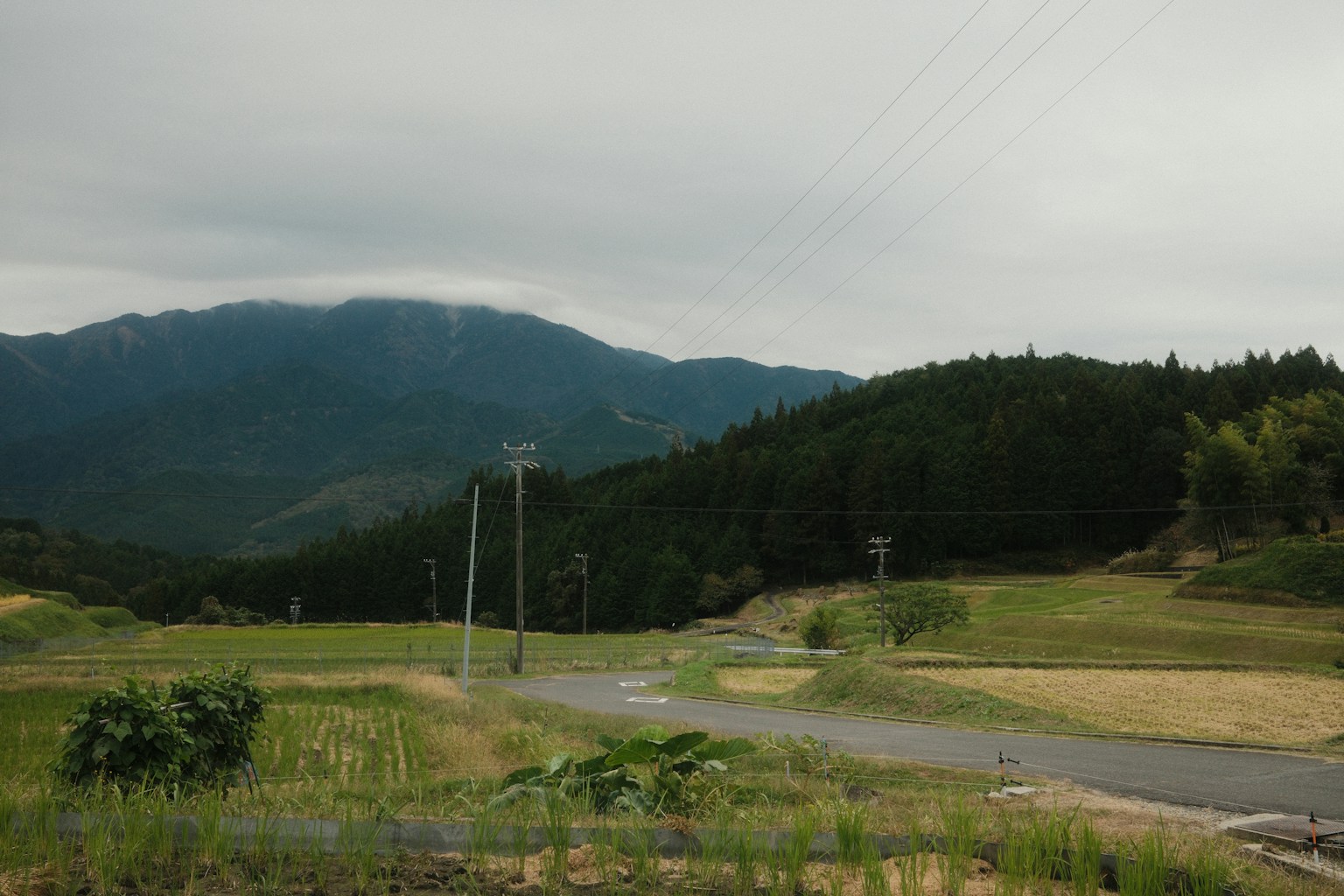
Most families flying to Kyushu default to Fukuoka Airport (FUK), do the city for two or three days, then maybe daytrip to Yufuin. That is a fine trip. It is also the trip everyone else is on.
The quieter and — if you have a Sanrio-obsessed five-year-old — substantially happier alternative is to flip the map: fly into Oita Airport (OIT) on the Kunisaki peninsula, open Day 1 at Harmony Land (Sanrio’s outdoor theme park, 30 minutes from the runway), then road-trip west through Beppu, Aso, and Takachiho before exiting from Fukuoka Airport at the end of the week. You see four prefectures, you skip the worst of the FUK arrival traffic, and the first thing your kids see in Japan is Hello Kitty waving from a Ferris wheel.
This guide is the full Oita-in, Fukuoka-out version of the trip. Five days, one rental car, written for families with one or more kids aged roughly 3–10. For broader regional context, see our Kyushu family road trip planner.
Why fly into Oita instead of Fukuoka

Three reasons the math works for families:
- Harmony Land is 30 minutes from the airport, not 2.5 hours. From FUK you would spend a full day getting there. From OIT you can be on the carousel by lunch.
- One-way rentals between OIT and FUK are routine. All major Japanese rental companies allow drop-off at Fukuoka Airport with a modest one-way fee (typically ¥3,000–5,000). That makes the open-jaw routing actually viable.
- Beppu kashikiri onsen + Aso + Takachiho line up cleanly on a single westward arc. No backtracking. The route ends at Hakata, which is also where most families want to do their final shopping day anyway.
If you are still deciding whether to drive at all, our do you need a rental car in Fukuoka guide covers the public-transport alternative honestly.
The 5-day route at a glance
- Day 1 — Land at Oita Airport (OIT), rental car pickup, Harmony Land afternoon, Beppu overnight.
- Day 2 — Beppu: kashikiri family onsen + Hells Tour OR sand bath, plus African Safari if energy allows.
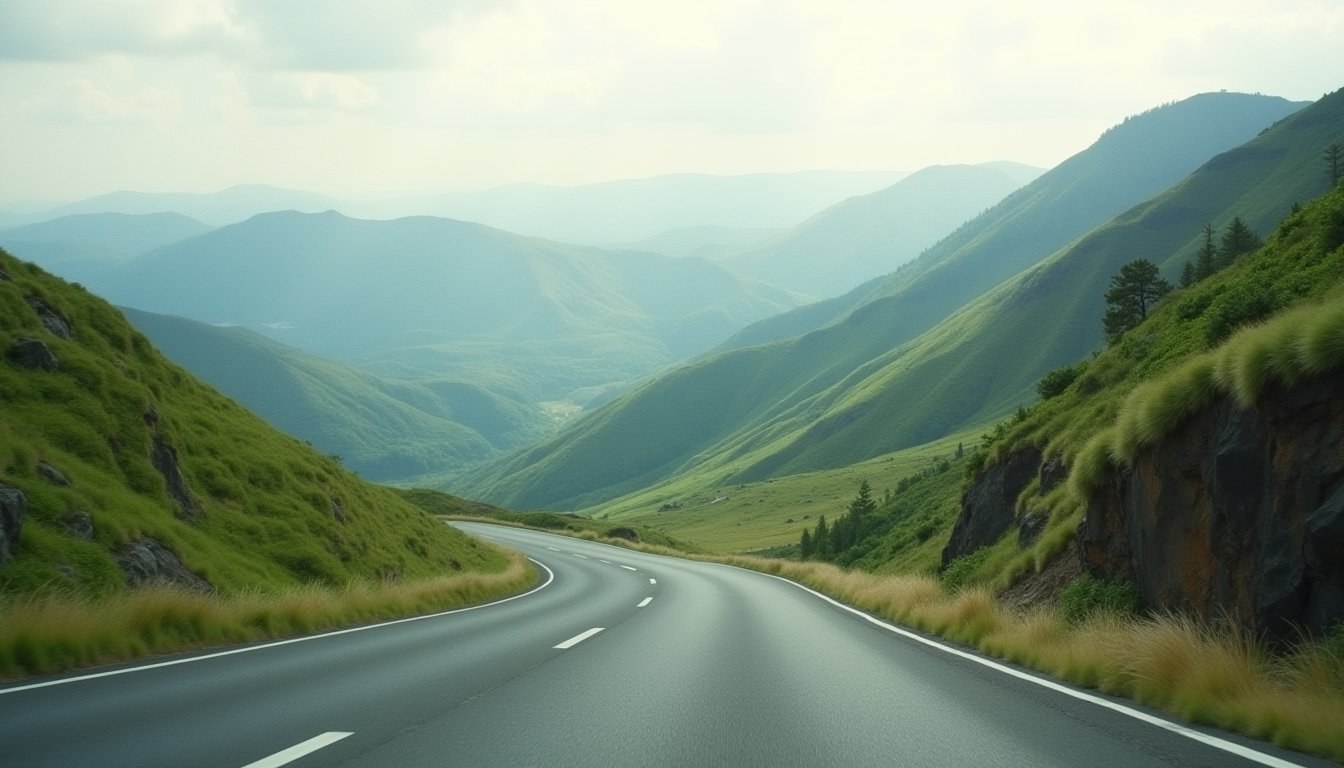
- Day 3 — Drive Beppu → Aso (about 2 hours via the Yamanami Highway). Kusasenri grasslands, optional horse ride.
- Day 4 — Aso → Takachiho (about 90 minutes). Amaterasu Railway trolley, gorge walk, Yokagura night dance.
- Day 5 — Takachiho → Fukuoka (about 3.5 hours including a Kurokawa Onsen lunch stop). Drop the car, fly home from FUK or overnight in Hakata.
Day 1: Oita Airport → Harmony Land → Beppu
OIT is a small, easy airport. International arrivals process through immigration in 30–40 minutes even on busy days. Rental car counters are immediately past baggage claim — Times, Toyota, Nippon, and Orix all have desks. Pre-book before you fly; walk-up rates are double.
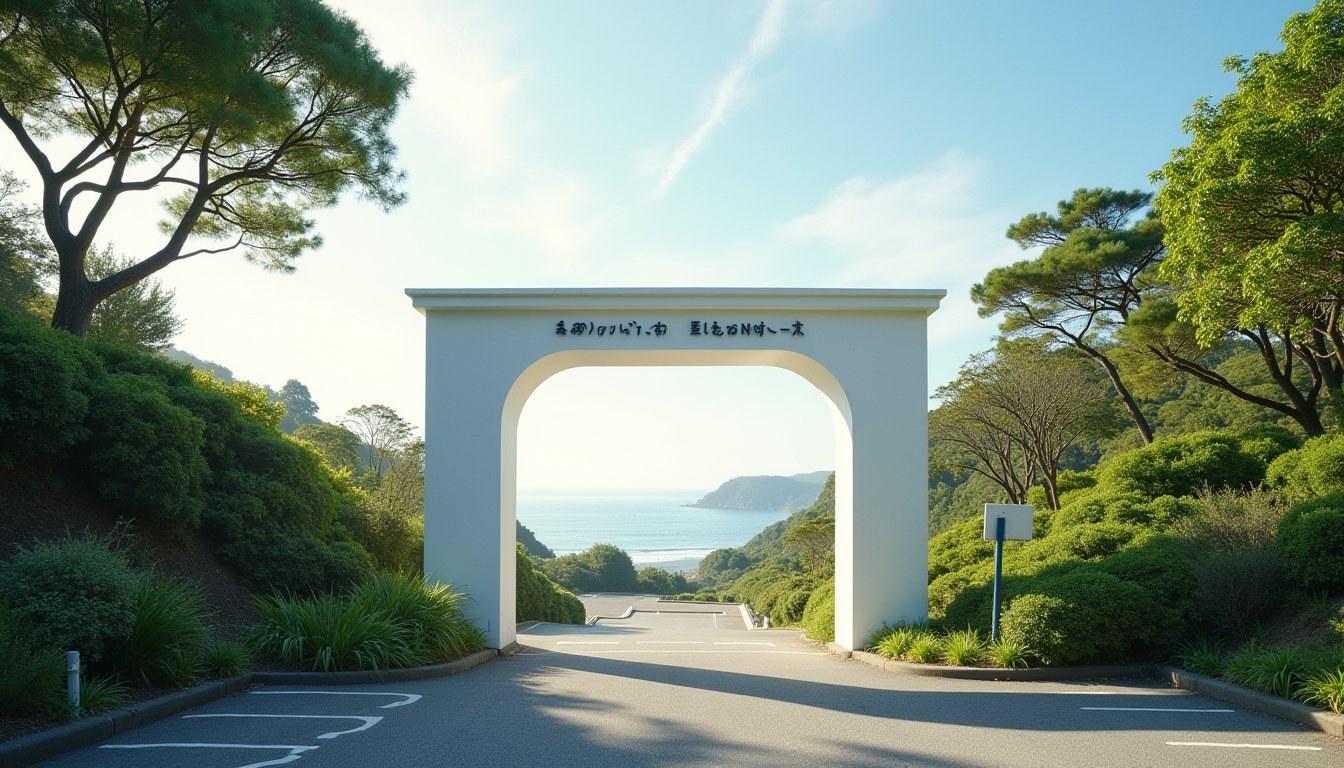
From the airport, take Route 213 north for 30 minutes. Harmony Land sits on a hill above the coast and is impossible to miss — there is a giant Hello Kitty face on the entrance arch.
What to do at Harmony Land with small kids:
- The character parade (typically once or twice daily) is the headline event. Find the schedule at the front gate and plan the day around it.
- Sanrio Carnival musical in the indoor theater — useful on hot afternoons or if the weather turns. Family-friendly, mostly visual, around 25 minutes.
- The Ferris wheel at the back of the park has the best photo angle in the whole property and is gentle enough for toddlers.
- Skip: the larger coasters unless your kid clears the height bar (110 cm). Far too intense for typical 4–6 year-olds.
For a side-by-side comparison if you are torn between Harmony Land and the safari park down the road, see our Harmony Land vs African Safari Oita comparison. Most families with under-5s pick Harmony Land. Most families with 7+ year-olds pick the safari.
Plan to leave Harmony Land around 16:00. The park itself closes by 17:00 most of the year, but the meltdown risk after a full afternoon is real, and you still have a 45-minute drive south to Beppu. Stay overnight near Beppu Station — there are plenty of mid-range family hotels in the Beppu Ekimae Honmachi & Yayoi Tengai arcade arcade area, and you are walking distance to dinner.
Day 2: Beppu — the kashikiri onsen day
The single biggest worry parents tell us about Japan with small kids is the public bath problem: tattoos, toddler crying, mixed-gender confusion. Beppu solves it because almost every traditional hotel here offers a kashikiri (privately rented) family bath. You book a 50-minute slot in advance, the entire bath is yours, and nobody else is in the room.
Detailed booking mechanics live in our kashikiri onsen booking guide and our Beppu kashikiri family roundup. Reserve before you fly — peak weekend slots fill 2–3 weeks ahead.
Once the bath is sorted, the rest of Day 2 has three usable shapes depending on weather and kid stamina:
- The classic: Beppu Hells Tour (Jigoku Meguri) in the morning (the seven colored “hells” — visual, weird, kid-engaging), beach lunch, Beppu Beach Sand Bath "Sand SPA" (Shoningahama) sand bath in the late afternoon — both public venues (Takegawara Onsen and the beachside Sand SPA) set a published minimum age of 6, so this slot only works once your youngest clears that bar.
- The animal day: Beppu African Safari jungle-bus ride mid-morning, lunch at the safari, back to Beppu mid-afternoon.
- The slow day: Beppu Park in the morning, Beppu Ropeway / Mt. Tsurumi up Mt. Tsurumi in the afternoon for the panoramic view. Best on clear days.
Eat early. Kids and onsen-tired adults both crash hard around 19:00.
Day 3: Beppu → Aso via the Yamanami Highway
This drive is one of the great open-road experiences in Japan and the first day your kids will start noticing the landscape change. The Yamanami Highway (Route 11, then 442) rises from Beppu’s coastal plain through Kuju’s high meadows to Aso’s crater rim. About 2 hours non-stop; budget 3 with kid breaks.
Suggested stops in order:
- Yufuin (optional) — adds 30 minutes but breaks the climb. Get a soft-serve, walk Lake Kinrin, leave. Do not try to do the whole town on a transit day.
- Kuju Flower Park — best in May–June (rapeseed → poppies → roses) or September (cosmos). In peak rainy season (mid-June to mid-July) check the weather before committing.
- Lunch at a roadside michi-no-eki — Kuju Yamanami or Kokonoe Yume Otsurihashi. Both have local-grass-fed beef and play areas.
Arrive at your Aso lodging by 16:00. For where to base yourself, see our Aso family accommodation guide — we recommend the Aso-Kuju side (volcano-facing) over the Takamori side for first-time visitors.
Day 4: Aso outdoor day + drive to Takachiho
This is the day to actually do an outdoor thing rather than just driving past one. Kusasenri Grasslands is the postcard view of Aso — a massive grass crater floor with grazing horses, two small ponds, and a paved 1 km loop walk that suits stroller-aged kids. Park at the Volcano Museum (paid), do the loop, get an Akaushi beef bowl at the museum cafeteria.
For families with 4+ year-olds who tolerate animals well, a 15-minute pony lead-ride on the grasslands runs around ¥1,500/child. The horses are docile. No reservation needed in low season; queue in summer.
If horses are a non-starter, swap in Aso Cuddly Dominion (bears, lemurs, dog show — covered in detail in our Cuddly Dominion family guide) or Aso Farm Land (resort village with mini-petting zoos and a giant play dome). Pick one. Do not try to do both on the same day.
After lunch, drive 90 minutes south to Takachiho. Check in to your ryokan, then catch the Takachiho Amaterasu Railway late-afternoon trolley over the iron bridge — open-air, 30 minutes, the highlight of the town for most under-10s. The 20:00 Yokagura performance closes the night. (Full prep notes in our Takachiho Yokagura family guide.)
Day 5: Takachiho → Fukuoka (or Kurokawa Onsen)
The direct route Takachiho → FUK is about 3.5 hours via Aso and Kurume. If your flight is evening, build in a 90-minute Kurokawa Onsen lunch stop — the village is exactly halfway, and walking the hot-spring street in yukata is a softer goodbye to rural Kyushu than rolling straight onto the Kyushu Expressway.
Drop the rental car at Fukuoka Airport or at one of the in-city return offices (Hakata Station has the most convenient). Most major chains charge ¥3,000–5,000 for OIT→FUK one-way return; confirm at booking, not at the counter.
If your flight is the next morning, overnight in Hakata. Our complete Fukuoka family guide covers where to base yourself, and the FUK → Hakata transport guide covers the morning-of run to the airport.
What this trip is not
A few honest caveats so the route lands well:
- Not a deep Fukuoka trip. You see Fukuoka on Day 5 evening only. If your kids’ main ask is teamLab, Marine World, or Canal City, you may want to flip the routing and finish in Oita instead.
- Driving is non-trivial. Yamanami and the Takachiho stretch include narrow mountain road. Confident driver, automatic transmission, ETC card recommended. The Kyushu driving with kids planner covers the gritty bits.
- Rainy season caveat. Mid-June to mid-July, the Yamanami can fog over and Takachiho’s outdoor activities go soggy. Either book before June 10 or after July 20, or bake in 1 indoor backup day. Our Kyushu typhoon & rainy season family guide has the full weather framework.
One-way rental car: what to actually book
Three brands have the smoothest English booking flow for OIT→FUK one-way:
- Times Car Rental — best app, ETC card included on most plans.
- Toyota Rent a Car — biggest fleet, every car has a Japanese-only navi but English voice prompts are available on newer Aqua/Sienta units.
- Nippon Rent-A-Car — competitive on price for 5+ day rentals, in-app drop-off photo confirmation.
Reserve a Toyota Sienta or Honda Freed (6-seat sliding-door van) for two adults + two kids with luggage and one car seat. Smaller compacts work for one-child families but get tight by Day 3 with souvenirs.
Where to sleep, in order
- Day 1 (Beppu) — Suginoi, Kamenoi, or any Beppu Ekimae Honmachi & Yayoi Tengai arcade mid-range with a kashikiri. Detailed picks in the Beppu kashikiri roundup.
- Day 2 (Beppu) — Same hotel as Day 1. Do not bounce; you will lose the booking advantage on the second kashikiri slot.
- Day 3 (Aso) — Kamenoi Hotel Aso or Aso Resort Grandvrio. See our Kamenoi Aso review.
- Day 4 (Takachiho) — Solest Takachiho Hotel or Ryokan Yamatoya. Onsen ryokans with futon-on-tatami work well here for kids; book the 18:00 dinner slot if available.
- Day 5 (optional Hakata) — anywhere near Hakata Station. Our Kyushu bases guide covers Hakata vs Tenjin for last-night logistics.
Frequently asked questions
Is Oita Airport really viable as an international entry point? Yes for Seoul, Taipei, and Shanghai (direct flights). From elsewhere you connect via Tokyo or Osaka — adds 90 minutes vs flying direct to FUK, often the same total day for trans-Pacific flyers.
Can we do this trip without a car? Not well. JR Kyushu trains hit most of these stops but skipping the rental cuts Harmony Land + Yamanami Highway + Takachiho from the realistic plan. If you cannot drive, do a different itinerary — see our JR Kyushu Rail Pass family guide for the train-based equivalent.
Best season? Late April–May (post-Golden Week is ideal) or late September–October. Avoid mid-June to mid-July (rainy) and August (hot, plus humid Aso evenings).
How much does this trip cost? Rough envelope for two adults + two kids, mid-range hotels, one-way rental, no flights: ¥320,000–420,000 / about USD 2,150–2,800 for the five days. Single-largest line is lodging.
Final thought
The reason this trip works is that Day 1 is already a payoff. Most Japan-with-kids itineraries make families grind through a transit day before anything fun happens. Flying into Oita means you land at 11, you are on the carousel by 14, and your kids fall asleep that night having already met Hello Kitty. The rest of the week — onsen, volcanoes, mythology dance — is the slow, weird, real Kyushu. Both halves matter. Putting the loudest joy on Day 1 is what makes the quieter days land.
 Sanrio Harmonyland Passport Ticket
 Beppu Onsen Resorts
Not sure where to begin? This free guide helps you pick the right Kyushu trip for your family — from a Fukuoka family who actually lives here.
- ✅A simple “which trip suits us?” chooser — by days, ages & interests
- ✅Snapshots of all 7 prefectures — what’s actually worth it with kids
- ✅Instant PDF download — name your price (free), no spam
Onsen, rail, or a full itinerary? It points you to the right deep-dive guide.
Onsen with kids is a maze of rules. This done-for-you playbook removes the guesswork — written by a Fukuoka family who soaks here year-round.
- ✓Family-bath & private (kashikiri) ryokan — baby-OK, tattoo-friendly, named picks
- ✓Babies & toddlers — water-temp tactics, cribs/baby-bath rentals, what to pack
- ✓Etiquette, made simple — exactly what to do so nobody stares
Instant PDF · written by locals · skip hours of forum-digging