
Okinawa in summer is warm, blue and gloriously beachy — and also hotter, more humid and more jellyfish-prone than the postcards let on. With kids, the trick is knowing when to swim, where the nets are, and what your rainy-hot-day backup looks like.
This guide is the practical version: heat management, which beaches have jellyfish nets, and how to line up pool and indoor plans so a scorching afternoon never derails the day.
Is Okinawa Good in Summer with Kids? (Quick Answer)

Yes — Okinawa in summer (June–September) is great for beach-loving families, but plan around heat and jellyfish. Swim inside netted beaches like Emerald Beach or Naminoue, hit the water before 10am or in the late afternoon (Emerald Beach’s swimming area closes at 17:00; Naminoue runs to 19:00 in July–August), and always hold a pool or indoor backup (a hotel pool or Churaumi Aquarium). Expect 30–33°C, high humidity, strong sun, and typhoon risk from July onward — August and September are the peak months.
What an Okinawa Summer Actually Feels Like

Daytime highs sit around 30–33°C from June through September — Naha’s average daily high is 29.8°C in June, 31.9°C in July, 31.8°C in August and 30.6°C in September (JMA 1991–2020 normals) — but the humidity is what wears kids out. It rarely “cools off” much at night, so shade and hydration matter more than a thermometer number.
The sun is intense this far south. Fair-skinned kids can burn in 15–20 minutes of unprotected midday exposure, so we treat 11am–3pm as “stay shaded or indoors” time.
- June: tail end of the rainy season (tsuyu), which normally lifts around 21 June, humid with sudden downpours.
- July–August: peak heat, peak crowds, best sea conditions — and typhoon season is already live (Okinawa averages 1.5 typhoon approaches in July and 2.2 in August).
- Early September: still hot and swimmable, slightly thinner crowds — but September averages 1.9 approaches, second only to August, so it is not a quiet month for storms.
For the full month-by-month picture, our month-by-month guide to the best time to visit Okinawa with kids lays out the trade-offs season by season.
Jellyfish Nets: Which Beaches Are Safest for Kids
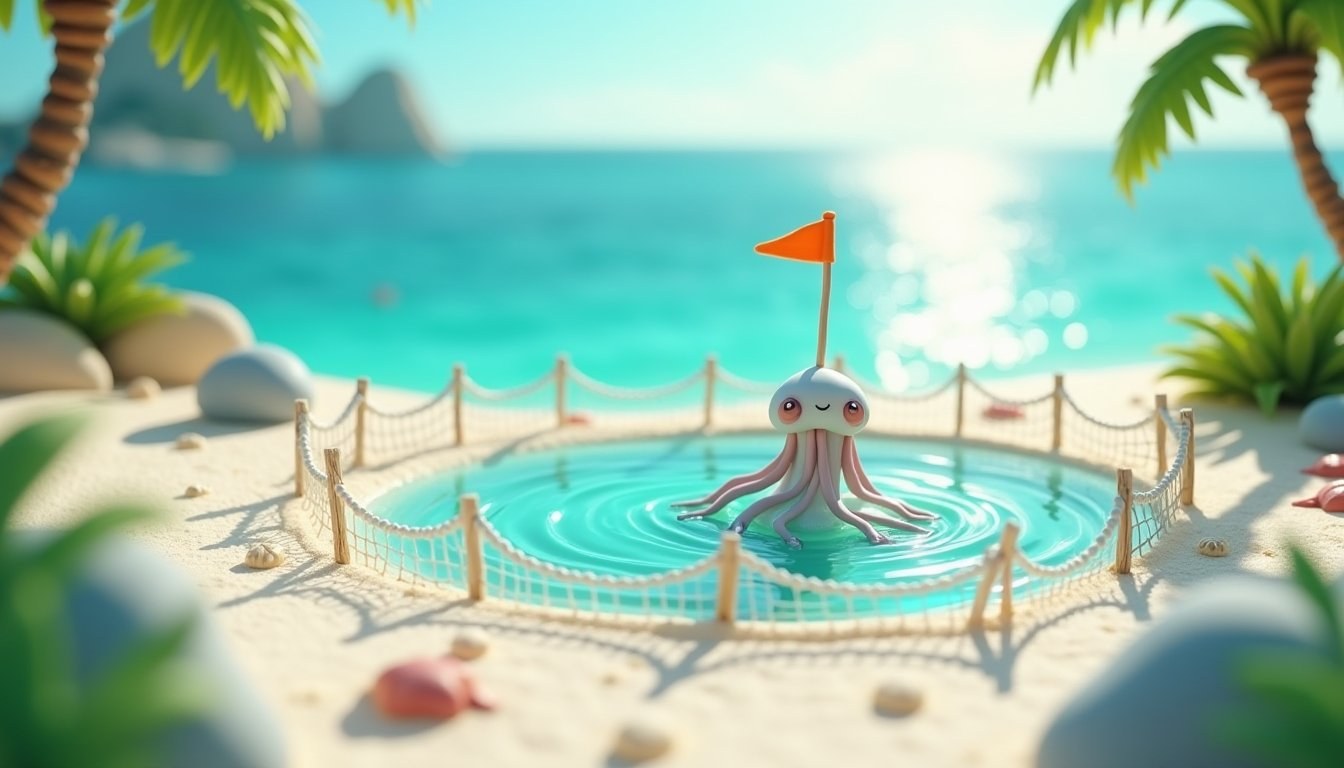
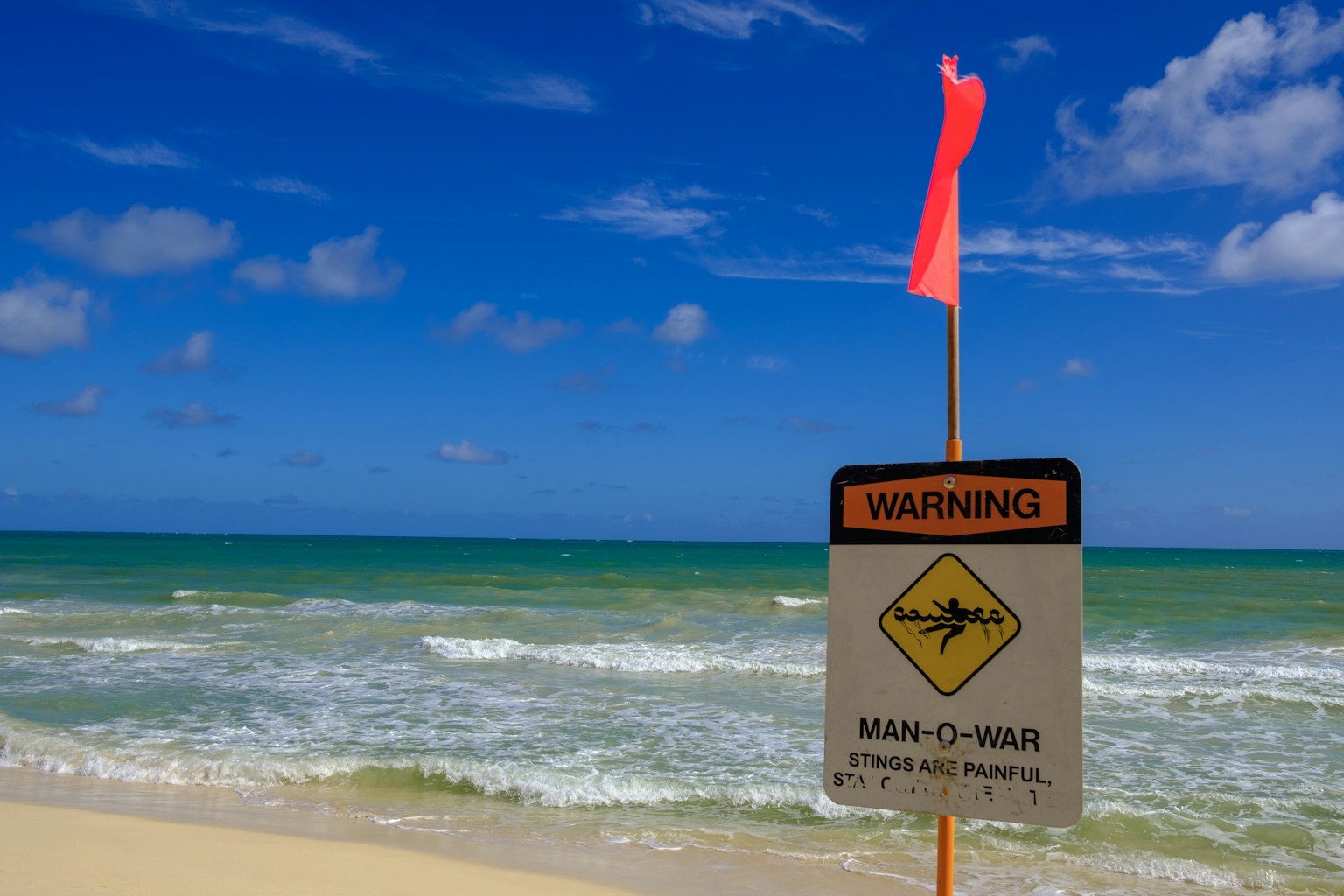
Summer is box jellyfish (habu-kurage) season: Okinawa Prefecture runs an official habu-kurage advisory from 1 June to 30 September every year, because the animals grow to a dangerous size from early June. The good news: most family beaches run a roped-off swimming zone with a jellyfish net and lifeguards during official swimming season.
The rule we follow with young kids is simple — swim inside the net, or don’t swim. Managed beaches also fly colored safety flags; a red flag means no swimming, full stop.
For the full breakdown of stingers, habu snakes and beach-flag meanings, read our Okinawa hazards guide on jellyfish, habu and beach flags before your first beach day.
Netted family beaches compared
| Beach | Entry | Swim season | Jellyfish net | Best for |
|---|---|---|---|---|
| Emerald Beach (Motobu) | Free | Apr 1–Oct 31 | Yes + lifeguards | Calm, shallow zones; pair with Churaumi |
| Naminoue Beach (Naha) | Free | Apr–Oct | Yes + lifeguards | No car needed; city-center swim |
| Resort beaches (Onna) | Free–paid | Apr–Oct | Yes (hotel-run) | On-site showers, rentals, shade |
Details for the two public beaches: Emerald Beach — Free, season Swimming season Apr 1–Oct 31: 8:30-18:30 Apr 1–Jun 30, 8:30-17:00 Jul 1–Oct 31 (lifeguard and nurse on duty, jellyfish net, free showers; snorkelling not permitted). Naminoue Beach — Free, Swimming season Apr–Oct (2026 opened Apr 5); 9:00-18:00 Apr–Jun & Sep–Oct, 9:00-19:00 Jul–Aug (lifeguards and jellyfish net in season).
Swimming hours matter as much as the season. Emerald Beach’s swimming area runs 8:30–17:00 for the whole 2026 season (1 April–31 October), and snorkelling is not permitted there — showers are free, lockers ¥100, and rentals include life jackets at ¥1,000 plus a refundable ¥1,000 deposit. Naminoue swims 9:00–18:00 in April–June and September–October, and 9:00–19:00 in July and August; its 2026 season opened on 5 April. Neither beach charges admission, but Naminoue’s car parks are paid, while Ocean Expo Park’s lots — P9 Emerald Gate is closest to the beach — are free. Naminoue’s own lots cap at ¥700 per 24 hours and the Wakasa lot at ¥800.
Emerald Beach sits inside Ocean Expo Park at 沖縄県国頭郡本部町石川424(海洋博公園内), with Free (Ocean Expo Park lots; P9 Emerald Gate multi-storey is closest) — which is why it pairs so neatly with an aquarium afternoon.
Pool Backups: When the Ocean Is a No-Go
 Where to Stay in Okinawa
Some days the sea just isn’t the move — a red flag, a jellyfish warning, rough surf, or a toddler who melts down in salt water. A pool is your pressure valve.
Most resort hotels in Onna and Chatan run kid-friendly pools with shallow ends and shade, and many are open even when their beach isn’t. Booking a hotel with a strong pool is the single best summer insurance for families.
Ready to lock in a resort pool day? You can browse family activities and pool passes on Klook to compare before you commit.
The Naha vs Onna vs Chatan stay comparison helps you pick a base where the pool alone can carry a hot afternoon. Resorts like the Renaissance Okinawa Resort (family tags: kids pool, kids club, dolphin program) are built for exactly this.
Indoor and Heat-Escape Backups
When the whole day turns against you — a squall, a heat spike, or nap-crashed kids — you want an air-conditioned anchor. The obvious one is Churaumi.
The Okinawa Churaumi Aquarium runs 8:30–18:30 (last entry 17:30); 8:30–20:00 Apr 25–May 6 and Jul 18–31, 8:30–21:00 through August; no scheduled closing days through March 2027, with tickets Adults ¥2,180, high school ¥1,440, elementary/junior high ¥710, under 6 free and Free (Ocean Expo Park lots, approx. 1,900 spaces; north lot P7 is closest to the aquarium). Allow about 3 hours. Our full Churaumi Aquarium with kids guide covers stroller routes, feeding times and the free outdoor tanks.
- Aquarium or museums for a full indoor reset.
- Aeon Mall Okinawa Rycom for a genuinely indoor lunch-and-arcade block (specialty shops 10:00–22:00).
- American Village in Chatan is mostly open-air, so treat it as a fine-weather option — its indoor pockets are the cinema, Aeon Chatan and Depot Central.
- A mid-day hotel-room break — genuinely a valid “activity” in this heat.
Packing and Sun Safety for Summer

Two things matter most in an Okinawa summer: sun protection and hydration. Rash guards do more heavy lifting than sunscreen for all-day beach kids.
- Long-sleeve rash guards + wide-brim hats for every child.
- Reef-safe sunscreen — encouraged (Naha City campaigns for coral-friendly formulas) but not legally required anywhere in Japan, unlike Hawaii or Palau. A rash guard does more for both your child and the reef.
- Water shoes for rocky or reef-edged entries.
- An electrolyte drink option — plain water isn’t always enough in this humidity.
On sunscreen specifically, see our reef-safe sunscreen and rash-guard rules for Okinawa. For the complete kit, the Okinawa family packing list has our tested checklist.
The Typhoon Factor

From July onward — not just August — typhoons can close beaches, ground flights and shut attractions for a day or two. Okinawa averages 7.7 typhoon approaches a year, with the peak in August (2.2) and September (1.9). It’s not a reason to avoid summer — it’s a reason to build slack into the itinerary.
One thing that surprises families: a beach can stay shut after the sky clears. Managed beaches pull their jellyfish nets before a storm, and swimming only resumes once the net has been re-installed and checked. In 2026, Naminoue closed on 24 August for Typhoon No. 18 and did not reopen until 2pm on 27 August.
Keep one flexible indoor day, don’t schedule your flight home for the last possible connection, and watch forecasts 3–5 days out. Our Okinawa typhoon-season family guide explains how to travel around the storms without panicking.
A Heat-Smart Sample Day
- 7:30–10:30am: Beach or pool while it’s cool; net-zone swimming only.
- 11am–3pm: Indoor block — aquarium, mall lunch, or hotel nap.
- 4–6:30pm: Back to water or a shaded park as the sun drops.
- Evening: Relaxed dinner; hydrate hard before bed.
Frequently Asked Questions
Is summer a good time to visit Okinawa with kids?
Yes, for families who want beaches and warm sea. Summer (June–September) has the best swimming conditions but brings 30–33°C heat, high humidity, jellyfish season and typhoon risk. It works well if you swim early or late, use netted beaches, and keep pool and indoor backups ready.
Are there jellyfish in Okinawa in summer?
Yes. Dangerous box jellyfish (habu-kurage) are the reason Okinawa Prefecture issues an official advisory from 1 June to 30 September each year. Managed family beaches run roped swimming zones with jellyfish nets and lifeguards during swimming season — swim inside the net and follow the beach flags to stay safe.
Which Okinawa beaches have jellyfish nets?
Most official swimming beaches do, including Emerald Beach in Motobu, Naminoue Beach in Naha, and resort beaches along the Onna coast. Nets and lifeguards operate during the posted swimming season (generally April–October).
How hot does Okinawa get in summer?
Daytime highs run about 30–33°C from June through September, with high humidity and strong sun. Nights stay warm too. Plan water time for early morning or late afternoon and keep midday (11am–3pm) shaded or indoors.
What should we do on a rainy or too-hot day in Okinawa?
Go indoors or to a pool. Churaumi Aquarium is the standout air-conditioned option (allow ~3 hours), and Aeon Mall Okinawa Rycom is a fully indoor mall for lunch, arcades and A/C — American Village is mostly open-air, so it is a weaker rain plan than it looks. Most resort pools stay open even when the beach is flagged closed.
Do we need a pool if we’re staying near the beach?
It’s the best insurance. Red flags, jellyfish warnings, rough surf or a cranky toddler can all cancel ocean plans. A hotel pool with a shallow end lets you save the day without changing base — book a resort known for its family pool.
Is July or August too crowded and expensive?
They’re the peak. Expect higher hotel prices, busier beaches and full flights, especially around Japan’s Obon holiday in mid-August. Late June and early September are hot and swimmable but noticeably calmer and often cheaper.
Will a typhoon ruin our summer trip?
Usually not, if you plan for it. Typhoons are possible from July, peaking in August and September, and can close beaches or delay flights for a day or two — and a beach may stay shut a day or two longer while its jellyfish net is re-installed. Build in a flexible indoor day, avoid last-minute connecting flights, and monitor forecasts a few days ahead.
Which island, how many days, and when to go — the free guide that gets your Okinawa plan started, from a Fukuoka family who travels Japan’s south with kids.
- ✅A “which Okinawa trip suits us?” chooser — by days, ages & whether you’ll drive
- ✅Main island vs the outer islands — what’s actually worth it with kids
- ✅Instant PDF download — name your price (free), no spam
Beaches, ferries, or the aquarium? It points you to the right deep-dive guide.