
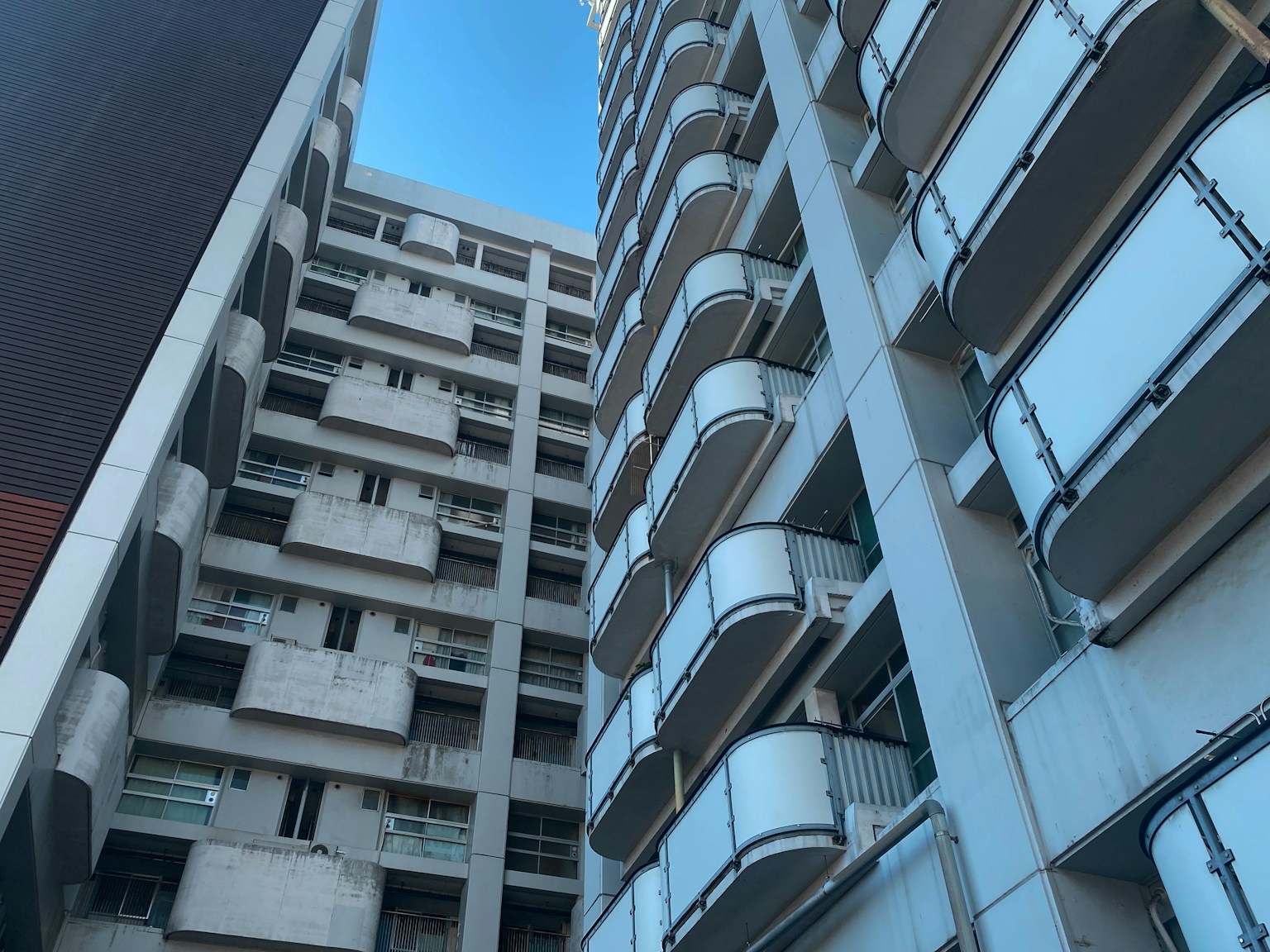
Renting an apartment in Fukuoka as a foreign family is absolutely doable, but the system is unfamiliar and several upfront costs catch newcomers off guard.
This guide walks you through the whole process: finding an agent, the upfront fees you’ll pay (and which are negotiable), the guarantor system, screening, and which neighborhoods are foreigner-friendly for families.
If you’re also weighing schools, healthcare and daily logistics, pair this with our Living in Fukuoka with Kids guide before you commit to a district.
Plan 6–8 weeks for the full process if you’re moving from outside Japan, or 3–4 weeks if you’re already in the country.
Because viewings and screening can’t be rushed, many families book a short-stay serviced apartment in Fukuoka for the first few weeks so they can house-hunt in person without committing blind.
Upfront costs: what you’ll pay before move-in

Typical upfront total for a ¥120,000/month family apartment:
- First month rent: ¥120,000
- Security deposit (shikikin): 1–2 months → ¥120,000–240,000
- Key money (reikin): 0–2 months → ¥0–240,000 (gift to landlord, non-refundable)
- Agent fee (chuukai-tesuryo): 1 month + tax → ¥132,000
- Guarantor fee (hoshou-gaisha): 50–100% of one month rent
- Fire insurance: ~¥15,000–20,000 for 2 years
- Lock change: ¥15,000–20,000
- Cleaning fee: ¥30,000–50,000 (sometimes deducted from deposit at end)
- Total upfront: typically 4–7 months rent equivalent (¥480K–¥840K for a ¥120K/mo apartment)
That upfront burden is the single biggest budgeting shock for arriving families, so build it into your relocation fund early.
For context on how rent and daily expenses compare to the capital, see our Fukuoka vs Tokyo cost of living guide — Fukuoka typically lands 20–30% lower.
Step 1: Find a foreigner-friendly agent

- GTN (Global Trust Networks): foreigner-specialist; can serve as guarantor too
- Apaman, Mini-Mini: large Japanese chains with English-capable Fukuoka branches
- Fukuoka Apartments: small English- and Japanese-speaking agency in Imaizumi, Chuo-ku, aimed at Fukuoka’s foreign community
- Online: SUUMO, Athome for browsing; many listings flag “外国人OK” (foreigners accepted)
- Hours: Mon–Sat 10:00–19:00 (most closed Wednesday)
Start the agent conversation in parallel with your temporary stay so viewings are booked before you land — agents move faster when you can attend in person.
Step 2: Filter listings

Family-relevant filters to apply:
- Layout: 2LDK or 3LDK minimum for a family of 4 (60–80sqm)
- Pets: most apartments don’t allow; “ペット可 (pet-OK)” listings are typically 2x rent
- Foreigner-OK: “外国人OK”
- Family-OK: “ファミリーOK” — some buildings restrict to single occupants/couples
- Furnished: rare and expensive; most apartments are unfurnished (no fridge, no light fixtures)
- School district: a major consideration if kids attend public school
Step 3: The guarantor system

- Most landlords require a guarantor (rentai hoshou-nin) — a Japanese citizen or resident who guarantees rent
- If you have no personal guarantor, use a guarantor company (hoshou-gaisha) — fee 50–100% of one month rent plus a smaller annual renewal
- GTN, JID and Casa are common guarantor companies that work with foreigners
- Some buildings only accept personal guarantors; family-friendly listings usually accept guarantor companies
Because the three big foreigner-friendly guarantors differ on fees and acceptance, here’s a quick comparison:
| Company | Initial fee | Annual renewal | Foreigner support |
|---|---|---|---|
| GTN | 50–100% of one month | ~¥10,000 | Multilingual; can also act as your agent |
| JID | ~50% of one month | ~¥10,000 | Widely accepted; limited English |
| Casa | ~50% of one month | ~¥10,000 | Common in family-oriented buildings |
Step 4: Application and screening
- Application form (mooshikomi-sho): personal info, employer, income, family members
- Required docs: residence card (or passport for newcomers), employment certificate, recent payslips/contract, photo ID
- Screening takes 5–10 business days
- If declined: try another property; reasons are rarely shared
- Income test: monthly rent should be ≤30% of gross monthly income
Screening is the most uncertain step for foreign applicants, and a clean residence card plus a stable employment certificate carry the most weight.
Keep your flexible Fukuoka base bookable week-to-week here — if one application is declined, you want room to apply again without scrambling for somewhere to sleep.
Step 5: Sign contract and pay
- The contract is in Japanese; some agents provide an English summary
- Read carefully: deposit return rules, restoration clause (genjyou-kaifuku), notice period
- Pay all upfront fees by bank transfer (cash counter at the bank, or online once you have an account)
- Standard contract: 2 years; renewal fee at year 2 = 1 month rent
Step 6: Move-in checklist
- Document existing damage with photos at handover (kasai chosa); send them to the agent
- Set up utilities: electricity (Kyushu Electric), gas (Saibu Gas or LP), water (Fukuoka City Waterworks)
- Internet: NURO Hikari, J:COM, Softbank — typically a 2-week install
- Register your address change at the ward office within 14 days — our address registration & My Number card guide walks through the exact counter and forms
- Arrange mail forwarding from your previous address (if a domestic move)
Family-friendly neighborhoods
Each ward trades off rent, schools and commute differently — for a deeper breakdown, see our Best Neighborhoods in Fukuoka for Families.
Sawara-ku (Momochi, Fujisaki)
- Near FIS international school
- Modern family apartments common
- Beach access and large parks
Chuo-ku (Akasaka, Yakuin, Imaizumi)
- Central, walkable, plenty of cafes and shops
- Higher rent but excellent schools and amenities
- Mix of Japanese and foreign families
Hakata-ku (Hakata Station area)
- Convenient for commuting; smaller family-apartment stock
- Some new family buildings near Hakata Station
Nishi-ku (Kyudai, Meinohama and Odo)
- Newer suburb feel; large apartments are more affordable
- Long commute to the center but car-friendly
Higashi-ku (Najima, Aoba)
- Near Kyushu University Hospital; good for medical-research families
- Affordable and family-oriented
Common pitfalls
- “Restoration clause” — at move-out you may pay to repaint walls and replace tatami; budget ¥50,000–150,000
- Foreigner-excluded buildings — some old landlords still restrict; your agent should filter these out
- Auto-renewal contracts — confirm whether your contract auto-renews or requires re-signing
- No-pet → secret pet — if discovered, eviction follows; insurance won’t cover pet damage either
- Underestimating utilities — heating/cooling in older apartments can hit ¥15,000–25,000/mo in extreme months
Furnishing the apartment
- Most apartments come empty (no fridge, washing machine, sometimes no light fixtures)
- Budget ¥200,000–500,000 for a basic family setup bought new
- Cheaper options: Sayonara Sales (departing expats), Mercari, recycle shops
- IKEA Fukuoka Shingu (just outside the city, at JR Shingu-Chuo Station) delivers; Nitori (cheaper) has multiple Fukuoka stores
Lease ending
- Give 1 month written notice (some contracts require 2 months)
- Pre-move-out inspection: document everything with photos
- Deposit return: 1–2 months after move-out, minus restoration costs
- Disputes: the ward office has a consumer mediation service; small claims court for serious cases
More Fukuoka Family-Life Guides
- Best Neighborhoods in Fukuoka for Families
- Fukuoka Address Registration & My Number Card Guide
- Living in Fukuoka with Kids: Complete Expat Guide
- Fukuoka vs Tokyo Cost of Living: Family Guide
A relaxed, ready-to-use plan from a Fukuoka family who actually lives here — instant PDF, name your price (free).
- ✅A gentle day-by-day Fukuoka plan — ramen, parks, one easy day trip
- ✅Tap-to-open Google Maps for every stop, plus where to stay & family tips
- ✅Instant PDF download — no spam, yours to keep
Planning the whole island? The full 7-day Kyushu itinerary is inside.
Want the whole trip mapped out? This is our complete 7-day Kyushu loop, done for you — the exact route a Fukuoka family runs with their own kids.
- ✓Day-by-day plan — what to do, in what order, at a kid-friendly pace
- ✓Named hotels & booking links — where to sleep each night, no rabbit-holes
- ✓Packing & prep checklists — arrive sorted, not scrambling
Instant PDF · written by locals · hours of planning, done