
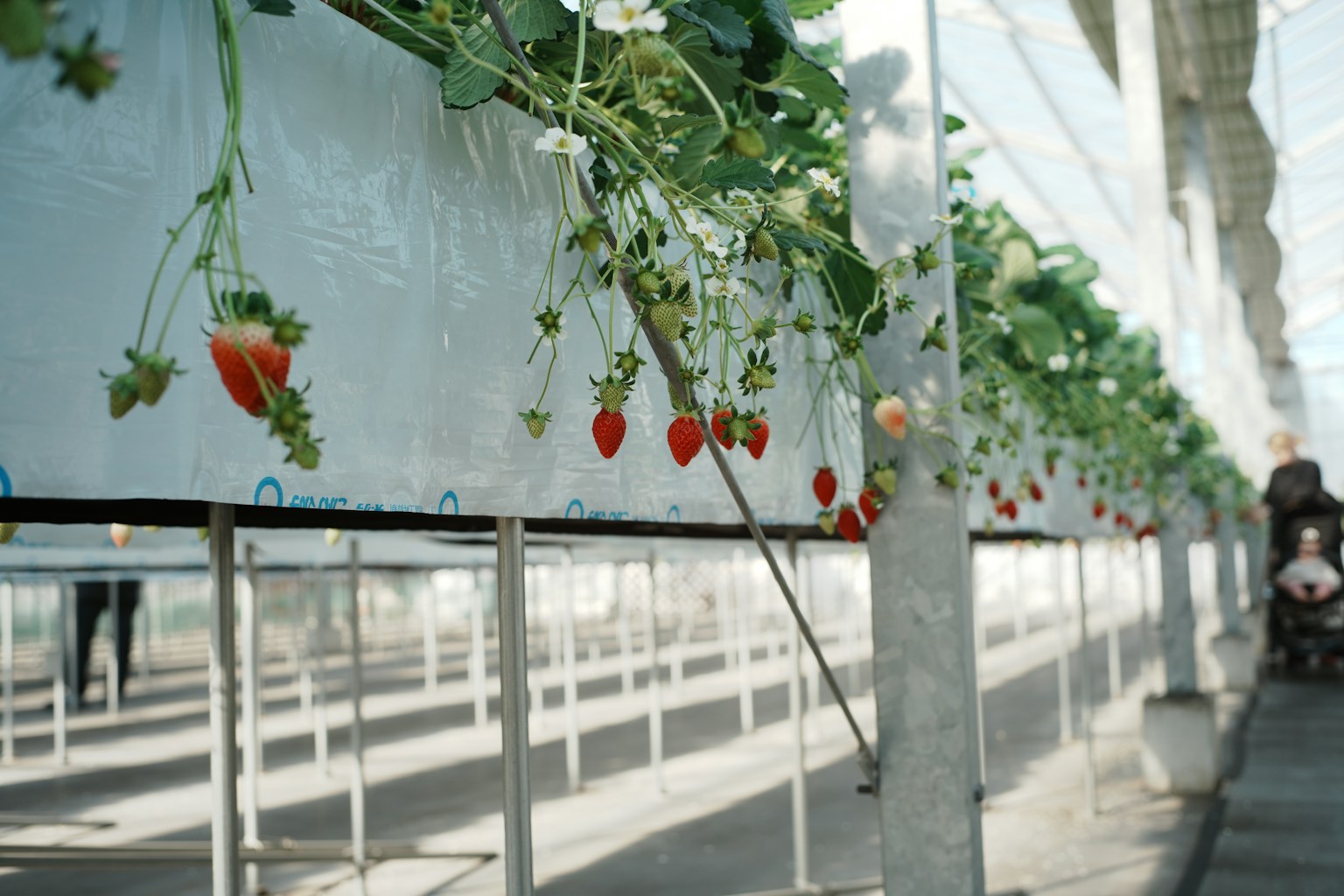
Fukuoka grows Japan’s most famous strawberry: the fat, dark-red amaou, sweet enough to eat with nothing on it.
From late December to May, greenhouses across the countryside open for all-you-can-eat picking at roughly ¥1,100–¥3,500 per adult.
Inside it is t-shirt warm even in January. Strollers roll between the rows, and a toddler can reach the berries unaided.
As winter activities with kids in Kyushu go, this one is close to perfect — and it happens entirely under glass, so rain never cancels it.
Below: how the season works, what it really costs, 12 family-tested farms compared, and how to book when the farm’s website is Japanese-only.
Strawberry Picking Near Fukuoka (Quick Answer)
The season runs late December to May, with the biggest, sweetest berries in January–February.
Expect ¥1,800–¥3,500 per adult for 30–60 minutes of all-you-can-eat picking, with child discounts from around age 3.
Almost every farm requires advance booking by web or phone, and peak-season weekend slots go about a week out.
The handiest clusters from Fukuoka City are Itoshima (40 minutes west) and Kurume–Ukiha (45 minutes south) — and yes, most farms grow amaou.
How Strawberry Picking Works in Japan
You book a time slot, get assigned a greenhouse row, and eat everything you pick inside the time limit.
Most farms hand you a tray with a well of condensed milk for dipping — the detail kids remember longest.
In modern farms the berries grow on raised beds at roughly table height.
That means no bending for adults, stroller- and wheelchair-width aisles, and fruit sitting at toddler eye level.
Winter is the sweet spot. Cold nights keep the berries firm and sugary, while the greenhouse itself sits at t-shirt temperature.
Two etiquette points to brief kids on before you go in:
- Eat what you pick — no stockpiling berries on the tray for later.
- Twist the stem rather than yanking the plant; staff demonstrate at the start.
Which Strawberry Varieties You Will Meet
Fukuoka grows seven-plus varieties, and knowing three of them is enough to choose a farm.
- Amaou — the big, dark-red flagship; the default at most farms in the table below.
- Awayuki — a pale white-pink berry, softer and more peach-like; the one kids point at.
- Kaorino / Toyonoka — lighter, more fragrant berries used for variety-comparison trays.
If your kids only care about one thing, aim for a farm that grows both red and white berries — the contrast is what makes the visit memorable.
Family-Tested Farms Compared
Prices below are the typical adult range across the season, based on 2025–26: January sits at the top of each range, May at the bottom.
Farms adjust their pricing every year, so confirm the exact fee when you book.
| Farm | Area | Adult price | Time | Amaou? | Family notes |
|---|---|---|---|---|---|
| Uruu Farm | Kurume | ~¥2,400–3,200 | 40 min | Amaou only | 50 greenhouses of pure amaou; the purist’s pick |
| Ichigo Kirari | Kurume | ~¥1,800–2,800 | 50 min | Yes + white berries | Awayuki white strawberries thrill kids |
| Itoshima Farm Shima Strawberry House | Itoshima | ~¥2,000–3,200 | 40 min | Yes | Five big greenhouses, easy parking |
| Sakura Farm | Itoshima | ~¥1,200–3,500 | 45 min | Yes + white berries | White berries hidden among red = built-in treasure hunt |
| Berry Field | Ogori | ~¥1,800–3,100 | 60 min | Yes, 8 varieties | 8-min walk from Mitsusawa Station; pizza & soft-serve on site |
| Yokamon Ichigo | Ukiha | ~¥2,000–3,500 | 120 min | Yes, 13 varieties | Longest time limit; Saturday night picking |
| Kajiwara Fruits | Ukiha | ~¥1,500–2,800 | 60 min | Yes | Jam-making (~¥3,000) and strawberry-daifuku workshops |
| Hirai Tourist Farm | Yame | ~¥1,800–3,300 | 45 min | Yes | Price includes a 200g take-home pack |
| Genkai Strawberry Farm | Munakata | ~¥1,100–2,420 | 40 min | Yes | Cheapest amaou around; weekends first-come |
| Lion Strawberry Farm | Chikuzen | ~¥1,700–2,500 | 60 min | Yes | Capacity 300 — good late-booking odds |
| Chikushino Strawberry Fields | Chikushino | ~¥1,600–3,000 | 40 min | Other varieties | 23 greenhouses + attached gelato shop |
| Ike Strawberry Farm | Fukuoka City (Imajuku) | ~¥3,000–3,500 | 60 min | Kaorino | The only in-city option; weekends only |
Only Berry Field in Ogori and Ike Farm in Imajuku are realistically doable without wheels — the rest sit 30–50 minutes’ drive from the city.
If Fukuoka is your base, collecting a rental car in Fukuoka the evening before makes a 9am farm slot painless with small kids.
 Not Driving? Private Driver from Fukuoka
When to Go (Quick Answer)
January and February are peak: berries at maximum size and sweetness, greenhouses warm, weekend slots gone about a week ahead.
December works from around the 20th, when most farms open the season.
March and April bring falling prices and thinning crowds; May is bargain season with smaller berries.
Book weekends 1–2 weeks ahead in peak months. Weekdays often still have space a day or two out.
Booking When You Don’t Read Japanese
Most farms take reservations through plain Japanese web forms, and those auto-translate cleanly in Chrome or Safari.
The fields are only ever name, phone number, party size, and time slot — no Japanese address required.
A Japanese phone number is rarely validated, so your hotel’s number works fine.
Quirks worth knowing before you start:
- Itoshima Berry Farm books via Instagram DM — a plain English message is enough.
- Genkai Strawberry Farm runs weekends first-come, first-served, with no booking at all.
- If a form defeats you, hotel front desks in Japan are used to making exactly this call.
Translating on the move is far easier with your own data: a Japan eSIM or pocket Wi-Fi keeps Translate and farm maps working out in the orchards.
With Toddlers: What Actually Matters
Kids under about 3 are usually free or heavily discounted — they nibble off your allowance anyway.
Raised-bed farms (most of the table above) beat ground-planted rows for stroller access.
Mention the stroller in the booking notes and staff will assign you a wide row.
The time limit is not a challenge to beat: a 3-year-old is usually finished in 20 minutes.
That is why the 40-minute farms, not the 120-minute one, are the genuinely family-friendly choice.
What to pack for a greenhouse morning:
- Dark, washable clothes — juice stains are the day’s one guarantee.
- Wet wipes, plus a spare top per child.
- Layers you can strip off; greenhouses reach t-shirt warmth well before noon.
- A cool bag if you plan to buy a take-home pack on the way out.
Making a Day of It
Strawberry farms sit in fruit country, so pair the morning pick with the area’s other stops.
In Itoshima, the coast road and salt-ice-cream stands make the classic family loop — our Itoshima day trip guide maps it out.
Around Kurume and Ukiha, roadside fruit stands and small onsen finish the day nicely.
Our Ukiha–Kurume family stays guide helps if you would rather sleep among the orchards than drive back after dark.
Ukiha ryokan and guesthouse rates are usually lowest midweek — which is also when the farms are quietest.
Coming back via Chikushino or Ogori, the obvious detour is Dazaifu Tenmangu and its umegae-mochi stalls; our Dazaifu with kids guide covers the shrine approach.
A picking slot only eats the morning, so the afternoon stays open for Fukuoka attraction tickets and day passes on the way back into the city.
Strawberries are the winter chapter of a year-round story — grapes, pears, and persimmons take over from summer.
Our Kyushu fruit picking guide covers the full calendar, month by month.
The winter guides for December and January–February slot picking into a broader itinerary.
Why Amaou Is Worth the Fuss
Amaou (あまおう) is Fukuoka’s trademarked flagship variety, and it is barely grown anywhere else.
The name abbreviates amai (sweet), marui (round), ookii (big) and umai (delicious) — and the berries routinely reach golf-ball size.
A single amaou is a luxury gift item in a Tokyo fruit shop, and absurdly cheap when you are standing in the greenhouse it grew in.
If the farm offers a variety comparison, take it.
Tasting amaou against Kaorino or a white Awayuki berry side by side is the kind of food memory kids keep for years.
After the Picking: Take-Home and Souvenirs
Most farms sell packed berries by weight at the exit — cheaper and fresher than any department store counter.
Amaou also turns up as jam, daifuku and freeze-dried snacks in farm shops and at Hakata Station, which travel far better than fresh fruit.
If you are flying out, buy fresh berries on the last morning only; they bruise within a day in a warm bag.
Frequently Asked Questions
When is strawberry picking season in Fukuoka?
Late December through May. January–February has the biggest, sweetest berries; March–May is cheaper and quieter. A few farms open in early December.
How much does strawberry picking cost near Fukuoka?
¥1,800–¥3,500 per adult at peak, falling through spring. Children under ~3 are free or discounted at most farms.
The fee covers all-you-can-eat picking within the time limit; take-home packs cost extra by weight.
Do I need a reservation?
Almost always yes, by web or phone. Book weekends 1–2 weeks ahead in January–February. Genkai Strawberry Farm (Munakata) is the notable first-come exception on weekends.
Can we go without a car?
Berry Field in Ogori is an 8-minute walk from Mitsusawa Station (Nishitetsu line from Tenjin). Some farms offer station shuttles on request. Everything else is realistically a rental-car or taxi trip.
Is it stroller and wheelchair friendly?
Farms with raised beds — most modern ones — have flat, wide rows. Mention wheels when booking so staff assign an accessible greenhouse.
Is it fine in the rain?
Yes — picking happens entirely inside greenhouses, making it one of the best rainy-day family activities in winter Kyushu.
For a second indoor stop the same day, Marine World Uminonakamichi tickets pair neatly with the Munakata and Itoshima farms.
What should kids wear?
Dark, washable layers — greenhouses are warm even in January — and shoes you can wipe. Juice stains are the one guarantee of the day.
Can I pick amaou strawberries specifically?
Yes. Uruu Farm in Kurume grows amaou exclusively, and most farms in the table include amaou rows — confirm the variety when you book, as assignment can depend on the day’s ripeness.
Where can I buy amaou strawberries without picking them?
Farm shops, roadside stations in Ukiha and Itoshima, and the depachika under Hakata Station all sell graded amaou packs from December to April.
Where should we stay to reach the farms early?
Fukuoka City works for Itoshima and Ogori; Ukiha or Kurume suits the southern cluster. Fukuoka family hotel rates are cheapest on weeknights, which are also the quietest farm days.
Top Things to Do in Fukuoka Instant confirmation for most tickets
 Relax in Ukiha
A relaxed, ready-to-use plan from a Fukuoka family who actually lives here — instant PDF, name your price (free).
- ✅A gentle day-by-day Fukuoka plan — ramen, parks, one easy day trip
- ✅Tap-to-open Google Maps for every stop, plus where to stay & family tips
- ✅Instant PDF download — no spam, yours to keep
Planning the whole island? The full 7-day Kyushu itinerary is inside.
Want the whole trip mapped out? This is our complete 7-day Kyushu loop, done for you — the exact route a Fukuoka family runs with their own kids.
- ✓Day-by-day plan — what to do, in what order, at a kid-friendly pace
- ✓Named hotels & booking links — where to sleep each night, no rabbit-holes
- ✓Packing & prep checklists — arrive sorted, not scrambling
Instant PDF · written by locals · hours of planning, done