
Okinawa is the one place in Japan where our kids never once asked “are we there yet?” — because between the whale sharks, the beaches, and the caves, every day felt like the main event. But the island is bigger than most families expect, and picking the wrong combination of activities means hours in the car with cranky back-seat passengers.
This guide covers the ten things to do in Okinawa with kids that actually earned their place on our list, organized so you can match them to your children’s ages and the day’s weather. For the bigger-picture logistics — flights, where to base yourselves, and budgets — our complete Okinawa family planning guide maps out the whole trip.
What Are the Best Things to Do in Okinawa with Kids? (Quick Answer)

The best things to do in Okinawa with kids are Churaumi Aquarium and the free beaches and playgrounds of Ocean Expo Park in the north, Gyokusendo Cave at Okinawa World in the south, and American Village in Chatan for easy evenings. Most families need four to five days and a rental car to cover them comfortably, with Naha’s museum and market as rainy-day backups.
 Churaumi Aquarium: Admission Ticket
Okinawa Family Activities at a Glance: An Easy Comparison

| Spot | Cost | Best Ages | Rain OK? | Time Needed |
|---|---|---|---|---|
| Churaumi Aquarium | Adults ¥2,180, high school ¥1,440, elementary/junior high ¥710, under 6 free | All ages | Yes | 180 min |
| Ocean Expo Park | Free (aquarium and some facilities charge separately) | All ages | No | 240 min |
| Emerald Beach | Free | 2+ | No | 90 min |
| Okinawa World | Adults (15+) ¥2,000, children (4–14) ¥1,000, under 4 free | 4+ | Mostly | 150 min |
| American Village | Free to enter (shops, rides, and attractions priced individually) | All ages | Partly | 120 min |
| Shuri Castle | Paid zone during restoration: adults ¥400, high school ¥300, elementary/junior high ¥160, under 6 free | 4+ | No | 90 min |
| Prefectural Museum | Museum permanent exhibition: adults ¥530, high school/university ¥270, elementary/JHS ¥150 | All ages | Yes | 120 min |
| Naminoue Beach | Free | 2+ | No | 90 min |
| Makishi Public Market | Free to browse | 4+ | Yes | 60 min |
| Umikaji Terrace | Free entry | All ages | No | 90 min |
Churaumi Aquarium: The One Every Family Comes For
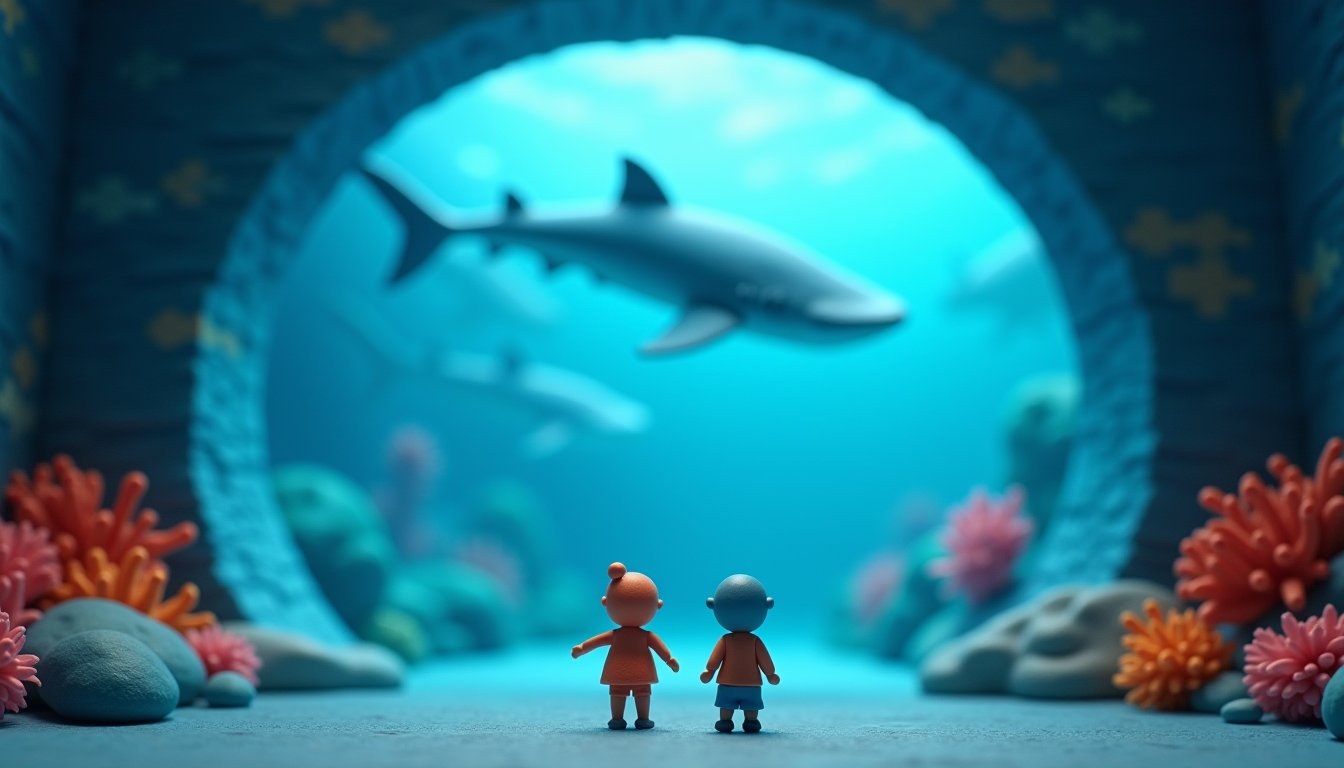
The Kuroshio Tank at Okinawa Churaumi Aquarium stopped our kids mid-sentence. Whale sharks the length of a bus glide past a window two stories tall, and even our toddler stood silent for a full minute — a family record. Time your trip for January through March and you can swap the tank glass for the open sea on a winter boat trip to spot real humpbacks with the kids. If Churaumi is the anchor of your trip, our in-depth guide to visiting Churaumi with kids walks through every tank, feeding time, and stroller route.
Practical numbers: admission is Adults ¥2,180, high school ¥1,440, elementary/junior high ¥710, under 6 free, hours are 8:30–18:30 (last entry 17:30); 8:30–20:00 Apr 25–May 6 and Jul 18–31, 8:30–21:00 through August; no scheduled closing days through March 2027, and parking is Free (Ocean Expo Park lots, approx. 1,900 spaces; north lot P7 is closest to the aquarium). Strollers roll easily through the whole building, and there’s a nursing room near the entrance.
Two timing tips that saved us:
- Arrive at opening (8:30) — tour buses land around 10:00 and the Kuroshio Tank viewing area gets three-deep.
- Or go after 16:00 for discounted tickets and thinner crowds — enough time if your kids are past the touch-everything stage.
Buying tickets in advance skips the counter line entirely, which matters with an impatient four-year-old in tow — you can book discounted Churaumi tickets and other Okinawa activities on Klook before you go.
Ocean Expo Park & Emerald Beach: A Free Full Day Around the Aquarium
The aquarium sits inside Ocean Expo Park (Kaiyohaku Park), and entry to the park itself is Free (aquarium and some facilities charge separately). There’s a huge net-and-slide playground, a free dolphin show at the Okichan Theater, free sea turtle and manatee pools the kids can walk right up to, and enough shaded lawn for a picnic lunch. If that slide is a hit, the island hides much bigger ones — our roundup of free parks with hillside roller slides is worth a detour on a no-budget afternoon.
Five minutes’ walk away, Emerald Beach is the easiest swim of your trip: Free entry, Swimming season Apr 1–Oct 31: 8:30-18:30 Apr 1–Jun 30, 8:30-17:00 Jul 1–Oct 31 (lifeguard and nurse on duty, jellyfish net, free showers; snorkelling not permitted). The roped, lifeguarded swimming area and gentle shelf make it genuinely toddler-friendly. For a little one who won’t get in the water, a nearby toddler-safe glass-bottom boat serves up the same reef fish without anyone getting wet. Older kids ready for the real thing can graduate to snorkeling the Blue Cave, where age limits and gentler alternatives matter, down the coast in Onna.
Our honest advice: give this whole complex a full day. Families who “do Churaumi in the morning and drive south after lunch” spend the afternoon refereeing meltdowns.
Okinawa World: Cave Adventures That Feel Like a Quest
The 890-meter walk through Gyokusendo Cave at Okinawa World (Gyokusendo Cave) was our seven-year-old’s trip highlight — dripping stalactites, glowing pools, and a satisfying “we explored a real cave” badge of honor. Admission is Adults (15+) ¥2,000, children (4–14) ¥1,000, under 4 free, hours 9:00–17:30 (last tickets 16:00), and parking is Free.
Know before you go:
- The cave has stairs and damp walkways — baby carriers beat strollers underground.
- Catch the Eisa drum dance show up top; even wiggly kids sit through the 25 minutes.
- It pairs well with a southern-Okinawa day — thread it together with the quietly powerful, kid-appropriate Peace Memorial Park in Itoman — and the cave stays the same temperature in drizzle or blazing sun.
American Village: Easy Evenings and a Ferris Wheel Sunset
American Village (Mihama, Chatan) in Chatan is where we ended up every time we needed a low-effort evening: Free to enter (shops, rides, and attractions priced individually), with kid-tolerant restaurants, arcades, and a seaside boardwalk. A short drive inland, the Okinawa Zoo and its hands-on Kodomo no Kuni museum fills an easy afternoon before dinner. Hours vary by shop, but most stores and restaurants run roughly 10:00–21:00, and district parking is Free (shared district lots).
Chatan is also one of the best family bases on the island — mid-island location, big family rooms, and walkable dinners. If you’re still choosing where to sleep, compare family rooms in Chatan and Naha on Agoda — beachfront Chatan books out first in summer.
Shuri Castle with Kids: A Short, Worthwhile History Stop
Shuri Castle (Shurijo Castle Park) is mid-reconstruction after the 2019 fire, and honestly that’s what made it work for our kids — watching craftsmen rebuild a palace beats staring at a finished one. The paid zone costs Paid zone during restoration: adults ¥400, high school ¥300, elementary/junior high ¥160, under 6 free, open Paid zone 8:30–18:30; closed first Wed of July and the following day.
Keep expectations calibrated: this is a 60–90 minute stop, not a half-day. The stone gates and city views hold kids’ attention; the exhibit panels don’t.
Rainy-Day Backup: Okinawa Prefectural Museum
When a rain band parked over the island, Okinawa Prefectural Museum & Art Museum in Omoromachi saved our morning. The hands-on children’s room (fureai taikenshitsu) let our kids try Ryukyuan instruments and traditional toys while we actually read the exhibits.
Entry is Museum permanent exhibition: adults ¥530, high school/university ¥270, elementary/JHS ¥150, open 9:00–18:00 (Fri–Sat until 20:00), closed Mondays. It’s stroller-friendly with a nursing room, and the San-A Naha Main Place mall next door covers lunch. The museum is only one option — our full list of indoor places that genuinely hold up on a washout day keeps rain from wrecking the whole itinerary.
If your trip overlaps Japan’s early-summer rains, our family guide to surviving tsuyu has the same wet-weather playbook we use across Kyushu — Okinawa’s rainy season just arrives about a month earlier.
Naha’s Easy Wins: City Beach, Market Food & Plane Spotting
Naminoue Beach: A Swim Without Leaving the City
Naminoue Beach is a real sand beach ten minutes from Kokusai-dori — Free, with Swimming season Apr–Oct (2026 opened Apr 5); 9:00-18:00 Apr–Jun & Sep–Oct, 9:00-19:00 Jul–Aug (lifeguards and jellyfish net in season). The expressway overhead isn’t postcard material, but with jet-lagged kids on arrival day, a lifeguarded swim beats another shopping street.
Makishi Public Market: Lunch as a Spectacle
At Makishi Public Market (Daiichi Makishi Kosetsu Ichiba), kids point at neon-blue parrotfish downstairs, then you eat upstairs. Free to browse; 2F eat-up meals from around ¥1,000; cooking fee applies if you buy fish downstairs and have it prepared upstairs — closed 8:00–22:00 (varies by shop; last orders around 19:45 downstairs, 20:00 in the 2F diners), closed the 4th Sunday of the month (except December) aside, it’s a reliable rainy-hour filler too. We break down the fish stalls, the upstairs food court, and the surrounding arcades in our Makishi Market and Naha shopping walkthrough.
Umikaji Terrace: Sunset and Landing Jets
Umikaji Terrace (Senaga Island) on Senaga Island stacks white terraces above the sea directly under Naha Airport’s flight path. Free entry, free parking, and planes roaring overhead every few minutes — our kids rated it above the sunset, which says everything.
Practical Tips for Planning Okinawa with Kids
- Rent a car. Churaumi is 2 hours from Naha; buses double that with transfers. Book weeks ahead in summer.
- Split your base. Two nights north (Motobu/Nago) plus the rest in Chatan or Naha beats commuting the whole island from one hotel. Basing north also puts you within striking distance of Yanbaru’s newest attraction — the just-opened JUNGLIA theme park in the northern rainforest — if you want a full day of rides between beach days. Nago itself rewards a slow morning too, whether that’s hand-feeding free-roaming birds at the walk-through aviaries of Neo Park or riding the mini-train through Nago Pineapple Park.
- Chasing older-kid thrills? Central Okinawa burns off energy no aquarium can, from ziplines through the Onna forest canopy to a family paddle through the mangroves on the island’s tidal rivers.
- Swim season is roughly April–October, with jellyfish nets and lifeguards at managed beaches in season.
- Traveling with a baby? The pacing rules from our Kyushu with a baby itinerary — one anchor activity per day, naps in the car — apply doubly here.
- Combining with the mainland? Naha has cheap direct flights to Fukuoka and Kagoshima, so Okinawa bolts neatly onto our 10-day Kyushu grand tour with kids as a beach finale.
Frequently Asked Questions
Is Okinawa good for toddlers?
Yes — Okinawa is one of the easiest beach destinations in Japan for toddlers. Churaumi Aquarium is stroller-friendly with nursing rooms, Emerald Beach has a shallow roped swimming area with lifeguards, and driving your own rental car means naps happen on schedule. Skip the cave at Okinawa World until kids can walk stairs confidently.
How many days do you need in Okinawa with kids?
Four to five days is the family sweet spot on the main island. That covers a full day at Churaumi and Ocean Expo Park, a southern day for Okinawa World, a beach-and-pool day, and a Naha or American Village day, with slack for weather. Three days works but feels rushed with the north–south driving distances.
Do you need a rental car in Okinawa with kids?
Realistically, yes. The Yui Rail monorail only covers Naha, and reaching Churaumi by bus takes around four hours round trip with transfers — brutal with small children. A rental car turns that into two comfortable hours each way with nap potential.
What is the best age for Churaumi Aquarium?
Every age works, which is rare. Babies and toddlers fixate on the giant Kuroshio Tank, elementary kids love the touch pool and dolphin show, and teens actually put phones away for whale sharks. Under-6s enter free, so it’s also the best-value stop for young families.
What can you do in Okinawa with kids when it rains?
Head indoors: Churaumi Aquarium is fully covered, the Okinawa Prefectural Museum has a hands-on children’s room, Gyokusendo Cave stays dry-ish underground, and Makishi Market plus Naha’s arcades fill the gaps. Build one flexible “weather day” into any Okinawa itinerary — rain bands pass through even outside the rainy season.
When is the best time to visit Okinawa with kids?
Late April to early May or October are ideal — warm enough to swim, before or after peak typhoon risk. Beaches officially open roughly April through October. The rainy season runs about early May to late June, and August–September carries the highest typhoon probability, so buy flexible tickets in those months.
Is Okinawa expensive for families?
It’s cheaper than most families expect. Big-ticket sights are modest — Churaumi is about ¥2,180 per adult with under-6s free, Ocean Expo Park and its beaches are free, and parking is free at most major attractions. Your real costs are the rental car and summer-season hotels, so book both early.
Can you swim at Okinawa’s beaches year-round?
Not officially — managed beaches run lifeguards and jellyfish nets roughly April through October. The water stays mild in winter, but nets come down and habu jellyfish risk is real, so stick to the official season with kids. Water parks and day-pass hotel pools cover the swimming itch in the off months.
More Family Travel Guides
- Phoenix Seagaia Resort with Kids: A Family Guide to Miyazaki’s All-In-One Resort — the mainland resort alternative when Okinawa flights don’t fit.
- Ferry to Yakushima with Kids — another island adventure, this time to ancient forests off Kagoshima.
- Kyushu with Teenagers Itinerary — for families with older kids splitting time between the islands and the mainland.
Top Things to Do in Okinawa Instant confirmation for most tickets
Which island, how many days, and when to go — the free guide that gets your Okinawa plan started, from a Fukuoka family who travels Japan’s south with kids.
- ✅A “which Okinawa trip suits us?” chooser — by days, ages & whether you’ll drive
- ✅Main island vs the outer islands — what’s actually worth it with kids
- ✅Instant PDF download — name your price (free), no spam
Beaches, ferries, or the aquarium? It points you to the right deep-dive guide.