
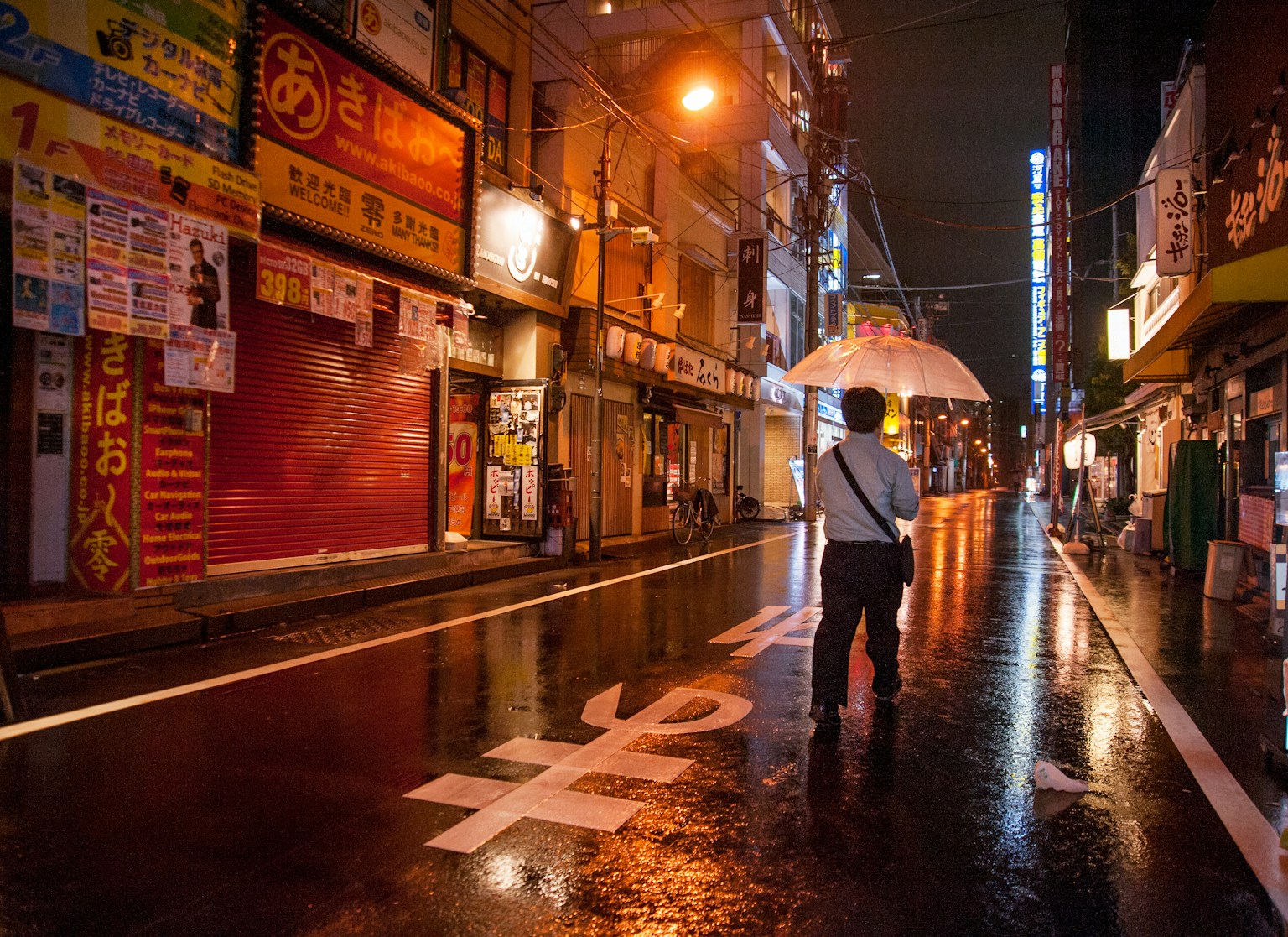
Quick Answer: Best Rainy-Day Activities in Kitakyushu and Kyushu
In Kitakyushu, the best rainy-day activities with kids are the Kitakyushu Museum of Natural History & Human History (dinosaur halls), the Kyushu Railway History Museum at Mojiko, the indoor keep at Kokura Castle, and the Kitakyushu Manga Museum beside Kokura Station.
Elsewhere in Kyushu, the strongest wet-day anchors are Marine World Uminonakamichi and teamLab Forest in Fukuoka, kashikiri onsen in Beppu, the Penguin Aquarium in Nagasaki, and Io World in Kagoshima.
Why the Kyushu Rainy Season Is Not a Trip-Killer

Planning a family trip to Kyushu — Fukuoka, Kitakyushu, or further south — in June or early July?
You’ve probably spotted the word tsuyu (梅雨), the rainy season, and started wondering whether to postpone.
Don’t. After living through multiple tsuyu seasons here in Fukuoka, the honest verdict is this: tsuyu is inconvenient, not catastrophic.
This guide is the Kyushu-wide rainy-day hub, comparing the best indoor family venues across Fukuoka, Kitakyushu, Beppu, Nagasaki, and Kagoshima so you can choose a base.
If Fukuoka city is your only stop and you just want the longest list of indoor things to do when it’s raining, jump to our Fukuoka rainy day guide with 25+ indoor activities.
Think of this article as the comparison and entry point, and that one as the city deep-dive.
The rain mostly comes in bursts rather than all-day downpours. And Kyushu has an impressive number of fully indoor, genuinely great family venues to fill any wet afternoon.
More than that, tsuyu has real upsides that peak-season visitors miss: smaller crowds at popular spots and noticeably lower hotel rates.
You also get a lushly green, almost cinematic version of Kyushu’s mountains and countryside.
Those off-peak room rates are worth acting on early. Compare tsuyu-season Fukuoka family hotel deals on Agoda before the late-July school holidays push prices back up.
If you can live with humidity and an umbrella in your bag, tsuyu is one of the more underrated times to visit.
When Is Tsuyu in Kyushu? A Realistic Timeline

Kyushu enters the rainy season earlier than the rest of Japan.
Southern Kyushu (Kagoshima, Miyazaki) typically sees tsuyu arrive around 30 May on the 1991–2020 average.
Northern Kyushu (Fukuoka, Kitakyushu, Nagasaki, Beppu) follows a few days later — historically the first or second week of June.
The rainy season in Fukuoka Prefecture usually ends around mid-to-late July, though the exact dates shift year to year.
On the same 1991–2020 averages the season lifts around 19 July in northern Kyushu and around 15 July in the south, but the declared dates move by a week or more each year.
Check the JMA forecast for the current picture before you travel.
What does tsuyu actually feel like day-to-day? Think of it as persistent humidity punctuated by rain.
You’ll get bright mornings that turn grey by afternoon, or drizzly starts that clear by noon.
Solid all-day rain happens but is not the norm — most families get at least a few usable outdoor hours most days.
The bigger challenge is the heat-plus-humidity combination, which is tiring for small kids even under cloud cover.
After tsuyu lifts (late July–August): summer in Kyushu is genuinely hot and sunny — great for beaches — but also the start of typhoon season.
Typhoon risk is low in June–July; it ramps up August through September.
If your trip straddles tsuyu’s end and typhoon season, build buffer days into your itinerary.
Once the real summer heat arrives, the challenge shifts from rain to extreme humidity, and a different set of indoor cool-spots becomes essential.
Keep that in mind when planning the back half of July.
What to Pack: Rainy-Season Family Checklist

Packing right makes tsuyu manageable. These are the items we actually use, not a generic list:
- Compact fold umbrella per adult — You’ll use these every day. Japanese convenience stores sell decent umbrellas for around ¥500–¥700 if you forget, but a sturdy compact one takes less bag space.
- Disposable ponchos (2–3 per child) — Toddlers in strollers and preschoolers who don’t hold umbrellas reliably need these. Buy a multipack before you leave; they’re bulky to find in Japan in exactly the right size.
- Stroller rain cover — Essential if you have a child under 3 in the pram. The rain cover plus a poncho for you is the two-handed solution that actually works at a busy subway exit.
- Quick-dry clothing for everyone — Synthetics and merino layers dry overnight. Cotton jeans in tsuyu are a misery you only make once.
- Light waterproof layer — A packable rain jacket folds into a fist-sized pouch and doubles as an air-conditioning shield in malls and restaurants.
- Waterproof day bag or cover — Passports, snacks, and phones should not get soaked. A dry bag inner pouch works well.
- Extra change of clothes for each child in the day bag — Even with perfect rain gear, kids find puddles.
- Wet bag or zip-lock bags — For damp clothes, wet umbrellas, and soggy shoes.
One tsuyu-specific tip: Japanese convenience stores are your friend.
Every 7-Eleven, FamilyMart, and Lawson stocks cheap umbrellas, dry-change snack bribes, and hot drinks.
When a downpour catches you between venues, duck into the nearest konbini and reassess.
Rainy-Day Family Activities Across Kyushu

Below is a city-by-city breakdown of genuinely worthwhile indoor (or mostly-indoor) family activities for tsuyu days.
We start with Fukuoka city, then cover Kitakyushu — the prefecture’s second city and the easiest rainy-day day trip in the north.
These are places we’d actually take our own kids — not filler entries.
All prices and opening hours below were rechecked against official sources in September 2026. Tsuyu-season schedules change, so always reconfirm on each venue’s official site before you go.
If you only have time for one big indoor anchor per city, here are the four aquariums families return to most:
| Aquarium | City | Star attraction | Visit time | Tickets |
|---|---|---|---|---|
| Marine World Uminonakamichi | Fukuoka | Dolphin & sea lion shows | 2–3 hrs | Book on Klook |
| Umitamago | Oita (near Beppu) | Dolphin & walrus shows | ~2 hrs | Book on Klook |
| Nagasaki Penguin Aquarium | Nagasaki | 180 penguins, 9 species | 1–1.5 hrs | Book on Klook |
| Io World | Kagoshima | Whale shark tank | 2–3 hrs | Book on Klook |
Fukuoka: The Rainy-Day Capital of Kyushu
Fukuoka punches far above its weight for indoor family options. On a grey day, you’ll have more choices than time.
Marine World Uminonakamichi
A full-size aquarium on the Uminonakamichi peninsula, about 35 minutes from Hakata by JR: Kagoshima Line to Kashii, then the Kashii Line (branded the Umi-no-Nakamichi Line) to Uminonakamichi Station.
This is the go-to rainy-day venue for families: dolphin and sea lion shows, a large touch pool, and penguins.
There is also a jellyfish gallery that toddlers stare at in genuine awe. Plan two to three hours minimum.
There is also a ferry from Momochi (Marizon), but it is seasonal: in 2026 the Umi-naka Line only sailed on weekends and holidays between 18 July and 26 August.
So the boat is not an option during tsuyu itself — take the train to Uminonakamichi Station instead.
- Adults (high school and up): ¥2,500; over-65s ¥2,200
- Children (elementary–junior high): ¥1,200
- Preschoolers aged 3 and over: ¥700; under 3 free
- Hours: generally 9:30–17:30, last entry an hour before closing (extended in summer)
- Dolphin and sea lion shows are suspended 12 January – 9 April 2027 while the show pool is repaired
- Stroller-friendly throughout; free stroller loan and coin lockers on site
It sells timed-entry tickets that let you skip the queue on a wet weekend. Book Marine World tickets on Klook and walk straight in.
Fukuoka City Science Museum
Inside the Ropponmatsu 421 complex, straight up from exit 3 of Ropponmatsu Station on the subway Nanakuma Line — the exit is signposted “Kagakukan-mae” (museum front).
This is a strong option for ages 5 and up, with the hands-on basic exhibition room filling the whole 5th floor.
The dome planetarium on the 6th floor runs shows in Japanese, but the visuals are compelling even for younger kids.
- Basic exhibition — Adults ¥510 / High school ¥310 / Elementary & middle ¥200 / Preschool free
- Planetarium: extra charge
- The building is open until 21:30, but the 5F exhibition room closes at 18:00 (last entry 17:30); closed Tuesdays
The late closing makes it useful if you need an afternoon pivot when the rain sets in.
teamLab Forest Fukuoka
Inside the BOSS E·ZO Fukuoka building next to Fukuoka PayPay Dome, this is an interactive digital art space.
It is genuinely spectacular for children and adults alike, and completely weather-proof.
The two main zones are Catching and Collecting Forest, and Athletics Forest.
Together they keep energy levels high and screens out of hands for a good two hours.
- Adults (16+): ¥2,400 on regular dates, ¥2,700 on peak dates
- Ages 4–15: ¥1,000 regular, ¥1,200 peak
- Age 3 and under: free, with an adult
- Open: weekdays from 11:00, weekends from 10:00
- Strollers cannot go inside — there is a stroller park on 3F — and there are no toilets within the exhibit
It sells out on rainy weekends especially, so don’t plan to walk in. Reserve teamLab Forest tickets on Klook the moment your dates are fixed.
KidZania Fukuoka
Inside LaLaport Fukuoka (15 minutes from Hakata Station), KidZania is an indoor role-play city for children aged 3–15.
They try out grown-up careers — pilot, doctor, sushi chef, TV anchor — earning and spending the city’s own play currency.
It runs on a shift system — on two-shift days the first runs 9:00–14:30 and the second 15:30–20:00 — so book the first slot for the best experience.
Later slots get crowded and some activities fill quickly.
- Per child (ages 3–15): ¥3,500–¥6,900 depending on weekday, weekend or school-holiday season and which shift
- Accompanying adults: ¥2,200–¥2,900
- Stroller parking at the entrance; kids navigate the “city” on foot
This venue easily fills a half-day. Check KidZania Fukuoka admission tickets on Klook to lock in your preferred shift.
Fukuoka Anpanman Children’s Museum
Inside the Hakata Riverain mall by Nakasukawabata Station, this museum is themed around the hugely popular Anpanman characters.
It is entirely indoor and a hit with toddlers and preschoolers (roughly ages 1–6).
It pairs a live character stage show with hands-on play zones and a shopping floor.
That combination makes it one of the easiest rainy-day picks for the youngest travellers.
Admission is ¥2,000–¥2,200 for everyone aged 1 and over (under 1 free) and changes with the date, so check the price calendar and show times on the official site before you go.
Covered Arcades and Underground Malls
On a rainy afternoon in central Fukuoka, the Tenjin underground arcade (Tenjin Chikagai) is an entirely dry maze of shops and cafés.
It is stroller-navigable end to end, and above ground the Shintencho arcade — western Japan’s first covered shopping street — keeps you out of the rain too. (Tenjin Nishidori, despite the name, is an open street with no roof.)
Canal City Hakata has an indoor children’s play area — Skids Garden, in the basement of the Business Center building, for ages 0 to school year 2 — plus frequent events and a food floor.
It is a solid fallback for an hour of browsing when you need shelter.
For a more dedicated indoor-play focus, see our indoor playgrounds and malls rainy-day guide.
It maps out the best soft-play zones, arcades, and kid-friendly spaces across Fukuoka’s major malls.
We also have a longer Fukuoka rainy day guide with 25+ indoor activities if you want to go deeper.
It includes budget options and free entries this article can’t cover in full.
Round1 Stadium / Spo-Cha
For older kids (roughly 6+) and teens, Round1’s arcade-and-sports-complex format is a solid rainy-day absorber.
There is no branch inside Canal City; the Spo-Cha sites in the prefecture are Hakata Hanmichibashi, Fukuoka Tenjin and Kokura.
Bowling, billiards, table tennis, karaoke, crane games — you can disappear inside for three hours easily.
Pricing is by time block rather than per activity.
Getting Around Fukuoka in the Rain with a Stroller
Fukuoka’s three subway lines reach most of the indoor venues above — though Marine World is a JR trip and LaLaport (KidZania) is a bus or taxi ride — and most stations have lifts.
Look for the elevator signage at the ticket gate as soon as you enter.
The trick in heavy rain is the exit: station lifts often discharge you at a less-covered exit than the main stairs.
Plan your exit number before you ascend.
Our guide to navigating Fukuoka on rainy days with a stroller has station-by-station exit guidance.
It also covers taxi tips for when the rain is simply too heavy to manage on foot.
Taxis in Fukuoka are abundant and reasonably priced by Japanese standards.
On a truly grim weather day — or with overtired toddlers — do not feel guilty calling a cab.
The Uber app works in Fukuoka, or you can hail a taxi from the street.
If you’re heading to LaLaport or Canal City with heavy bags, both have covered car and taxi drop-off points.
They sit close to the main entrances, which is exactly what you want when it’s pouring.
Kitakyushu: Kokura, Mojiko and the Best Rainy-Day Museums
Ask which Kyushu city handles rain best and the honest answer is Kitakyushu, not Fukuoka city.
Kokura is roughly 16 minutes from Hakata by Shinkansen, about 45 minutes on the Sonic limited express, or about 80 minutes on JR Kagoshima Line local trains.
One catch: the JR Kyushu Rail Pass does not cover the Hakata–Kokura Shinkansen, because that stretch belongs to JR West’s Sanyo Shinkansen — with a Kyushu pass, take the Sonic or a local train instead. The pass is also sold only to non-Japanese passport holders visiting on a temporary-visitor stamp, which you must be ready to show when boarding. Check JR pass options for Kyushu on Klook before you buy point-to-point tickets.
Almost everything families do in Kitakyushu is indoors: dinosaur halls, a railway museum, a manga library, and a castle keep with hands-on floors.
Kokura Station also connects straight into covered malls and arcades, so you can arrive, eat, and play without opening an umbrella.
Here are the four indoor venues we’d actually queue for on a wet day:
| Venue | Area | Best for | Visit time | Adult admission |
|---|---|---|---|---|
| Museum of Natural History & Human History | Yahata (Space World Stn) | Ages 3–12, dinosaurs | 2–3 hrs | around ¥600 |
| Kyushu Railway History Museum | Mojiko Retro | Train-mad ages 2–10 | 1–1.5 hrs | ¥500 |
| Kokura Castle | Central Kokura | Ages 5+, hands-on floors | 1 hr | ¥500 |
| Kitakyushu Manga Museum | aruaru City, Kokura Stn | Ages 8+ and teens | 1–2 hrs | around ¥480 |
Tickets, day tours and transport add-ons for the area are easy to line up ahead — browse bookable Kitakyushu experiences on Klook.
Kitakyushu Museum of Natural History & Human History
Locally known as the Seimei no Tabi Museum, this is the single best rainy-day activity in Kitakyushu for primary-age kids.
It sits beside Space World Station on the JR Kagoshima Line, about 15 minutes from Kokura Station.
The main hall is a full-scale dinosaur skeleton gallery, backed by an ecology floor and a hands-on discovery zone for younger children.
- Adults: around ¥600 / high school & university around ¥360
- Elementary & junior high: around ¥240; preschoolers free
- Hours: generally 9:00–17:00 (last entry 16:30)
- Stroller-friendly throughout; allow two to three hours
The station-to-museum walk is short and largely sheltered by the adjoining shopping complex.
Kyushu Railway History Museum (Mojiko Retro)
Mojiko Retro is Kitakyushu’s port district, about 15 minutes from Kokura on the JR Kagoshima Line.
The Kyushu Railway History Museum next to Mojiko Station is its indoor anchor: retired locomotives, cab simulators, and a large model railway diorama.
- Adults: ¥500 / junior-high age and under ¥250 (under 4 free) — prices rose on 1 April 2026
- Hours: 9:00–17:00 (last entry 16:30); closed the 2nd Wednesday of most months
- Allow one to 1.5 hours; the mini-train circuit is outdoors, costs ¥300 a ride and pauses in heavy rain
Mojiko Station itself is a preserved wooden landmark with covered platforms and cafés, so the wait is part of the visit.
Kokura Castle and Riverwalk Kitakyushu
Kokura Castle is about a 15-minute walk from Kokura Station — or 10 minutes from Nishi-Kokura — with much of the Kokura Station stretch under the Uomachi Ginten covered arcade.
The reconstructed keep is fully indoor, with a kids’ play floor, a palanquin you can climb into, and city views from the top.
Adult admission is ¥500 (junior and senior high ¥300, elementary ¥150), it opens daily until 20:00 from April to October, and the castle sits directly beside Riverwalk Kitakyushu, a large mall with a cinema and family food floors.
That pairing is the classic wet-afternoon combination: an hour of castle, then lunch and browsing without stepping outside.
Kitakyushu Manga Museum
On the upper floors of aruaru City, right beside Kokura Station’s covered exit, this museum celebrates Kitakyushu-linked manga artists.
The main draw for families is the free-reading library of roughly 70,000 volumes, plus drawing corners and exhibits.
Admission is ¥480 for adults, ¥240 for junior/senior high and ¥120 for elementary kids; it opens 11:00–19:00 and closes on Tuesdays, so check the day before you build a wet afternoon around it. It suits ages 8 and up best.
Younger siblings do better one floor down in the arcade and hobby shops in the same building.
Where to Stay for a Kitakyushu Rainy Day
Kokura Station is ringed by business and family hotels that connect to covered walkways — ideal when the forecast is grim.
Basing in Kokura also puts you inside Fukuoka Prefecture, so day trips back to Hakata stay short.
Compare Kokura and Fukuoka Prefecture family hotel rates on Agoda — tsuyu weeks are usually the cheapest of the summer.
If you’d rather keep Fukuoka city as your base, our rainy-day transport guide for families covers the station logistics for day trips like this one.
Beppu: Rainy Days Are Made for Onsen
Beppu is actually better in the rain. Steam from the hells (jigoku) looks more dramatic in low cloud.
And there’s no better excuse to disappear into a private onsen room for 90 minutes.
The kids can splash without you worrying about nearby strangers.
Beppu’s onsen ryokan also drop their rates in tsuyu.
Compare Beppu onsen-hotel deals on Agoda — a room with its own private bath is the family game-changer here.
Kashikiri (Private Family Onsen Baths)
Multiple bathhouses in Beppu offer kashikiri — rented private baths — for family groups.
Hyotan Onsen, a short taxi ride from central Beppu, is one of the most family-recommended.
It has 14 private baths — eight indoor and six open-air.
- Private rooms: ¥2,400 for 60 minutes, ¥3,000 for 75, ¥3,600 for 90 — the base rate covers three people aged 13+, extra child ¥300
- On Saturdays, Sundays and public holidays private baths are capped at 60 minutes
- Real Beppu geothermal water; open 9:00 to 1:00 the following morning
- Toddlers in diapers can’t use shared public baths — private rooms are the solution
Phone bookings open a week ahead, which is worth doing for a wet weekend.
For pre-bookable Beppu onsen and activity tickets, browse Beppu & Oita experiences on Klook.
Umitamago Aquarium
The area’s main aquarium sits on the seafront between Beppu and Oita (it is technically in Oita City, below Takasakiyama) and is a solid rainy-day option with dolphin and walrus performances that kids love.
It’s not as large as Fukuoka’s Marine World but is perfectly sized for a two-hour visit.
The otter feeding session is a paid add-on (¥500 on weekdays, ¥1,000 at weekends) and is held outdoors, so it is the one part that weather can spoil.
Suginoi Hotel: the Aqua Beat Water Park
The Suginoi Hotel’s indoor/outdoor water park, Aqua Beat, is a seasonal operation: in 2026 it ran from 25 April to 1 November.
That covers the whole tsuyu and summer window, but confirm the dates before you book — the season shifts every year.
- Day visitors (2026 rates): adults ¥2,600 on weekdays, ¥3,100–¥3,400 at weekends and on holidays
- Children from age 3 to elementary school: ¥1,800 on weekdays, ¥2,100–¥2,400 at weekends; under 3 free
- Hotel guests: included in the room rate, no extra charge
The main hall is covered, so ordinary rain doesn’t stop play, though parts of the park can shut in severe weather. This is a real crowd-pleaser for primary-age kids.
Staying at Suginoi gets you in free, which is why checking Suginoi and nearby Beppu rates on Agoda often pays for itself.
Want more Beppu detail for a wet day? See our full Rainy Day in Beppu with Kids guide.
It covers which hells are worth the entrance fee and which onsen are genuinely stroller-accessible.
Nagasaki: Penguins and Peace in the Rain
Nagasaki is a city that rewards slow, curious exploration — and rain actually fits its reflective, historical mood.
Nagasaki Penguin Aquarium
One of the best aquariums in Japan for its size, it houses around 180 penguins across nine species.
That is the widest range of penguin species kept in any single facility in the world — nine of the world’s 18.
The aquarium is mostly indoor, so rain barely matters.
Feeding times are the main event; arrive 10–15 minutes early for a good spot.
- Adults: ¥800
- Elementary, junior high and high school: ¥400
- Preschoolers: free
- Open 9:00–17:00; stroller-friendly ramp path, allow 60–90 minutes
Pair it with other rainy-day stops — see bookable Nagasaki family activities on Klook.
Full review and practical tips are in our Nagasaki Penguin Aquarium with Kids post.
Nagasaki City Science Museum (Starship)
Compact but well-curated, the Nagasaki City Science Museum — nicknamed Starship — has a planetarium and hands-on exhibits suitable for ages 5 and up (exhibition room ¥610 adult / ¥310 child, planetarium ¥720 / ¥360, closed Mondays).
It is not next door to the Penguin Aquarium, though: it sits in Aburagi on the Peace Park side of the city, so treat it as a separate half-morning rather than a same-trip pairing.
Check the official site for current planetarium show times, as schedules vary by season.
Covered Arcades and Shopping
Nagasaki’s Kanko-dori arcade, by the Hamanomachi tram stop, is the heart of a fully covered downtown shopping network.
It’s entirely rain-proof and stroller-navigable in the wider central section.
Hamaya, the city’s last remaining department store, keeps its baby and children’s range on the 7th floor, with a kids’ room and a nursing room. Good for an hour of rainy-day browsing.
Kagoshima: Aquarium at the Ferry Port
Kagoshima’s rainy-day anchor for families is Io World (かごしま水族館), the city aquarium right next to the ferry pier for Sakurajima.
Io World Kagoshima City Aquarium
Io World is a full-size aquarium with a whale shark tank as its centrepiece.
It is genuinely impressive, and one of the largest indoor tanks in Japan.
- Adults (high school+): ¥2,000
- Elementary & junior high: ¥1,000
- Preschool: free
- Hours: generally 9:30–18:00 (last entry 17:00); summer until 21:00
- Stroller-accessible throughout; budget two to three hours
Tickets and the Sakurajima ferry combo are easy to line up in advance — see Kagoshima aquarium and ferry options on Klook.
Our Kagoshima aquarium and ferry half-day itinerary combines Io World with a (weather-permitting) Sakurajima crossing.
The crossing itself is covered and interesting even in light rain.
How to Flex Your Itinerary Around Tsuyu Rain
The families who enjoy tsuyu most plan with a two-track itinerary: an outdoor first choice and an indoor backup for every day.
This is less work than it sounds:
- Check the morning forecast, not the week forecast. Tsuyu forecasts are notoriously inaccurate beyond 48 hours. Check JMA (Japan Meteorological Agency) or Weather News the morning of, and plan the day’s primary activity based on that. If it looks dry until noon, front-load outdoor plans.
- Use the “bracket” method. Schedule outdoor things in the morning or early afternoon (when rain is statistically less likely in a tsuyu day), and keep a nearby indoor venue identified as the afternoon fallback.
- Accept travel days as rainy-day wins. Shinkansen and express train journeys are fully covered activities. A Fukuoka–Kokura, Fukuoka–Beppu or Fukuoka–Nagasaki travel day is comfortable and interesting regardless of weather.
- Build in a half-day buffer. Don’t plan 8 activities across 5 days. Six activities across 5 days leaves room for a slow tsuyu morning in a café before moving on.
- Keep nap logistics simpler. Toddlers napping on a rainy afternoon in the hotel is not wasted time — it’s a natural rhythm that tsuyu actually supports.
For a fully planned 4-day Fukuoka itinerary with built-in rainy-day backups, see our 4 Days in Fukuoka with Kids itinerary.
Every outdoor slot has a same-neighbourhood indoor alternative if the weather turns.
Honest Verdicts: What’s Worth It, What to Skip in the Rain
Not every famous Kyushu attraction survives a wet day.
Here’s our honest worth-it-vs-skip call, with the actual reason behind each verdict.
Worth It in the Rain
- Marine World Fukuoka — worth it regardless. Big enough to absorb a full family morning, with shows timed so you never run out of things to do across two hours.
- Kitakyushu Museum of Natural History & Human History — worth it, best value in the north. Two to three hours of dinosaur halls and hands-on floors for around ¥600 an adult, with a sheltered walk from the station.
- Kyushu Railway History Museum, Mojiko — worth it for under-10s. Indoor locomotives and simulators make the Mojiko trip work even when the waterfront itself is a washout.
- teamLab Forest — worth it, but book ahead. Genuinely impressive for all ages; the only risk is sell-outs on rainy weekends, so don’t walk in expecting tickets.
- Beppu kashikiri onsen — worth it, peaks in the rain. A private bath while the rain falls outside is the single most relaxing tsuyu activity you can do with small kids.
Save for a Dry Day (Skip List)
- Uminonakamichi Park (outdoor section) — skip in heavy rain. Reason: it’s an exposed open park that loses all its appeal when wet. Stick to the aquarium building next door instead.
- Mojiko Retro waterfront and the Kanmon Strait promenade — skip in heavy rain. Reason: the retro streetscape and strait views are the whole point, and both vanish in rain. Move indoors to the railway museum.
- Hiraodai karst plateau (Kitakyushu) — skip entirely in rain. Reason: exposed upland walking with poor visibility and slippery limestone; save it for a clear day.
- Beppu Hell Tours — skip in heavy rain. Reason: the jigoku are outdoor paths between steaming pools. A drizzle is atmospheric; sustained rain just means wet shoes and unhappy kids. Keep Suginoi or an onsen room as backup.
- Nagasaki Glover Garden — skip in heavy rain. Reason: exposed hillside walking paths, and the views vanish in low cloud. Use the Penguin Aquarium instead and save the garden for a dry day.
- Sakurajima walking trails — light rain only. Reason: the ferry crossing is fine, but the island trails turn slippery in heavier weather. Io World is the safer Kagoshima anchor.
Frequently Asked Questions
What are the best activities for a rainy day in Kitakyushu?
The four strongest indoor picks are the Kitakyushu Museum of Natural History & Human History, the Kyushu Railway History Museum at Mojiko, Kokura Castle’s indoor keep, and the Kitakyushu Manga Museum.
For younger children, the natural history museum is the easiest full-morning option; for train-obsessed toddlers, Mojiko wins.
Add Riverwalk Kitakyushu and the Uomachi Ginten covered arcade beside Kokura Station as free, fully sheltered fallbacks.
Tickets and guided options are bookable ahead — see Kitakyushu activities on Klook.
Is Kitakyushu worth a rainy-day day trip from Fukuoka?
Yes — it is one of the best wet-weather day trips in Kyushu.
Kokura is about 16 minutes from Hakata by Shinkansen, and the main family venues are all within 15 minutes of Kokura Station by local train or on foot.
Because the station links directly into covered malls and arcades, you can spend most of the day without using an umbrella at all.
When exactly does tsuyu start and end in Kyushu in 2026?
Southern Kyushu (Kagoshima) typically enters tsuyu around early June, with northern Kyushu (Fukuoka, Kitakyushu, Nagasaki) following in the first or second week of June.
The rainy season generally ends around mid-to-late July.
The Japan Meteorological Agency publishes official tsuyu entry and exit dates once they are declared — check JMA’s site closer to your travel dates for the confirmed 2026 window.
Is the rain in tsuyu all day, every day?
No. Tsuyu rain is typically intermittent — bursts of moderate rain separated by grey or even partly sunny spells.
You won’t get solid wall-to-wall rain most days.
The bigger daily challenge is high humidity, which makes outdoor time feel draining, especially for young children.
Is Kyushu worth visiting during tsuyu with kids?
Yes, absolutely. The indoor family activity scene in Kyushu — particularly in Fukuoka and Kitakyushu — is excellent.
Tsuyu also brings genuine advantages: smaller crowds at popular venues, lower hotel prices, and lush green scenery.
Families who plan with indoor fallback options enjoy tsuyu trips without major disruptions.
What is the best rainy-day activity in Fukuoka with toddlers (under 3)?
Marine World Uminonakamichi is the top pick: large, stroller-friendly, and packed with enough shows and tanks for two to three hours.
Skip the wet-weekend queue by reserving ahead — book Marine World tickets on Klook.
The Fukuoka City Science Museum is better for ages 4 and up.
teamLab Forest (free for age 3 and under) is worth including if your toddler tolerates sensory-rich dark environments — but strollers are not allowed inside, so you park them on the 3rd floor.
For more under-3-friendly soft play, our Fukuoka indoor playgrounds guide has the gentlest options.
Can I use a stroller on Fukuoka subway during rainy season?
Yes. Fukuoka’s subway stations have lifts at all major stations, and the trains have dedicated stroller/wheelchair spaces.
The trickiest part in rain is navigating the lift exits, which often discharge at an uncovered street exit rather than the covered main entrance.
Check your exit number before ascending.
See our guide to getting around Fukuoka on rainy days with kids for station-by-station tips.
Are onsen in Beppu safe for babies and toddlers?
Shared public onsen require children to be out of diapers as a general rule.
For families with babies and toddlers, kashikiri (privately rented family baths) are the answer — you have the entire bath to yourselves, and toddler splashing is not an issue.
Hyotan Onsen and several other Beppu facilities offer private rooms; Hyotan takes phone bookings from a week ahead, and caps weekend sessions at 60 minutes.
For a room with its own bath, compare family onsen stays in Beppu on Agoda — full detail is in our Beppu with kids rainy-day guide.
What is the best aquarium in Kyushu for kids?
Marine World Uminonakamichi in Fukuoka is the largest and most show-heavy option, ideal for a long family morning.
Io World in Kagoshima has the spectacular whale shark tank — see our Kagoshima aquarium and ferry half-day itinerary.
The Nagasaki Penguin Aquarium wins for sheer penguin density and an intimate, unhurried atmosphere.
All three are excellent rainy-day anchors in their respective cities. You can line up tickets for any of them — browse Kyushu aquarium and family tickets on Klook.
Is there much of a typhoon risk during tsuyu season?
Typhoon risk during tsuyu (June to mid-July) is low. Typhoon season for Kyushu peaks in August and September, tailing off through October.
If your trip falls in late July onwards, it’s worth downloading a typhoon tracking app and building itinerary flexibility, but tsuyu itself is not typhoon season.
How far in advance should I book rainy-day venues like teamLab and KidZania?
Both teamLab Forest and KidZania Fukuoka are genuinely popular and sell out on rainy weekends during school holiday periods.
Book at least 2–3 days ahead on a normal tsuyu weekday; book a week or more ahead for weekends and any Japanese public holiday windows.
Lock in your slot the moment your dates are fixed — reserve teamLab Forest tickets on Klook, or compare KidZania Fukuoka ticket prices.
Wherever you base yourselves this tsuyu — Hakata, Kokura, or an onsen town — a little pre-booking turns a rainy forecast into a non-issue.
Browse rainy-day family activities across Fukuoka and Kyushu on Klook, and compare family hotel deals on Agoda before the school-holiday rates kick in.
 Top Things to Do in Fukuoka
 Instant confirmation for most tickets
Not sure where to begin? This free guide helps you pick the right Kyushu trip for your family — from a Fukuoka family who actually lives here.
- ✅A simple “which trip suits us?” chooser — by days, ages & interests
- ✅Snapshots of all 7 prefectures — what’s actually worth it with kids
- ✅Instant PDF download — name your price (free), no spam
Onsen, rail, or a full itinerary? It points you to the right deep-dive guide.
Want the whole trip mapped out? This is our complete 7-day Kyushu loop, done for you — the exact route a Fukuoka family runs with their own kids.
- ✓Day-by-day plan — what to do, in what order, at a kid-friendly pace
- ✓Named hotels & booking links — where to sleep each night, no rabbit-holes
- ✓Packing & prep checklists — arrive sorted, not scrambling
Instant PDF · written by locals · hours of planning, done