
Why Summer Day Trips from Fukuoka Actually Work
Fukuoka is one of the best bases in Japan for families precisely because you can sleep in an air-conditioned hotel room, spend a full day somewhere coastal, cool, or spectacularly fun, and be back before 9 pm. In July and August the city itself gets oppressively hot — regularly 35°C+ with high humidity — so the logic is simple: get out early, chase the breeze, return to the AC.
Every destination below is doable as a genuine one-day return trip from Hakata or Tenjin, and each one has a specific reason to shine in summer. If you haven’t locked in Fukuoka-side accommodation yet, searching Agoda for family-friendly hotels near Hakata is a good starting point — early checkout and late check-in flexibility matters for day-trip days.
A quick note on timing: Japanese summer heat is serious. The heat index on a calm, sunny August afternoon in Kyushu often pushes past 40°C. The golden windows for outdoor activity are before 10 am and after 4 pm. Aim to leave Hakata early, eat lunch somewhere air-conditioned, and save outdoor play for the cooler hours. Always carry water, electrolyte drinks, and a cooling towel for every child.
See our summer heat survival guide for the full checklist of what to carry and how to time outdoor activities safely.
Quick Comparison: Summer Day Trips at a Glance
| Destination | One-way from Hakata | Summer highlight | Kid difficulty |
|---|---|---|---|
| Itoshima coast | ~45 min by train | Swimming beaches, shaded café culture | Easy (needs car for flexibility) |
| Nokonoshima Island | ~1 hr 15 min (subway + bus + ferry + island bus) | Sunflowers (mid-July to mid-August), sea breeze | Easy — flat park, short ferry ride |
| Kurume fireworks | ~40 min by train | One of Kyushu’s biggest firework nights — cancelled in 2026 | Moderate — late night, crowds |
| Huis Ten Bosch | ~1 hr 45 min by limited express | Indoor rides, night illumination, pools | Easy — fully walkable, AC zones |
| Beppu onsens | ~2 hrs by Sonic limited express | Footbaths, steam, indoor attractions | Moderate — full-day commitment |
| Yufuin | ~2 hrs 15 min by limited express | Cool highland air, calm walks, onsen | Easy — walkable from station |
Itoshima: Beaches, Surf Cafés, and Salt Workshops
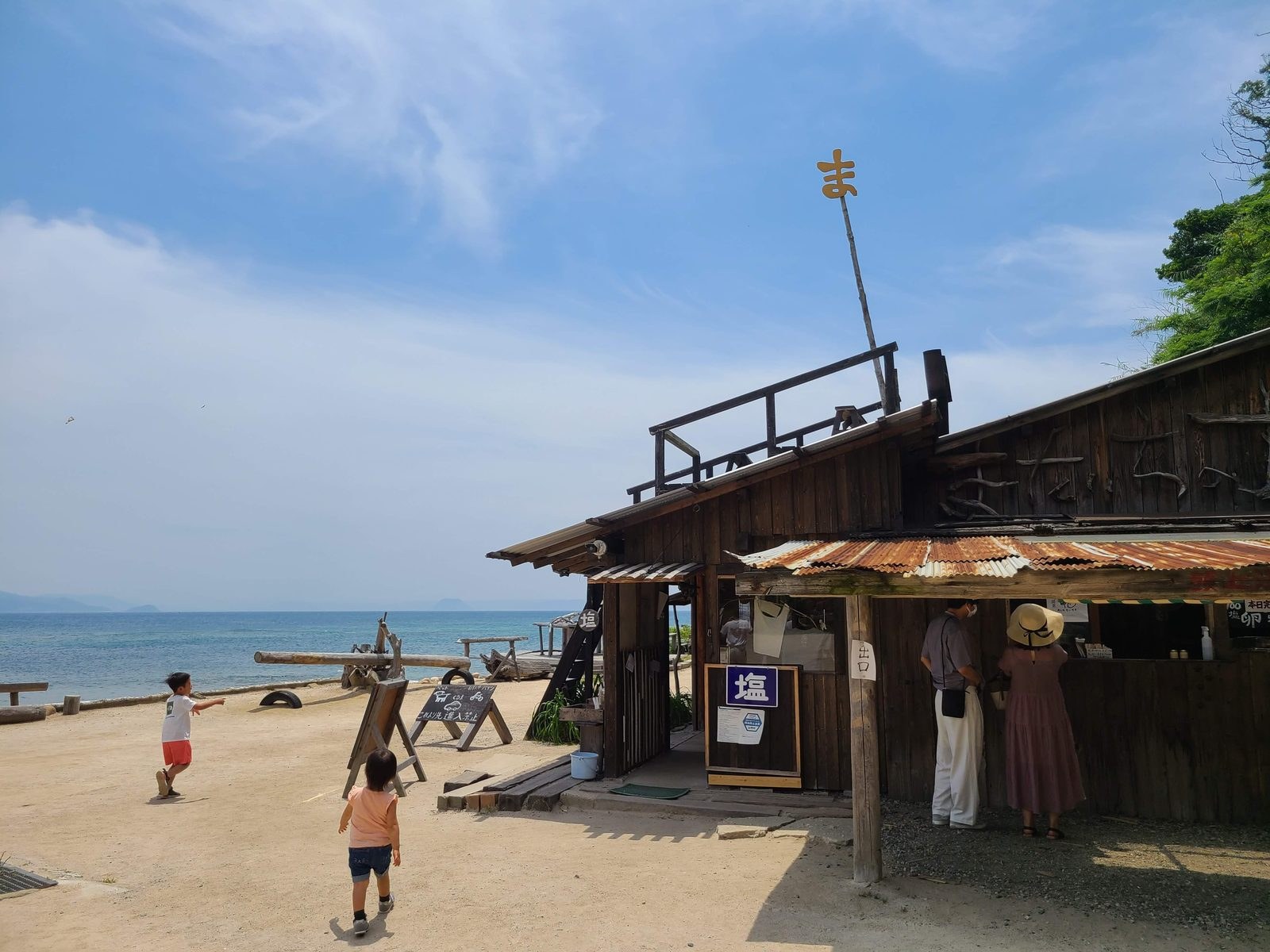
Itoshima is the go-to local escape for Fukuoka families. The coastline stretches west of the city, and Itoshima has exactly two officially managed swimming beaches — Keya and Fukae — which open their beach houses (海の家) with changing rooms, showers, food, and some shade from late June to late August. The famous photo spots along the same coast (Futamigaura, Shinomahama, Anego-no-hama) are not managed beaches: the tourism association warns of sudden drop-offs and rip currents there, and there are no lifeguards or toilets. The vibe is relaxed and increasingly café-forward rather than party-beach, which makes it genuinely enjoyable with young children.
Getting there: Take the subway from Hakata and stay aboard the through service onto the JR Chikuhi Line to Chikuzen-Maebaru (about 42 minutes, ¥640 one way). For Fukae Beach, stay on to Chikuzen-Fukae (about 53 minutes, ¥860) — the beach is a 10-minute walk from that station, which makes it the one Itoshima beach that genuinely works without a car. The rest of the area is spread out, so a rental car or taxi is strongly recommended if you want to hop between beaches and the craft-café strip. The Showa Bus "Ito-Shima-go" express from Hakata Bus Terminal takes about 50 minutes and costs ¥700 one way.
Summer angle: The beach houses only run from late June to late August (in 2026 Fukae opened on 23 June and Keya on 25 June), which makes this uniquely a summer trip. Fukae is long and shallow, so it is the better pick for toddlers and non-swimmers; Keya is the one on Japan’s “100 best bathing beaches” list for water clarity and calm waves. Bring a pop-up sun shade and set it up before 10 am; by midday the sand is scorching. The Mataichi-no-Shio salt works near Keya (Kobo Tottan, 10:00–17:00) is the classic lunchtime detour — you can watch the salt being made and eat the salted pudding, though the hands-on salt-making session is weekdays only, for groups of ten or more, and must be booked ahead.
- Travel time: ~42 min to Chikuzen-Maebaru (¥640); ~53 min to Chikuzen-Fukae (¥860)
- Summer highlight: Beach houses open late June–late August; shallow Fukae Beach suits toddlers and non-swimmers
- Best for ages: 2+ for beach paddling; the salt works is a short watch-and-snack stop at any age
- Getting around: Rental car or taxi strongly recommended between beaches and cafés
- Skip if: Your toddler won’t handle 45+ min of travel in heat, or you want more than one beach without a car
Stroller / heat notes: Getting from Chikuzen-Maebaru to the Keya side requires a short taxi or an infrequent bus; Fukae Beach is the walkable exception. On sandy beaches, a stroller is impractical — bring a baby carrier or beach wagon. Sunscreen is mandatory; reapply every 90 minutes.
Read our full Itoshima with kids guide for beach-by-beach detail, café picks, and rainy-day alternatives. Also see the best beaches in Kyushu with kids to compare Itoshima with other coastlines on the island.
Nokonoshima Island: Sunflowers and a 10-Minute Ferry
Nokonoshima sits right in Hakata Bay, and the drama-to-effort ratio here is unusually high. A 10-minute ferry from Meinohama pier lands you on a small, car-light island with flower fields, a modest beach, playgrounds, and panoramic views of Fukuoka’s skyline.
From mid-July to mid-August, the island’s sunflower fields are in full bloom — thousands of bright yellow heads turning toward the summer sky, with young children absolutely losing their minds with delight.
Getting there: Take the Fukuoka City Subway Airport Line from Hakata to Meinohama (about 20 minutes), then catch Nishitetsu Bus No. 98 from the north exit — about 15 minutes to the ferry pier. The city ferry takes 10 minutes and runs about once an hour through the middle of the day (roughly every 30 minutes at commuter times); the return fare is adult ¥460, child ¥240. From the island pier it is a further Nishitetsu bus of about 13 minutes (¥240 adult, ¥120 child) up to the park gate, timed to meet the boats — so budget a good hour and a quarter each way. On weekends and school holidays the subway leg is covered by the Famichika ticket (¥1,000 for one day, up to two adults plus unlimited children of elementary-school age or younger). Fukuoka summer with kids covers this and nearby in-city options if you want to turn it into a longer day.
Nokonoshima Island Park: Adult admission Adults (high school and above) ¥1,500 / elementary & junior high ¥800 / ages 3+ ¥500 / dogs ¥500 (city ferry round trip: adults ¥460, children ¥240; island bus ¥240/¥120 each way). The park covers 150,000 m² and combines seasonal flower gardens, a petting zoo, a grassy hill with hand-built wooden athletics and a playground, a retro sweet-shop street, and restaurants. There’s decent tree shade in the upper garden area. Note that the park itself has no beach — the island’s swimming beach belongs to Nokonoshima Camp Village down by the pier and runs from early July to late September. Weekday visits are strongly recommended — weekends in August fill up fast.
Summer angle: Sunflower season (mid-July to mid-August, per the park’s own flower calendar) is the peak. The sea breeze on the island genuinely cuts the heat compared to central Fukuoka. Park hours: Monday–Saturday 9:00–17:30, Sundays and holidays 9:00–18:30, open every day of the year.
- Travel time: ~1 hr 15 min total (subway + bus + 10-min ferry + island bus)
- Summer highlight: Sunflower fields mid-July to mid-August; sea breeze cuts the heat
- Best for ages: 1+ — ferry is the highlight for toddlers; playground keeps energetic kids busy
- Skip if: Visiting outside the mid-July to mid-August sunflower window, or you want swimming (that’s the camp village beach, not the park)
Stroller / heat notes: The island paths include some slopes. A lightweight stroller or baby carrier works fine in the lower garden; the sunflower hill has steeper terrain. There is a park restaurant and snack stalls for shade breaks. No car hire needed — this is a walkable day.
Kurume Fireworks: One of Kyushu’s Biggest Shows (Evening Day Trip)
The Chikugo River Fireworks Festival in Kurume dates back to 1650 and is one of Kyushu’s largest firework nights — about 12,000 shells over 60 minutes, launched from two points on the river with food stalls lining the banks.
Important for 2026: the 367th festival was set for 5 August 2026 (rain date 7 August), but the organising committee cancelled it after the 2026 Kumamoto earthquake — the police and fire crews who steward the event were deployed to the disaster area, and supporting affected residents took priority. The festival normally falls on 5 August every year, so treat this as a 2027 plan. When it runs, it is a different kind of day trip: spend the afternoon in Kurume, eat early, grab good spots by the river, then catch the last trains back.
Getting there: From Hakata, JR rapid trains reach Kurume in about 40 minutes for ¥870 one way. Limited express trains take about 30 minutes with a surcharge. The festival venue is roughly 10 minutes’ walk from Kurume Station. Book reserved seats on the return train well in advance — trains fill completely on fireworks nights.
Summer angle: Fireworks happen after dark (display runs approximately 19:40–20:40), which means you’re watching in cooler evening air rather than midday heat. The trade-off: it’s still a summer night (26–30°C), crowded, and very late for small children. This trip works best as a treat for kids aged 5+.
Family logistics: Strollers become difficult in festival crowd conditions — a baby carrier for toddlers is a safer choice. Ear protection for very young children is worth packing. Go early (by 4–5 pm) to find a good viewing spot before the crowds intensify. The food stalls (yatai) are part of the experience and are open from afternoon. Check our Kyushu fireworks with kids guide for detailed site-specific tips, multiple festivals across Kyushu, and advice on viewing spots with babies.
Best for ages: 5 and up for late nights; older kids will love the atmosphere. Skip if your children go to bed before 9 pm, or if the crowd and noise will overwhelm a toddler.
Huis Ten Bosch: Theme Park with Built-In AC (Nagasaki)
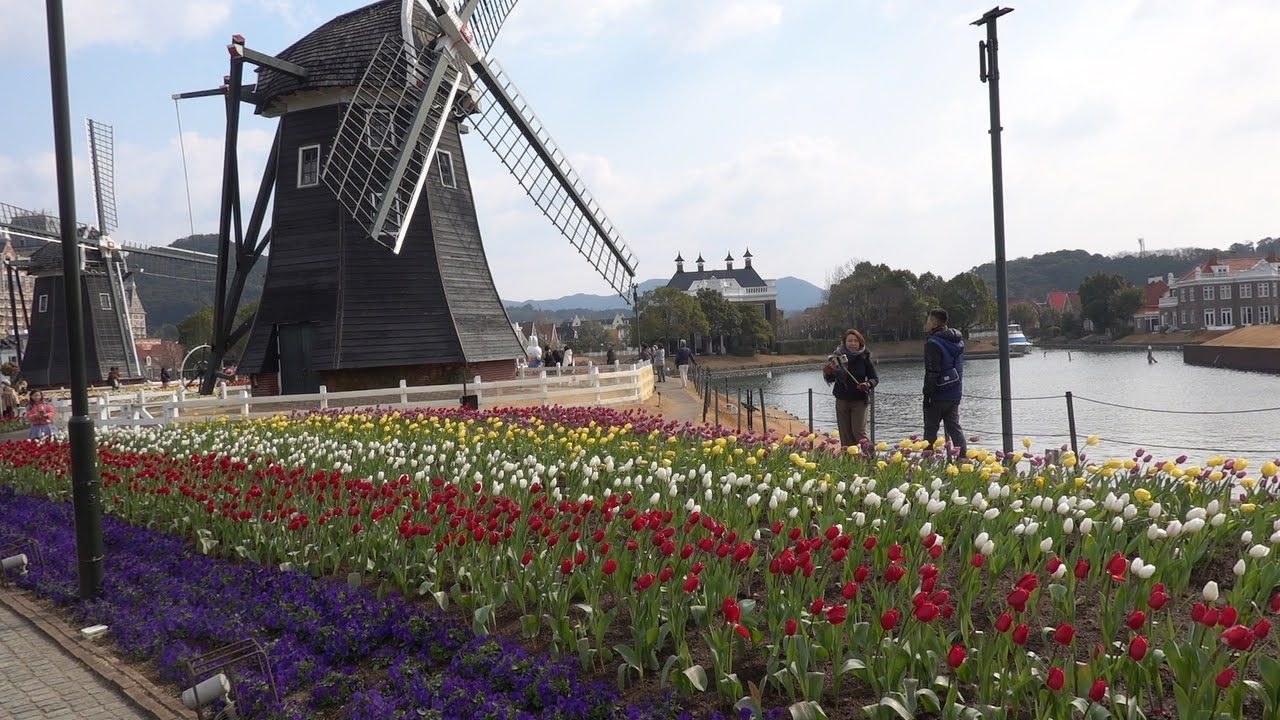
On the hottest, most humid days Huis Ten Bosch in Sasebo delivers a genuine escape. This Dutch-themed resort (152 hectares) has many of its best rides and attractions indoors or in air-conditioned zones. It also runs summer water events and transforms at night with illuminations — afternoon-arrival tickets can be a smart move in July–August.
Getting there: The JR Huis Ten Bosch Limited Express runs directly from Hakata Station to the park entrance station with no transfers — about 1 hour 45 minutes, roughly ¥4,200 one way for adults (reserved seat). Trains run every 1–2 hours. No car needed — it is about 600 m, or a five-to-ten-minute walk, from the station to the entrance gate.
If you plan to use the train frequently across multiple day trips, an JR Kyushu Rail Pass can cover both this route and the Beppu / Yufuin trains — worth comparing against single tickets for families making two or more longer runs. One catch: it is sold only to overseas visitors entering Japan on a short-stay status, and the passport with that entry stamp is checked when you collect it, so residents cannot use it. The Northern Kyushu 3-day version is ¥15,000 for adults and covers Hakata–Huis Ten Bosch, Hakata–Beppu and Hakata–Yufuin.
Tickets: Book Huis Ten Bosch tickets in advance on Klook — combo and afternoon-entry options are often cheaper online than at the gate, and it saves queuing time on busy summer days.
- Travel time: ~1 hr 45 min by JR Limited Express (direct, no transfers)
- Summer highlight: Indoor AC zones, water festival, and night illuminations
- Best for ages: 3+ for indoor attractions; 6+ for the full park
- Skip if: The ~4-hour round-trip train feels like too much for your youngest
Stroller / heat notes: Fully paved and flat — stroller-friendly throughout. Buggy rental is available inside the park if needed. The sheer size means a lot of walking; plan your route around indoor anchor points. Lockers are available near the entrance.
Our dedicated Huis Ten Bosch day trip guide has hour-by-hour itineraries, ticket tips, and what to skip if you only have one day.
Beppu: Hot Springs and Steam — Even in Summer
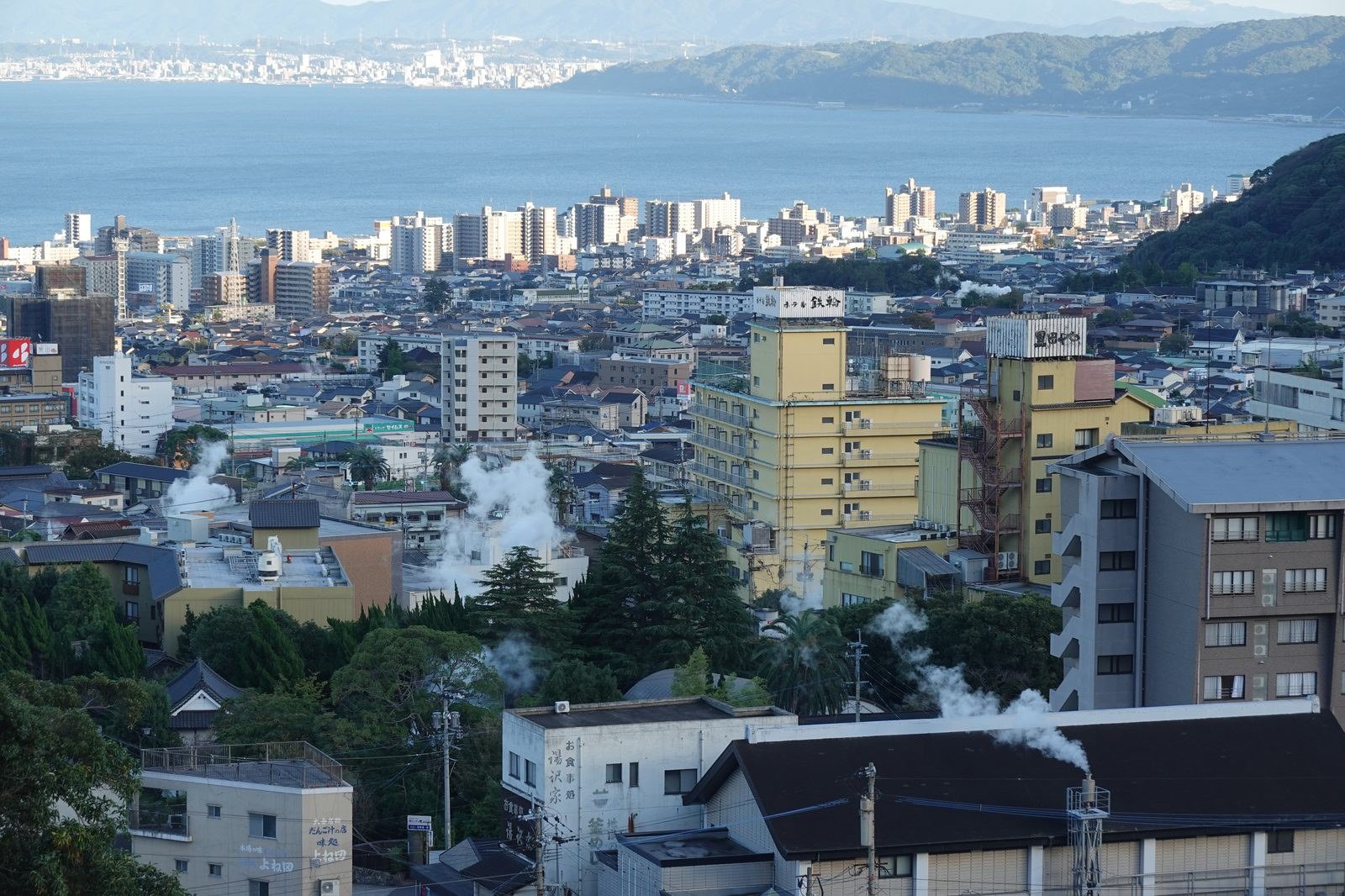
Beppu is usually thought of as a winter destination, but it works surprisingly well in summer if you approach it differently. The jigoku (hells) steam spectacles are compelling year-round. Indoor sand baths and mud baths skip the outdoor heat entirely.
Add the family-friendly food scene and you have a full day — just plan the outdoor circuits for early morning. If the day goes well and you want to take the steam-and-soak experience at a slower pace, an overnight stay in Beppu lets you hit the jigoku circuit in the cool evening and skip the 2-hour return train rush entirely.
Getting there: The JR Limited Express Sonic from Hakata takes about 2 hours and costs ¥6,910 one way for an adult with a reserved seat (¥6,380 unreserved) — covered by the Japan Rail Pass or the JR Kyushu Rail Pass if you qualify for one. There are around 30 Sonic services a day, one or two an hour. Leave Hakata no later than 8 am to make a day trip worthwhile.
- Travel time: ~2 hrs 5 min by JR Limited Express Sonic
- Summer angle: Do the jigoku circuit first (early morning), save footbaths for late afternoon
- Best for ages: 4+ for the hells; 6+ for sand baths
- Skip if: Toddlers won’t handle a 4-hour round-trip train day
Summer angle: Do the Beppu Jigoku circuit first thing in the morning — the seven hells open at 8:00 every day of the year, and the combined ticket is ¥2,400 for adults and ¥1,200 for primary and junior-high students (¥200 off the adult price with the coupon on the official site). It takes 2–3 hours with partial shade. Save footbaths for late afternoon when they feel restorative. Sand baths have a hard minimum age of 6 — both the indoor sand bath at Takegawara Onsen (¥1,500) and the beachside Sand SPA turn preschoolers away — but for school-age children they are genuinely fun rather than just scenic.
Stroller / heat notes: Jigoku paths have some uneven sections; stroller-foldable zones exist. Moving between Beppu’s main zones needs a taxi or bus. This is a full-day commitment — 4 hours of trains plus a full day out.
See our full Beppu with kids guide for the jigoku circuit order, best sand bath for children, and where to eat near the station.
Yufuin: Cool Highland Air and a Quiet Onsen Town
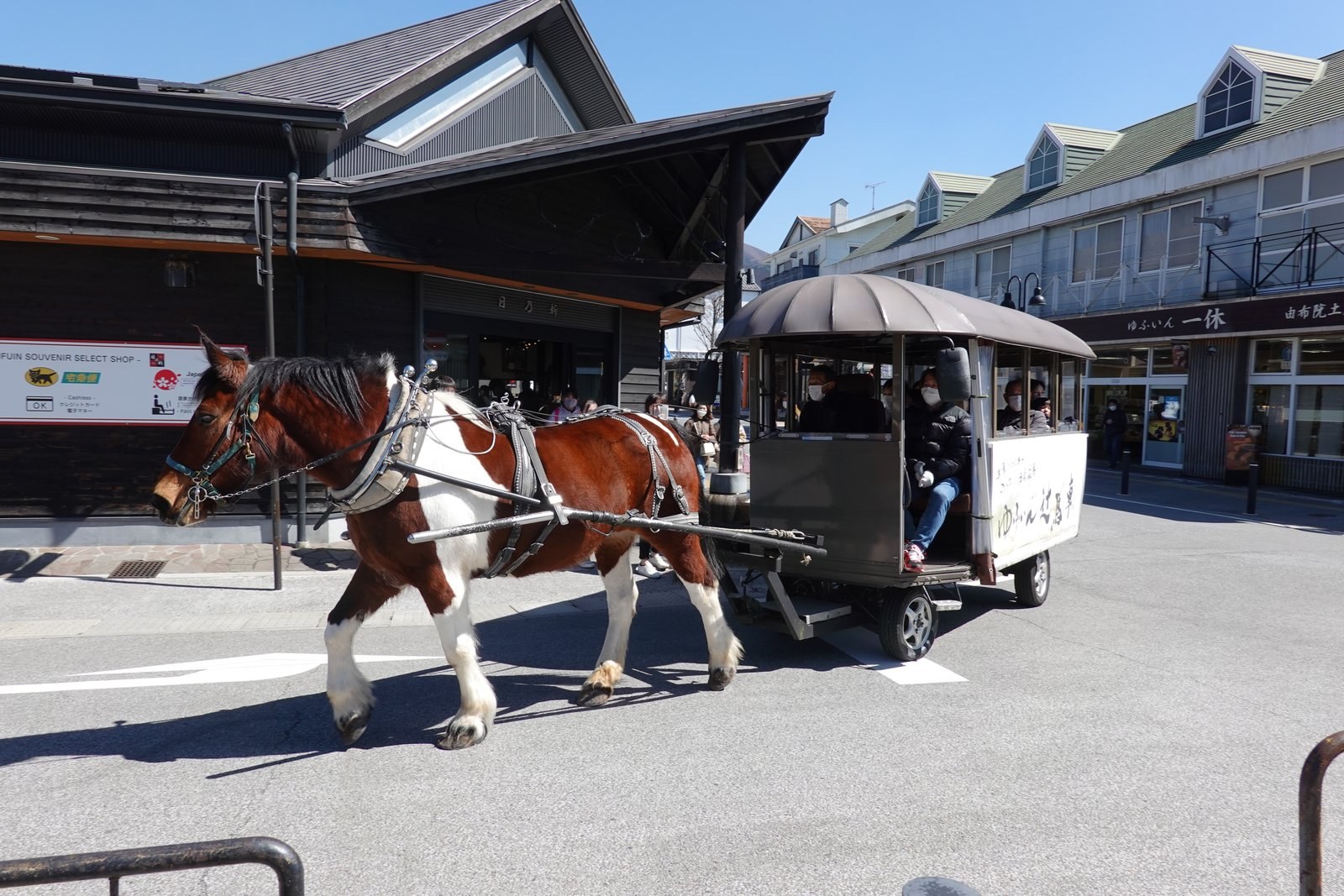
Yufuin sits in a basin at around 450 m, and on a humid Fukuoka August day that elevation noticeably cuts the heat — the August average high there is 29.5°C against Fukuoka’s 33-plus, so 3–5°C cooler is realistic. The town is a gentle, walkable strip of craft shops, onsen inns, and cafés that’s quieter and more artisanal than Beppu. Perfect for families who want atmosphere over constant activity.
Getting there: The JR Yufuin no Mori limited express is itself part of the experience — approximately 2 hours 15 minutes from Hakata, around ¥5,690 one way (reserved seat, book early — summer seats sell out weeks ahead). A highway bus from Hakata Bus Terminal takes about 2.5 hours and costs around ¥3,250 — a budget alternative if the train is full.
Summer angle: Morning heat on the main walking street (湯の坪街道) is manageable. Several free footbaths sit along and just off the strip and are a great rest point for tired legs while kids splash around (the much-photographed one on the platform at Yufuin Station is the paid one: ¥160 for adults, ¥80 for children, towel included). Day-trip onsen (日帰り入浴) at local inns runs roughly ¥600–¥1,200 per adult; confirm child admission in advance. Families who want to linger past the last train can find good ryokan options — browsing Agoda for Yufuin stays shows both traditional inns and family-friendly Western-style rooms.
- Travel time: ~2 hrs 15 min by JR Yufuin no Mori (reserve well ahead in summer)
- Summer highlight: 3–5°C cooler than Fukuoka; free footbaths for tired legs; artisanal craft street
- Best for ages: 2+ — the scenic train and footbaths are highlights for toddlers
- Skip if: Your child can’t manage 2+ hours on a train each way
Stroller / heat notes: Flat and paved throughout — stroller-friendly. Compact enough to cover on foot from the station. Reserve your return seat before leaving the station on arrival — trains fill fast in August.
Our Yufuin with kids guide covers child-friendly onsen, lunch spots, and return journey strategy in peak summer.
Planning Your Summer Day Trip: Heat, Timing, and What to Pack
A few things that make or break a summer day trip from Fukuoka with young children:
- Leave early. The 7–8 am bullet is the sweet spot: you arrive at your destination before the heat peaks, you have a full morning of outdoor time, and you can retreat to AC for lunch.
- Reserve the return. For Beppu, Yufuin, and Huis Ten Bosch, reserve your return train or bus before departure. Summer trains sell out, and being stuck waiting for the next one with overtired children is avoidable.
- Pack an electrolyte strategy. Sports drinks and electrolyte tablets are at every konbini. Kakigori (shaved ice) at every festival and beach town is your friend. For babies, carry rehydration sachets.
- Buggy on trains. Folded strollers fit in the luggage area behind the last seat on most limited express trains. IC cards (Suica/Hayakaken) simplify all local transit in and around Fukuoka.
What to Pack for a Kyushu Summer Day Trip
- Reusable water bottles (at least 500 ml per person) — refill at konbini or vending machines
- Cooling towel and portable fan for each child
- High-SPF sunscreen; reapply every 90 minutes outdoors
- Electrolyte drinks or rehydration sachets (especially for babies)
- Change of clothes for each child (beach days, footbaths, or surprise ice cream incidents)
- Light rain jacket — afternoon summer showers are common across Kyushu
- Ear protection for fireworks nights with babies or toddlers
- IC card (Suica or Hayakaken) for seamless local transit
For in-city backup plans on days when a day trip feels too ambitious, see our guide to the best pools and water parks in Fukuoka — all within the city and fully air-conditioned. You can also browse kid-friendly Fukuoka activities on Klook for hands-on workshops and guided tours that work as half-day alternatives on days when a longer trip isn’t practical.
Frequently Asked Questions
What is the easiest summer day trip from Fukuoka with a baby or toddler?
Nokonoshima Island is the easiest overall — the ferry crossing is short and exciting for small children, the lower garden is flat and stroller-accessible, and the whole trip is achievable in a single relaxed outing without long train rides. Itoshima is second-easiest if you have a car, as the beaches are gentle and close to the city.
Which day trips from Fukuoka are best for avoiding summer heat?
Yufuin has noticeably cooler highland air — typically 3–5°C lower than Fukuoka in summer. Huis Ten Bosch is the best option on the hottest days thanks to its extensive indoor attractions. For any outdoor destination, plan to be active before 10 am and after 4 pm, and retreat to AC during the peak midday hours.
How much does it cost to do a day trip from Fukuoka to Beppu?
The JR Limited Express Sonic costs ¥6,910 per adult one way with a reserved seat, or ¥6,380 unreserved. Two adults and two primary-school children come to roughly ¥40,000 return for the trains alone — children aged 6–11 pay half the base fare plus a reduced express charge, and under-6s ride free if they don’t take their own seat. That is why the pass maths matters: the Northern Kyushu 3-day JR Kyushu Rail Pass is ¥15,000 per adult, though it is sold only to overseas visitors on a short-stay entry status and the passport stamp is checked at collection. A Japan Rail Pass covers the Sonic too.
When is the Chikugo River Fireworks Festival in 2026?
It did not take place. The 367th festival was scheduled for 5 August 2026 with a rain date of 7 August, but the organising committee cancelled it after the 2026 Kumamoto earthquake, because the police and fire personnel who steward the event were working in the disaster area and supporting affected residents came first. In a normal year the festival is held on 5 August, runs approximately 19:40–20:40 with about 12,000 shells, and watching from the riverside is free, with paid reserved seating also sold.
Is Itoshima beach accessible without a car?
One of the two managed beaches is genuinely car-free: Fukae Beach is a 10-minute walk from Chikuzen-Fukae Station (about 53 minutes and ¥860 from Hakata), and it is the long, shallow one that suits small children. Keya Beach needs a short taxi or an infrequent local bus from Chikuzen-Maebaru (about 42 minutes and ¥640 from Hakata). Beyond a single beach, a rental car or taxi genuinely makes the day far more flexible — public transport to specific beaches and cafés is limited, and with young children the flexibility is worth the extra cost. See our Itoshima with kids guide (linked above) for beach-by-beach access details.
Are these day trips doable with a baby under 1 year old?
Nokonoshima Island and Huis Ten Bosch (indoor areas) are the most manageable with an infant. Beppu and Yufuin (2+ hours each way) are challenging — save those for 18 months+. Summer heat is a genuine risk for infants; always prioritise shade, hydration, and AC access.
Can you swim at Nokonoshima Island?
Yes, but not inside the flower park. The island’s swimming beach belongs to Nokonoshima Camp Village, a separate facility near the pier, and it runs from early July to late September with changing rooms, hot showers and lockers. Nokonoshima Island Park itself is a hillside flower park with no beach. If swimming is the main event, head for the camp village beach, or choose Itoshima’s Keya or Fukae beaches, which have beach houses and staffed facilities from late June to late August.
How do I book train tickets for the Yufuin no Mori?
The Yufuin no Mori is a reserved-seat-only scenic limited express; seats must be booked in advance, especially in peak summer (late July and August). Book via the JR Kyushu online reservation system, at any JR ticket office (みどりの窓口) in Fukuoka, or through third-party services like Klook. Summer seats sell out weeks in advance, so plan early.
 Top Things to Do in Fukuoka
 Instant confirmation for most tickets
A relaxed, ready-to-use plan from a Fukuoka family who actually lives here — instant PDF, name your price (free).
- ✅A gentle day-by-day Fukuoka plan — ramen, parks, one easy day trip
- ✅Tap-to-open Google Maps for every stop, plus where to stay & family tips
- ✅Instant PDF download — no spam, yours to keep
Planning the whole island? The full 7-day Kyushu itinerary is inside.
Want the whole trip mapped out? This is our complete 7-day Kyushu loop, done for you — the exact route a Fukuoka family runs with their own kids.
- ✓Day-by-day plan — what to do, in what order, at a kid-friendly pace
- ✓Named hotels & booking links — where to sleep each night, no rabbit-holes
- ✓Packing & prep checklists — arrive sorted, not scrambling
Instant PDF · written by locals · hours of planning, done