
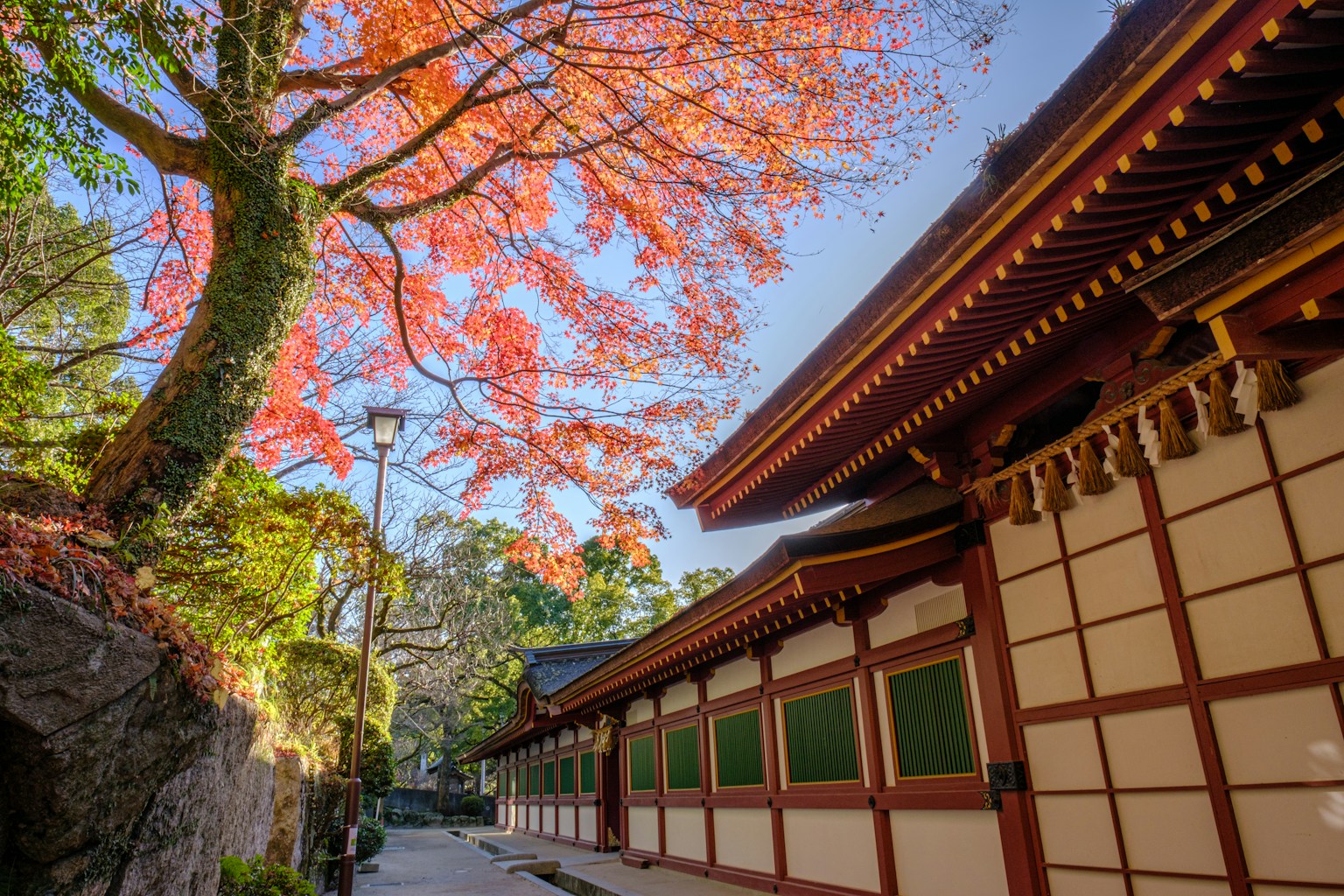
Fukuoka does get real autumn color — you just have to know where to look and, more importantly, when.
Because the city and its surrounds sit at low elevation in the south of Japan, the leaves here turn later and more gently than the postcard scenes of Kyoto or the Japanese Alps.
Families who fly in expecting early-November fire and find green trees are simply a couple of weeks early.
This guide covers the best family-friendly foliage spots in and around Fukuoka — from a giant 400-year-old maple in the Itoshima hills to a Demon Slayer-famous shrine and an easy, stroller-friendly park in the city center.
You’ll also get a straight answer on when each one actually peaks. For the wider region beyond Fukuoka, see our guide to autumn foliage spots across Kyushu.
When Do Autumn Leaves Peak in Fukuoka? (Quick Answer)
Fukuoka’s autumn leaves peak from mid-to-late November, later than Honshu.
The classic maple spots — Kamado Shrine, Akizuki, and Raizan Sennyoji — usually hit their best color in the second half of November, while city parks like Ohori run into early December.
Aim for the third or fourth week of November for the safest bet with kids. These are typical-year windows — actual peak shifts with the weather each year, so confirm with a live foliage forecast close to your dates.
When Fukuoka’s Foliage Actually Peaks
The single biggest mistake visitors make is using a Kyoto or Tokyo timeline.
Fukuoka is warmer and further south, so its momiji (Japanese maple) color arrives roughly one to three weeks later than central Honshu.
A rough guide for a normal year:
- Early November: Mostly still green in the city; only the higher hills start to turn.
- Mid November: Hill spots like Raizan and Akizuki begin peaking.
- Late November: The best all-round window — most maple spots are at or near peak.
- Early December: City parks such as Ohori often hold color longest.
Timing above reflects typical years and shifts with the weather, so check a live koyo (foliage) tracker such as weathernews.jp or tenki.jp close to your dates. Both publish spot-by-spot color status through November.
If your travel window is flexible, our month-by-month guide to Kyushu in October and November helps you pick the right dates overall.
Kamado Shrine (Hōman-gū) — Maples and a Demon Slayer Connection
Tucked into the wooded slopes of Mount Homan near Dazaifu, Hōman-gū Kamado Shrine is one of Fukuoka’s most atmospheric autumn spots.
It’s a magnet for families with older kids because it shares its name with the hero of the anime Demon Slayer (Kimetsu no Yaiba). Fans come for the connection; everyone stays for the maples, which frame the stone steps and shrine buildings in deep red through late November.
For families, it’s a moderate visit: there are stairs up to the main shrine, so a baby carrier beats a stroller.
The grounds are compact enough for a short outing, and it pairs naturally with a wider Dazaifu Tenmangu half-day with kids, since both sit in the same hills east of the city.
Opening hours and access notes can change seasonally, so confirm them on the shrine’s official page before you go.
Akizuki Castle Town — A Maple Corridor in a Little Kyoto
Akizuki, in the hills of Asakura, is often called a “little Kyoto.”
In autumn its most famous stretch — the Sugi-no-Baba avenue leading to the old castle gate — turns into a tunnel of red and orange maples. It’s flat, walkable, and photogenic, which makes it one of the easier foliage outings with young kids.
The town is small and best explored on foot; expect it to be busy on late-November weekends, so arrive early.
There are local snack stalls and simple cafes for a break, and the gentle terrain suits strollers along the main street (the castle steps themselves are optional).
Raizan Sennyoji Daihioin — A 400-Year-Old Giant Maple
Up in the Itoshima hills, Raizan Sennyoji Daihioin is home to a single enormous maple said to be around 400 years old, which draws crowds at peak.
When it turns, the whole temple courtyard glows red — a bucket-list photo spot and genuinely awe-inducing for kids who can appreciate “the biggest tree.”
Access is easiest by car — it’s in the hills above Itoshima, and public transport is limited — so this pairs well with a wider Itoshima family day trip.
The temple garden charges an admission fee during the autumn viewing period; the amount and the exact viewing dates change year to year, so check the official listing before you visit.
It gets very busy at peak, so go early on weekdays if you can. To lock in the drive out for peak red, book Itoshima day-trip experiences and rental cars on Klook and time the giant maple for a calm autumn morning.
Komyozenji Temple (Dazaifu) — A Zen Garden in Red
A short walk from Dazaifu Tenmangu, Komyozenji is a small Zen temple famous for its moss-and-stone gardens, wrapped in brilliant maple color in late November.
It’s a calm, contemplative stop rather than a run-around one — best with kids who can manage a quiet sit-down on the tatami veranda looking out at the garden.
It’s compact and usually involves removing shoes to view the garden from inside, so slip-on footwear helps with little ones.
A small donation is typically requested for entry, and the amount can vary — bring some coins. It slots neatly into a Dazaifu afternoon alongside the main shrine.
Ohori Park & Maizuru Park — Easy City Color
If you don’t want to leave the city, or you’re traveling with a stroller and a toddler, Ohori Park and the adjacent Maizuru Park (around the Fukuoka Castle ruins) are the easy answer.
The Japanese garden inside Ohori Park charges a small entry fee — the rate varies by season, so check the current amount on site — and offers manicured maples and ponds. The surrounding park loop is free, flat, and fully stroller-friendly.
If a low-stress city base suits your family this autumn, compare family-friendly Fukuoka City hotels on Agoda, since central rooms fill fast on late-November foliage weekends.
City color tends to peak slightly later — often into early December — so this is a good fallback if you arrive and find the hill spots have already dropped.
There’s plenty of open space for kids to run, plus cafes and boat rentals to break up the visit.
Visiting Fukuoka’s Autumn Spots with Kids: Practical Tips
 Top Things to Do in Fukuoka
 Instant confirmation for most tickets
A few things that make foliage outings smoother with children:
- Go on weekday mornings. The famous spots (Raizan, Akizuki, Kamado) get packed on late-November weekends.
- Car vs train: Kamado, Akizuki, and Raizan are much easier by car. Ohori and Dazaifu are simple by train and IC cards for easy family transport.
- Dress in layers. Hill temples are colder than the city — see our autumn packing guide for families.
- Carrier over stroller for the shrine and temple spots with steps; strollers are fine at Ohori and along Akizuki’s main avenue.
Fukuoka Autumn Leaves: Family Spot Comparison
| Spot | Area | Typical Peak | Best For | Access |
|---|---|---|---|---|
| Kamado Shrine | Dazaifu hills | Late Nov | Older kids, anime fans | Car / bus, has steps |
| Akizuki Castle Town | Asakura | Late Nov | Easy strolling, all ages | Car best |
| Raizan Sennyoji | Itoshima hills | Mid–late Nov | The “giant tree” wow factor | Car |
| Komyozenji | Dazaifu | Late Nov | Calm garden viewing | Train + walk |
| Ohori / Maizuru Park | Fukuoka City | Late Nov–early Dec | Strollers, toddlers | Subway |
Frequently Asked Questions
When is the best time to see autumn leaves in Fukuoka?
The safest window is the third and fourth weeks of November. Hill spots like Raizan and Akizuki peak mid-to-late November, while city parks such as Ohori often hold color into early December. Fukuoka runs one to three weeks later than Honshu.
Does Fukuoka city actually get autumn colors?
Yes, though gentler than the mountains. Ohori Park’s Japanese garden and the Maizuru Park castle grounds get good maple color, usually peaking late November into early December — a reliable, stroller-friendly option right in the city.
What is the best autumn spot in Fukuoka with young kids?
For toddlers and strollers, Ohori Park is easiest. For a classic maple-corridor walk that’s still flat, Akizuki’s main avenue is ideal. Raizan’s giant maple is the biggest “wow” but needs a car and involves crowds at peak.
Is Kamado Shrine worth visiting for Demon Slayer fans?
For families with older kids who love the anime, yes — the name connection is a fun hook, and the autumn maples make it genuinely beautiful. Note there are stairs, so a baby carrier is better than a stroller for little ones.
Do I need a car to see Fukuoka’s autumn leaves?
Not for everything. Ohori Park and Dazaifu’s Komyozenji are easy by train. But the standout hill spots — Raizan, Akizuki, and Kamado Shrine — are much easier by car, especially with kids and limited local buses.
How does Fukuoka autumn timing compare to Kyoto?
Fukuoka peaks roughly one to three weeks later than Kyoto because it’s warmer and further south. If you’ve seen Kyoto foliage forecasts, add a couple of weeks for Fukuoka, and always check a live koyo tracker near your dates.
More Kyushu Stories
 Where to Stay in Fukuoka
A relaxed, ready-to-use plan from a Fukuoka family who actually lives here — instant PDF, name your price (free).
- ✅A gentle day-by-day Fukuoka plan — ramen, parks, one easy day trip
- ✅Tap-to-open Google Maps for every stop, plus where to stay & family tips
- ✅Instant PDF download — no spam, yours to keep
Planning the whole island? The full 7-day Kyushu itinerary is inside.
Want the whole trip mapped out? This is our complete 7-day Kyushu loop, done for you — the exact route a Fukuoka family runs with their own kids.
- ✓Day-by-day plan — what to do, in what order, at a kid-friendly pace
- ✓Named hotels & booking links — where to sleep each night, no rabbit-holes
- ✓Packing & prep checklists — arrive sorted, not scrambling
Instant PDF · written by locals · hours of planning, done