
Why Mount Inasa Belongs on Every Kyushu Family Itinerary
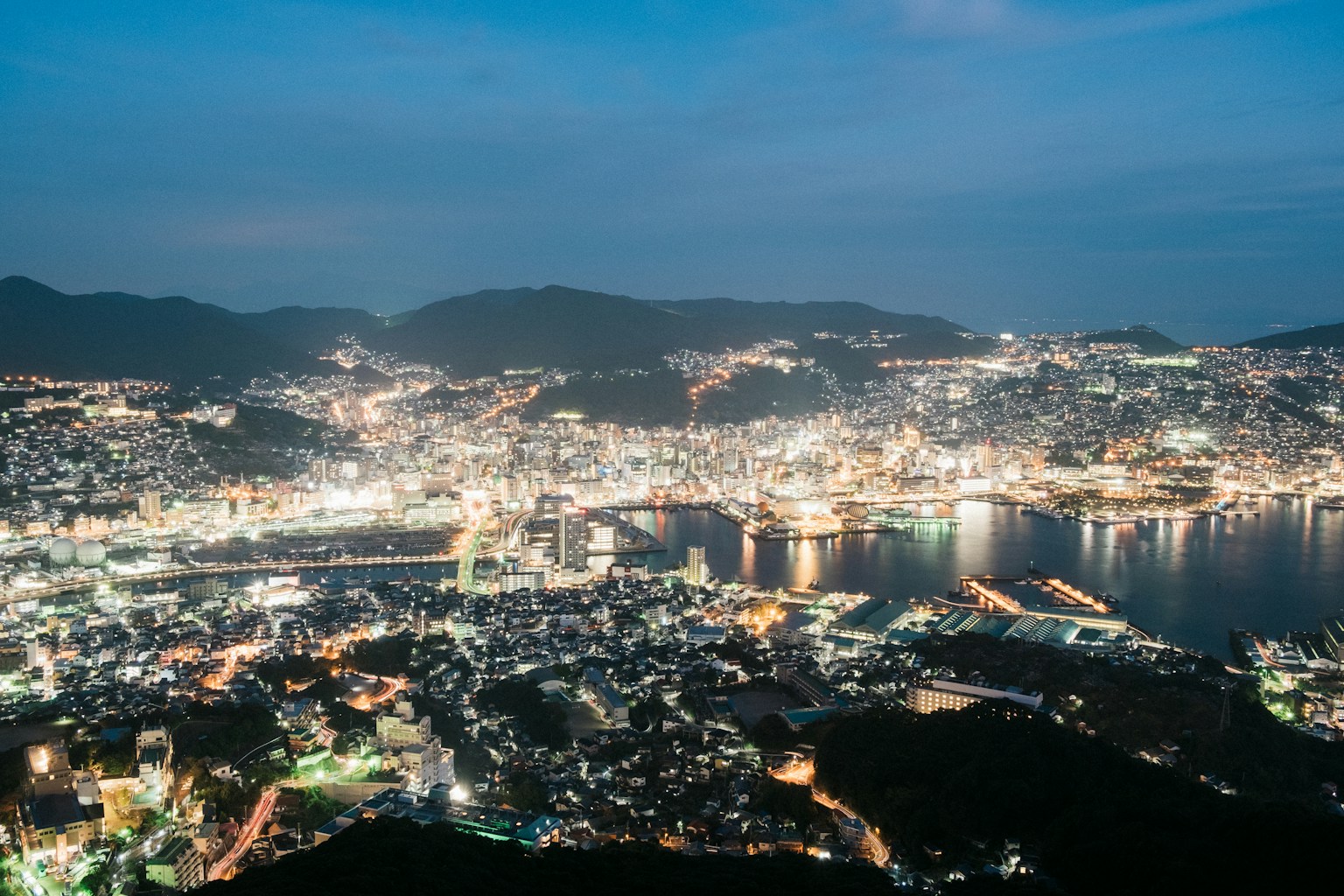
When people talk about Japan’s top night views, they usually mention three names: Hakodate in Hokkaido, Kobe’s Mount Rokko, and Nagasaki’s Mount Inasa.
That last one is easy to overlook because Nagasaki doesn’t always make the shortlist for family trips — but it absolutely should. If you’re already planning a visit to the city, skipping the view from the top of Inasa would be a genuine missed opportunity, even with small kids in tow.
We went up with our two children (ages four and seven at the time) on a clear autumn evening. It remains one of those travel moments where everyone — adults and kids alike — genuinely gasped.
The city spreads out below you in a wide horseshoe basin, with harbour lights reflecting off the water and the hills of Nagasaki glowing on both sides.
There’s a reason UNESCO and the Japan Tourism Agency keep putting this city on lists. The night view is a big part of that.
The good news: this is a completely doable outing with young children, as long as you plan around a few practical details. Here’s everything we learned.
Getting to Mount Inasa
Mount Inasa (稲佐山) sits at 333 metres above sea level, just northwest of central Nagasaki. There are two main ways to reach the summit: by ropeway, or by road (taxi or car).
For families, the ropeway is the obvious choice. It’s faster, more fun for kids, and avoids the winding mountain road entirely.
The ropeway base station (淵神社駅) is in the Fuchi Shrine area and is reachable by city tram. Take Tram Line 3 towards Akasako and get off at Takaramachi or Fuchi-jinja-mae, then walk about five minutes to the ropeway station.
For a full guide to getting around the city on public transport with a pushchair or stroller, see our article on Riding the Nagasaki Trams with a Stroller: Routes & Tips.
If you’re driving in from another part of Kyushu and trying to figure out the best logistics for the broader trip, our guide on Getting Around Kyushu with Kids: Car vs Train for Family Travel covers the tradeoffs in detail.
For Mount Inasa specifically, if you have a car, parking is available near the ropeway base station — but evenings can get busy, especially on weekends.
Ropeway Hours and Prices
The Mount Inasa Ropeway runs throughout the day and into the evening, which is key for timing your night view visit. As of the most recent season:
- Operating hours: approximately 9:00 AM to 10:00 PM (last ascent around 9:00 PM, last descent 10:00 PM). Hours may vary slightly by season and day — always check the official Nagasaki Ropeway website before you go.
- Adult round trip: approximately 1,250 yen
- Children’s round trip: approximately 620 yen (roughly half the adult fare)
- Small children under a certain age: often free — confirm at the ticket window
- The gondola ride takes around five minutes each way
Want to skip the on-the-day ticket scramble or pair the view with a guided evening outing? Compare Nagasaki night view & city tours on Klook to lock in your plans before you travel.
The ropeway is stroller-accessible in principle, but the gondola is small. We folded ours and carried it on without trouble.
If you have a large travel system, a compact umbrella stroller is much easier to manage. There’s a lift at the base station for those who need step-free access.
One important practical note: queues build up fast at sunset, especially on weekends, public holidays, and during the autumn leaf season (mid-November through early December).
We waited about 25 minutes to board on a Saturday evening in October. Budget for this in your timing plan.
When to Go: Sunset Timing by Season
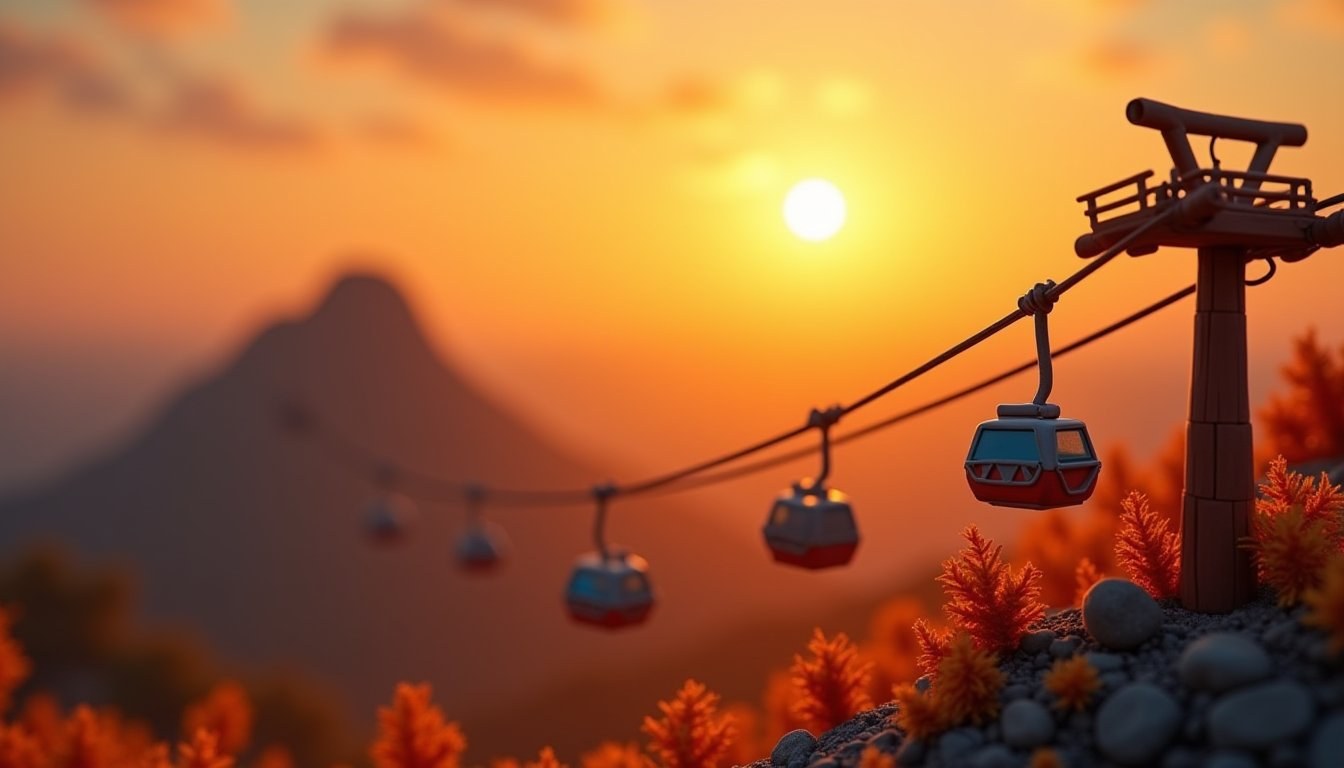
The magic of Mount Inasa’s night view is the transition — watching the city go from dusky gold to full glittering night.
To catch that, you need to time your ascent so you’re at the top roughly 20 to 30 minutes before full dark. Here’s a rough seasonal guide for sunset in Nagasaki:
- Spring (March–May): Sunset between 6:15 PM and 7:00 PM. Aim to board the ropeway around 5:45–6:15 PM.
- Summer (June–August): Sunset between 7:00 PM and 7:30 PM. This is late for young children — consider whether it fits your family’s rhythm. The views on a clear summer evening are spectacular, but tired toddlers at 8 PM on a windy hilltop are another matter.
- Autumn (September–November): Sunset between 5:30 PM and 6:30 PM. This is the sweet spot for families — early enough for kids, and the autumn atmosphere adds to the experience.
- Winter (December–February): Sunset as early as 5:15 PM, which is great for early bedtimes, but cold temperatures at the summit require serious preparation (see below).
For the most accurate local sunset times, use a weather or astronomy app and add 15–20 minutes to account for transit time from wherever you’re staying.
Cold Weather: Don’t Underestimate the Summit
Even in mild Fukuoka weather, Nagasaki’s hilltops are noticeably colder and windier than the city below.
In autumn and winter, the observation deck can feel several degrees colder than the streets, with a sharp wind that cuts through light layers instantly.
Our honest packing list for an evening on Mount Inasa with kids:
- Extra layers for everyone, including a hat and gloves from October onwards
- A baby carrier or structured carrier if you have a toddler — holding a cold, wriggly child while trying to look at the view is exhausting
- Warm drinks in a thermos — there is a small café/shop at the summit, but it’s small and can be crowded
- Snacks to keep everyone calm during any queue wait
Winter visits (December through February) are genuinely cold at the top — think 5–8°C even when the city below feels mild.
On those evenings, the clear winter air also produces the sharpest, most brilliant night views, so it’s worth it. Just dress everyone as if you’re going to a ski resort, not an evening stroll.
Toddler Safety at the Observation Deck
This is the question we get asked most from parents of very young children, and it’s worth addressing honestly.
The main observation deck at the summit has railings and fencing, but this is not a soft indoor attraction — it’s an open-air hilltop platform. The barriers are solid and at reasonable height, but a determined toddler can find gaps to poke fingers through, and the drop on the other side is severe.
Our practical advice:
- Never leave a toddler unsupervised near the edge, even for a second to take a photo
- The observation deck is large enough that you can stay away from the outer railing and still get an excellent view — the panorama is wide enough that you don’t need to press against the fence
- A carrier keeps restless small children safely attached to you and frees your hands
- School-age children (6+) are generally fine with normal parental supervision and a reminder of the rules before you step out
The summit also has an indoor viewing area that provides a similar panorama with no open-air risk. This is useful for very cold or rainy evenings, and gives parents of toddlers a lower-stress option.
Dinner: Before or After?
This is a genuine planning question because the timing of your visit overlaps with dinner time for most families. Our strong recommendation: eat before you go up.
The food options at the summit are limited to a small café that offers drinks and light snacks. There’s nothing wrong with it, but it’s not a dinner destination, and it can be crowded on busy evenings.
Coming down from the ropeway with hungry children after 8 PM and then trying to find a restaurant in an unfamiliar neighbourhood adds unnecessary stress.
Instead, have an early dinner in central Nagasaki — champon or sara udon at one of the classic Nagasaki noodle restaurants near Shinchi Chinatown is a crowd-pleaser — then head to the ropeway base station in time for sunset.
When you come back down, the kids are fed, the view is done, and you can head back to your accommodation without the chaos of a hungry post-outing restaurant search.
If your family does better with a late dinner, there are a handful of restaurants within walking distance of the ropeway base station, but your options are more limited than in the city centre. Plan accordingly.
Staying close to the ropeway makes the whole evening easier with tired kids. Search family-friendly hotels near Mount Inasa & central Nagasaki on Agoda to keep your post-view commute short.
How Does It Compare to Glover Garden’s Hilltop View?
Many families visiting Nagasaki also visit Glover Garden, the historic Western-style mansion complex on the slopes above the harbour.
There’s a free outdoor escalator system up the hillside that provides increasingly impressive views as you ascend, culminating in a harbour panorama near the top of the garden.
It’s a lovely view — but it’s not the same experience. Glover Garden’s hilltop looks out over the southern part of the harbour and gives you a partial city view.
Mount Inasa, at 333 metres, gives you the full panorama: the entire city basin, both arms of the harbour, and the surrounding mountains. It’s simply a bigger, more dramatic perspective.
Glover Garden is a daytime attraction with limited evening access (check seasonal hours), whereas Mount Inasa is specifically designed for night viewing. If you have time, do both — they complement each other rather than compete.
For a full overview of how to structure your Nagasaki trip with children, including Glover Garden, Dejima, and the Peace Park, see our The Ultimate Family-Friendly Guide to Nagasaki with Kids: History, Theme Parks & Hidden Gems.
Fitting Mount Inasa into a Wider Kyushu Trip
Nagasaki is often paired with other destinations in northwestern Kyushu. If you’re visiting Huis Ten Bosch in Sasebo — another big family favourite — you can combine both into a two or three-night loop from Fukuoka.
Huis Ten Bosch is famous for its own night illuminations, which offer a completely different but equally impressive atmosphere. For that, see our guide to Huis Ten Bosch with Kids: Best Attractions & Night Illumination Guide.
Planning the Nagasaki leg as a day trip from Fukuoka or building a multi-stop loop? Browse Nagasaki & Sasebo day tours and transport passes on Klook to stitch the region together with less hassle.
For families tackling the wider island, our Kyushu with Kids: The Complete Family Travel Guide (2026) covers how to build a multi-destination itinerary that works for all ages.
Quick Tips Summary
- Take the ropeway — it’s fast, fun, and accessible with strollers
- Arrive at the base station at least 30 minutes before sunset on weekends
- Dress warmer than you think you need to, especially October through March
- Eat dinner beforehand in the city centre
- Use a carrier for toddlers on the outdoor observation deck
- Check operating hours on the official website before your visit — seasonal variations apply
Frequently Asked Questions
Is the Mount Inasa ropeway suitable for strollers and pushchairs?
The ropeway gondola is small, so you will need to fold your stroller to bring it on board. A compact, lightweight stroller is much easier to manage than a large travel system.
There is a lift at the base station for step-free access to the boarding platform. Staff are generally helpful, and the ride itself is only about five minutes, so it’s manageable even with young children.
What age is appropriate for the Mount Inasa night view?
There’s no minimum age — babies and toddlers can come, but the experience is most rewarding for children old enough to appreciate the view, roughly three years and up.
For very young toddlers, the main consideration is the cold and wind on the outdoor observation deck. A front carrier helps enormously. School-age children tend to find it genuinely exciting and are old enough to understand basic safety rules at the railing.
How long should we plan to spend at the summit?
Most families spend between 30 and 60 minutes at the top. That’s enough time to watch the city transition to night, take photos, have a warm drink, and let the kids take it all in before they start getting cold and restless.
Factor in queue time at the ropeway, especially on weekends — we’d budget at least 90 minutes total from arriving at the base station to returning by ropeway.
Is Mount Inasa worth visiting on a cloudy or partly cloudy evening?
Low cloud or fog can obscure the view significantly, and Nagasaki is a coastal city that can be misty. Clear or lightly hazy evenings give the best results.
That said, partial cloud can occasionally add drama to the view, with the city lights reflecting off a low cloud layer. If you have flexible scheduling, check the forecast and aim for the clearest evening of your visit.
If clear skies aren’t on offer, the ropeway ride itself and the summit café are still enjoyable even with a reduced view.
Not sure where to begin? This free guide helps you pick the right Kyushu trip for your family — from a Fukuoka family who actually lives here.
- ✅A simple “which trip suits us?” chooser — by days, ages & interests
- ✅Snapshots of all 7 prefectures — what’s actually worth it with kids
- ✅Instant PDF download — name your price (free), no spam
Onsen, rail, or a full itinerary? It points you to the right deep-dive guide.