
The single most common pre-trip worry families email us about is some variant of: “What if our two-year-old has a meltdown in the middle of a Japanese restaurant?”
It is a real worry, and the answer is not “Japan is fine, don’t worry about it.” Sometimes it isn’t fine.
Tiny ramen counters with no buffer between tables. Hushed sushi counters where the chef can hear your kid breathing. Traditional kaiseki rooms where adjacent parties resent any sound at all.
These exist, and you can blunder into them. The fix in Fukuoka is to learn the four words that change the answer.
Those words are koshitsu (個室), zashiki (座敷), hori-gotatsu (掘りごたつ), and kashikiri (貸切).
Each one buys you a buffer between your family and the rest of the room. This guide is how to find them, how to book them, and what to actually say.
(Note: kashikiri applied to baths is the private onsen booking covered in our kashikiri family bath guide. Applied to restaurants, it means renting the whole place — useful for big multi-family groups but rarely what you want for a 4-person dinner.)
What is a zashiki room? (quick definition)
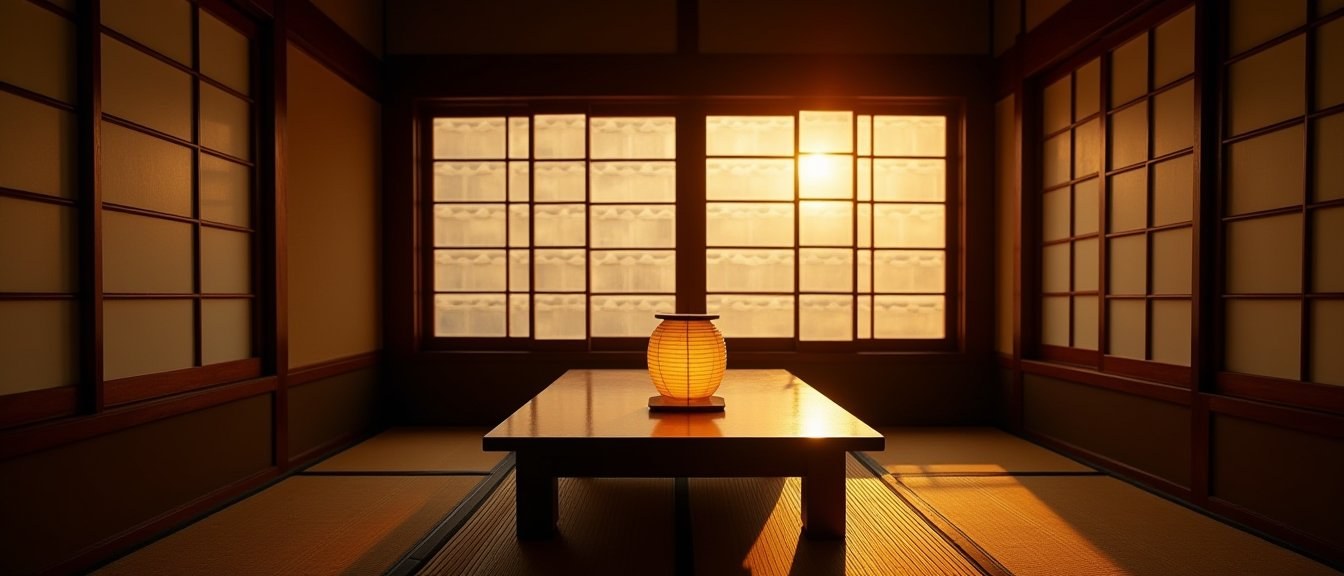
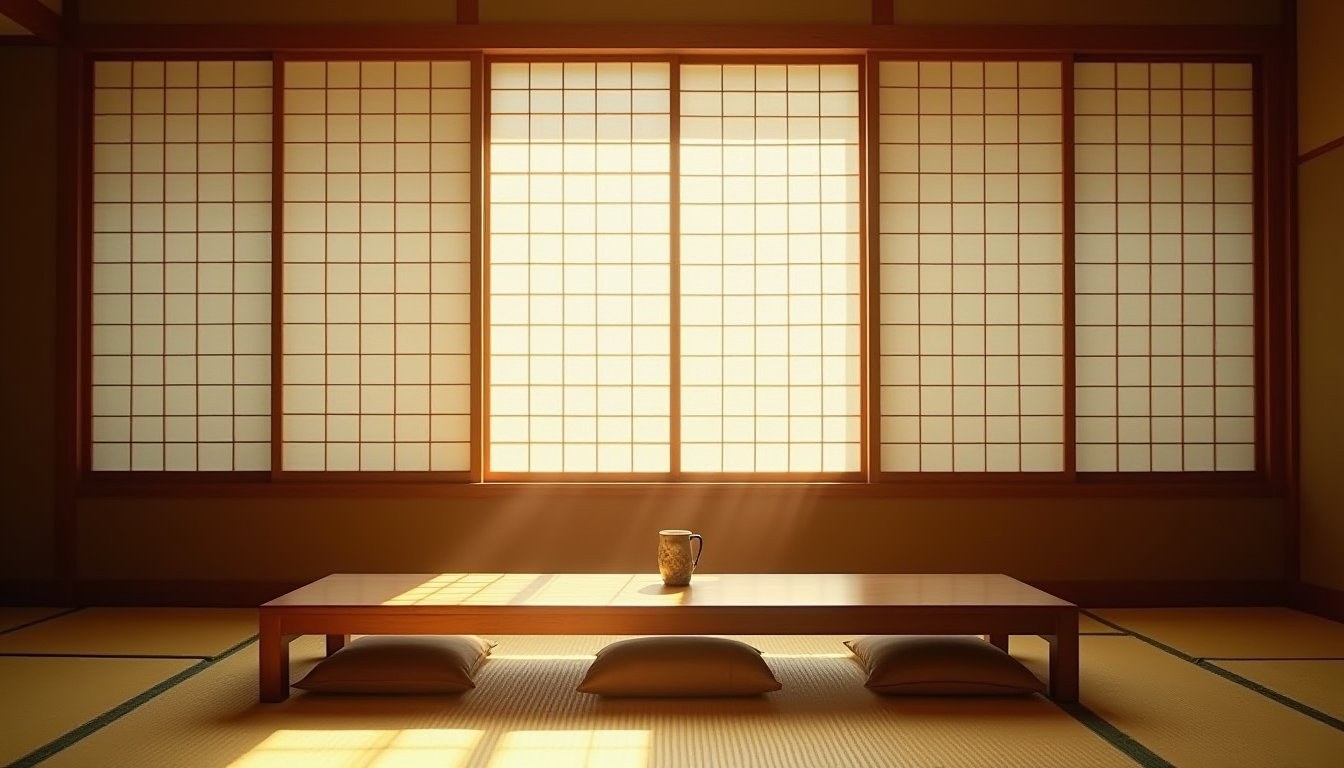
A zashiki (座敷) is a raised tatami-mat dining room where you take your shoes off and sit on cushions at a low table. In Japanese restaurants it is usually semi-private — separated from neighbouring parties by sliding shoji screens or low partitions — which makes it one of the easiest seating types for families with crawling or wriggly young kids.
A zashiki is not fully sealed like a koshitsu (private room). Sound still carries over the screens.
But it visually contains your group and gives small children a safe, shoe-free space to move. That is the reason it tops so many family shortlists.
The four buffer types, ranked by what they actually do for noisy kids
- Koshitsu (個室) — sealed private room. Full walls, sliding door, your party is acoustically isolated. The gold standard for families with under-4s. Some restaurants charge a room fee or require a per-person minimum spend (around ¥3,000–5,000/adult).
- Zashiki (座敷) — raised tatami room, often semi-private. Shoes off, sit on cushions. Usually shared with 2–3 other parties separated by shoji screens or low partitions. Sound carries more than a koshitsu but visually contained. Great for crawlers who want to move around safely.
- Hori-gotatsu (掘りごたつ) — tatami room with a sunken floor under the table. Same privacy level as zashiki but with leg space — solves the back pain for parents who can’t sit cross-legged for 90 minutes. Most modern family-friendly izakaya offer this.
- Booth or partitioned counter. Western-style booth seating or chain-restaurant partitioned counters. Not really private but visually breaks the room. The fallback when nothing else is available.
Quick comparison: which buffer type for which kid
| Type | Privacy | Shoes off? | Best for | Cost note |
|---|---|---|---|---|
| Koshitsu 個室 | Sealed, full walls | Sometimes | Under-4s, light sleepers | Room fee or ¥3,000–5,000/adult min |
| Zashiki 座敷 | Semi-private screens | Yes | Crawlers who need to move | Usually no surcharge |
| Hori-gotatsu 掘りごたつ | Semi-private | Yes | Parents who can’t sit cross-legged | Same as zashiki |
| Booth / partitioned counter | Visual only | No | Quick meals & fallback | None |
Why Fukuoka is harder than Tokyo for this
Two structural reasons families notice the difference:
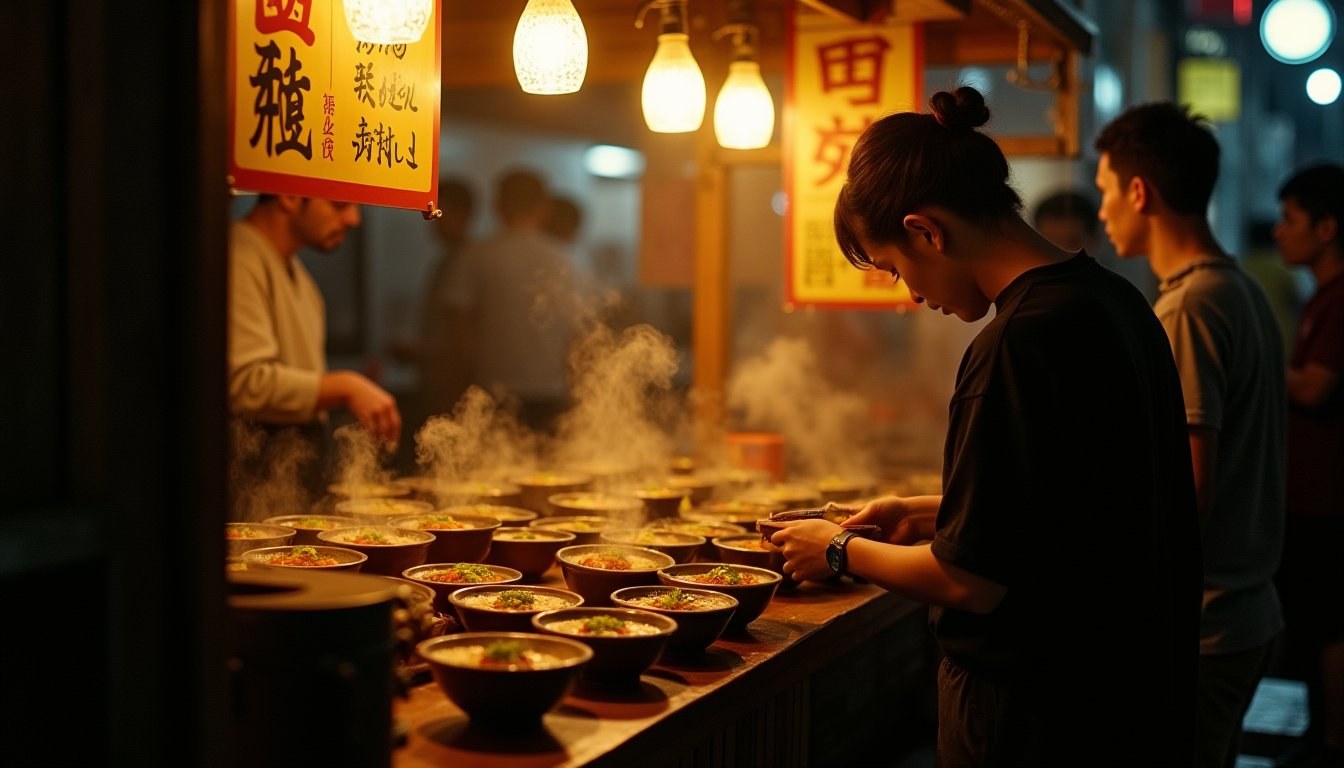
- Fukuoka’s food culture is built on counter intimacy. The yatai (street food stalls), tonkotsu ramen counters, and gion-area sushi spots are deliberately small — the bonding-with-the-chef experience is the product. Counters do not have koshitsu by definition.
- The big koshitsu inventory is in shopping-mall basements and hotel dining, not in the historic core. If your mental model of Fukuoka dining is “Nakasu yatai → Tenjin sushi alley → Hakata gion,” you will struggle to find private rooms. If you let yourself eat at AMU Plaza, Canal City, KITTE, JR Hakata City, or your hotel — you will find dozens.
That second point is the unlock. The best koshitsu options for families are not the famous food-tourism names.
They are the slightly newer, mall-based or hotel-based restaurants that built their floor plan around groups.
Where to look, in order
Here is the full venue map at a glance, from highest buffer to last-resort fallback:
| Where | Buffer you get | How to book | Lead time |
|---|---|---|---|
| Hotel & mall kaiseki | Koshitsu (sealed) | Concierge / phone | 2–3 days |
| Family izakaya chains | Hori-gotatsu / koshitsu | Tabelog / HotPepper | 1–4 days |
| Depachika & family restaurants | Booth (fallback) | Walk-in | None |
| Ramen Stadium (Canal City 5F) | Booth-style | Walk-in | None |
1. Hotel dining and mall-floor kaiseki
Our running list of Private-Room Kaiseki Restaurants in Fukuoka covers spots where the entire kaiseki experience happens in your own private room.
Kids are welcome, lower-cost lunch sets are available, and you can book in English via phone or hotel concierge.
These tend to be on hotel top floors (Grand Hyatt, Ritz Carlton, Hotel Okura) or in mall buildings with kaiseki tenants. Book 2–3 days ahead; same-day private rooms are uncommon.
The simplest path is to base yourself somewhere with a concierge who will make the call for you. Compare Hakata & Tenjin family hotels with concierge service on Agoda before you lock in the rest of the plan.
For the highest-end end of this spectrum — full Michelin private-room experiences with kids — see our Michelin-starred restaurants Fukuoka family guide.
2. Family izakaya chains with hori-gotatsu rooms
Three chains in central Fukuoka reliably have private or semi-private rooms with sunken-floor tables, English menus, and an explicit kids-welcome policy:
- Tofuro-style creative-Japanese izakaya — booking via Tabelog or HotPepper with “koshitsu希望” (request a private room).
- Modern Hakata gion-style restaurants in Tenjin and Hakata Station areas — most have at least 2–3 koshitsu rooms.
- Yakiniku chains with family rooms — especially the ones in Canal City and KITTE Hakata. Yakiniku is naturally noisier (people are grilling and talking), which actually helps mask a toddler.
One reliable named anchor that families know: Hakata Gion Tetsunabe.
The original Gion location is counter-only, but the larger branches (in Hakata Station and elsewhere) have zashiki rooms that fit 4–6 people. Book by phone the morning-of for dinner.
3. Department-store food halls and family restaurants
If the night is going sideways and you need to abort, the basement food halls (depachika) of Hakata Hankyu, Iwataya, and Daimaru Fukuoka Tenjin sell prepared family-sized meals you can take back to the hotel.
Not a “private room dinner” but the right tool when the meltdown is already happening.
True family-restaurant chains (Saizeriya, Joyfull, Royal Host) are not koshitsu options.
They do have boothed seating, kids menus with cute plates, and the lowest social cost if your kid screams. Reserve them for the bad-night fallback.
4. Ramen and counter food: the genuinely hard category
Ramen is the iconic Fukuoka thing, and ramen counters are bad for noisy kids. Two ways through it:
- Ramen Stadium (Canal City 5F) — Canal City’s 5F floor of 8 famous ramen shops, with booth-style seating in many of them. Not a koshitsu, but vastly easier with kids than the tiny Hakata Station counters. The mall environment also gives you a quick exit if needed.
- Ichiran Ramen — the famous solo-counter ramen chain. Each seat has a wooden partition (the so-called “flavor concentration booth”). It is paradoxically the easiest counter ramen with a quiet kid because every seat is already partitioned. With a loud kid, the partitions amplify the awkwardness.
Canal City pairs a kid-friendly ramen floor with shops, a fountain show and indoor escape from the heat or rain. Book Canal City & Fukuoka family activities on Klook to build the rest of that afternoon around the meal.
If kids are old enough to handle a counter (~7+), just go to a small ramen shop and let them experience it. Under that, default to Ramen Stadium.
How to actually book a koshitsu — three working methods
Method A: Hotel concierge. If you are staying at a mid-range or higher hotel, the concierge will call restaurants for you in Japanese and reserve a private room.
It is a free service, and they pick spots they know are kids-friendly. Easiest path by far.
Method B: Tabelog or HotPepper online booking. Both sites have a “席タイプ” (seat type) filter. Select 個室 (koshitsu) or 座敷 (zashiki).
Tabelog has more high-end restaurants; HotPepper has more izakaya chains. The reservation goes through in Japanese — Google Translate the confirmation email and you are fine.
Method C: Phone call. Restaurants take phone bookings even with limited English. The key sentence: “Koshitsu wa arimasu ka? Kodomo san-sai to gosai imasu” — “Do you have a private room? We have a 3-year-old and a 5-year-old.”
Their response will tell you everything: a flat “arimasu” (yes), a polite “moushiwake gozaimasen” (sorry, no), or a counter-offer like “zashiki nara arimasu” (we have a zashiki).
Age policies you may run into
This catches families off guard. A small but real number of upscale restaurants in Fukuoka have an age-minimum policy — typically “no children under 6” or “no children under elementary school age.”
When you see “お子様のご入店はご遠慮いただいております” in fine print, that is what it means.
Always check the restaurant’s official site, not just Tabelog, before booking the high-end places. Our Michelin family guide flags every restaurant we have personally seen a kid-policy at.
What not to default to
- Conveyor sushi. Fine for casual, but most kaiten chains have no private rooms and the noise level is already kid-friendly. If your worry is your kid being loud, conveyor sushi is the wrong scenery anyway — there is no room to be loud in.
- Yatai (street food stalls). Famous, atmospheric, almost impossible with small kids. Stools are kid-unfriendly, the stalls hold 8 adults max, and you cannot bail mid-meal without making it weird.
- Lunch counters in Hakata Station underground. Loud, fast, no buffer. Avoid for the under-5 crowd.
Suggested day plan for a family worried about restaurant noise
- Lunch — Hotel restaurant, mall kaiseki, or Ramen Stadium (Canal City 5F). Save the koshitsu booking for dinner; lunch crowds are noisier anyway and the social cost of a kid moment is low.
- Afternoon snack — Depachika at Hakata Hankyu or Iwataya. Buy something the kids will love (matcha mochi, mango shaved ice in season), eat in the rooftop garden.
- Dinner — Pre-booked koshitsu izakaya or kaiseki room. 18:00 start is the sweet spot. Most rooms have a 2-hour time limit (last order ~19:30) which actually helps — you are out before the toddler hits the wall.
Where this slots in your broader Fukuoka plan
Restaurant strategy is one piece of a kid-friendly Fukuoka stay.
For the bigger picture — where to base yourself, day-by-day itinerary, transport — see our complete Fukuoka family guide.
For airport-to-hotel logistics, our FUK to Hakata transport guide covers the first-day mechanics.
And if rainy weather forces you indoors and into a long restaurant lunch, the Fukuoka rainy-day backup guide chains nicely with this one.
Frequently asked questions
Will my baby be allowed in a kaiseki private room? In most cases yes, especially at the more contemporary kaiseki spots and hotel restaurants. The traditional ryokan-style kaiseki is more variable — call ahead. The kaiseki private-room registry above flags baby-policy for each entry where we have it.
Do I need to remove shoes for zashiki rooms? Yes, every time. Carry small slip-on shoes for kids — sandals work in summer, slip-on sneakers in winter. Avoid laced shoes for restaurant nights.
Is there a “kids menu” at koshitsu restaurants? Mid-range izakaya almost always have one (お子様ランチ). High-end kaiseki usually do not — you order a smaller adult course or share. Sushi spots vary widely; ask at booking.
How early should I book? Weekday: same-day or day-before is fine. Friday/Saturday: book 4–7 days ahead for popular places, especially in cherry blossom (late March), Golden Week (late April–early May), and Yamakasa Festival (early–mid July) windows.
Final thought
The “what if my kid is loud” worry is solvable in Fukuoka, but it requires you to look slightly outside the food-tourism canon. The Insta-famous yatai night is not your friend with a toddler.
The basement-of-Hakata-Hankyu kaiseki private room with the sliding door closed and the sunken-floor table? That is the trip you actually want, and it is right there, just one Google translation away.
Book ahead, learn the four words, and the dinner question stops being the thing you worry about.
 Where to Stay in Fukuoka
 Top Things to Do in Fukuoka
 Instant confirmation for most tickets
A relaxed, ready-to-use plan from a Fukuoka family who actually lives here — instant PDF, name your price (free).
- ✅A gentle day-by-day Fukuoka plan — ramen, parks, one easy day trip
- ✅Tap-to-open Google Maps for every stop, plus where to stay & family tips
- ✅Instant PDF download — no spam, yours to keep
Planning the whole island? The full 7-day Kyushu itinerary is inside.
Want the whole trip mapped out? This is our complete 7-day Kyushu loop, done for you — the exact route a Fukuoka family runs with their own kids.
- ✓Day-by-day plan — what to do, in what order, at a kid-friendly pace
- ✓Named hotels & booking links — where to sleep each night, no rabbit-holes
- ✓Packing & prep checklists — arrive sorted, not scrambling
Instant PDF · written by locals · hours of planning, done