
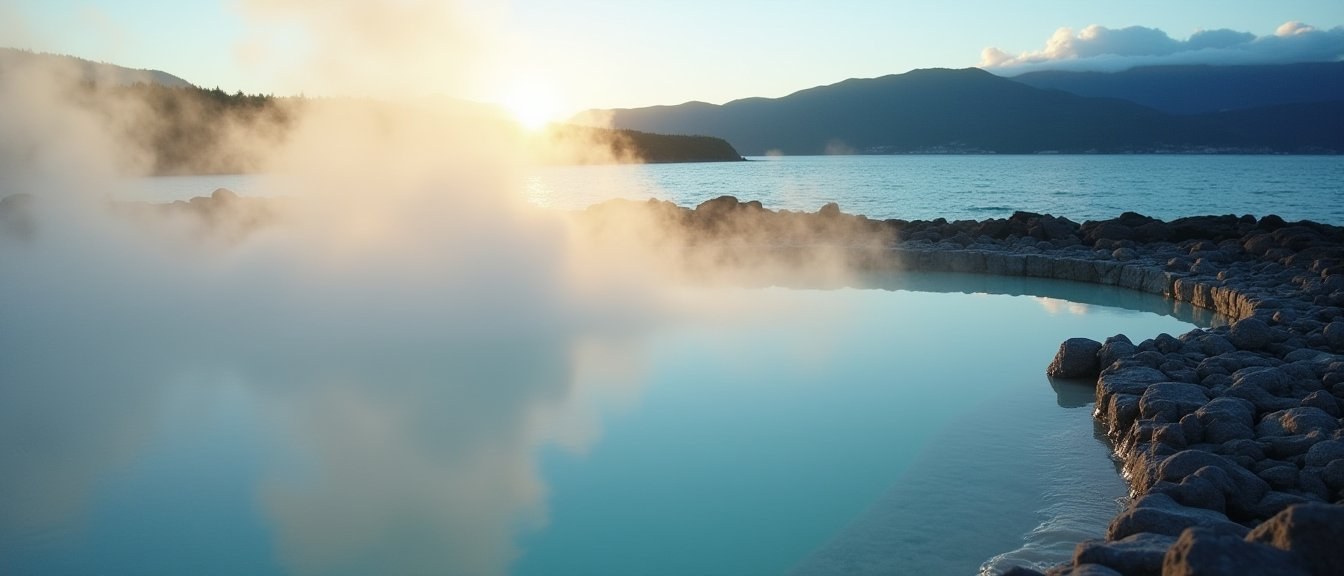
Beppu literally steams. Plumes of white vapor rise from streets, hillsides, bakery backyards, and parking lots — and your kids will lose their minds pointing at them. Sitting on Oita’s northeast coast, Beppu pumps out more hot spring water than anywhere else in Japan and ranks second in the world behind Yellowstone. What most travel guides miss is how family-friendly the city has made its natural oddities. Bubbling mud, scalding blue pools, sand baths, a drive-through safari, and a Sanrio theme park all sit within a 30-minute radius — and the tourism infrastructure is built around strollers, toddlers, and short attention spans.
We’ve been bringing our kids here from Fukuoka since they were babies, and Beppu remains our favorite weekend escape in Kyushu. This 2026 family guide covers how to get there, what Beppu is famous for, the best family attractions, the sand baths, and where to sleep — all through the eyes of parents who have done the trip with a toddler, a stroller, and a bag full of snacks.
Getting to Beppu with Kids: From Tokyo, Fukuoka, and Kumamoto
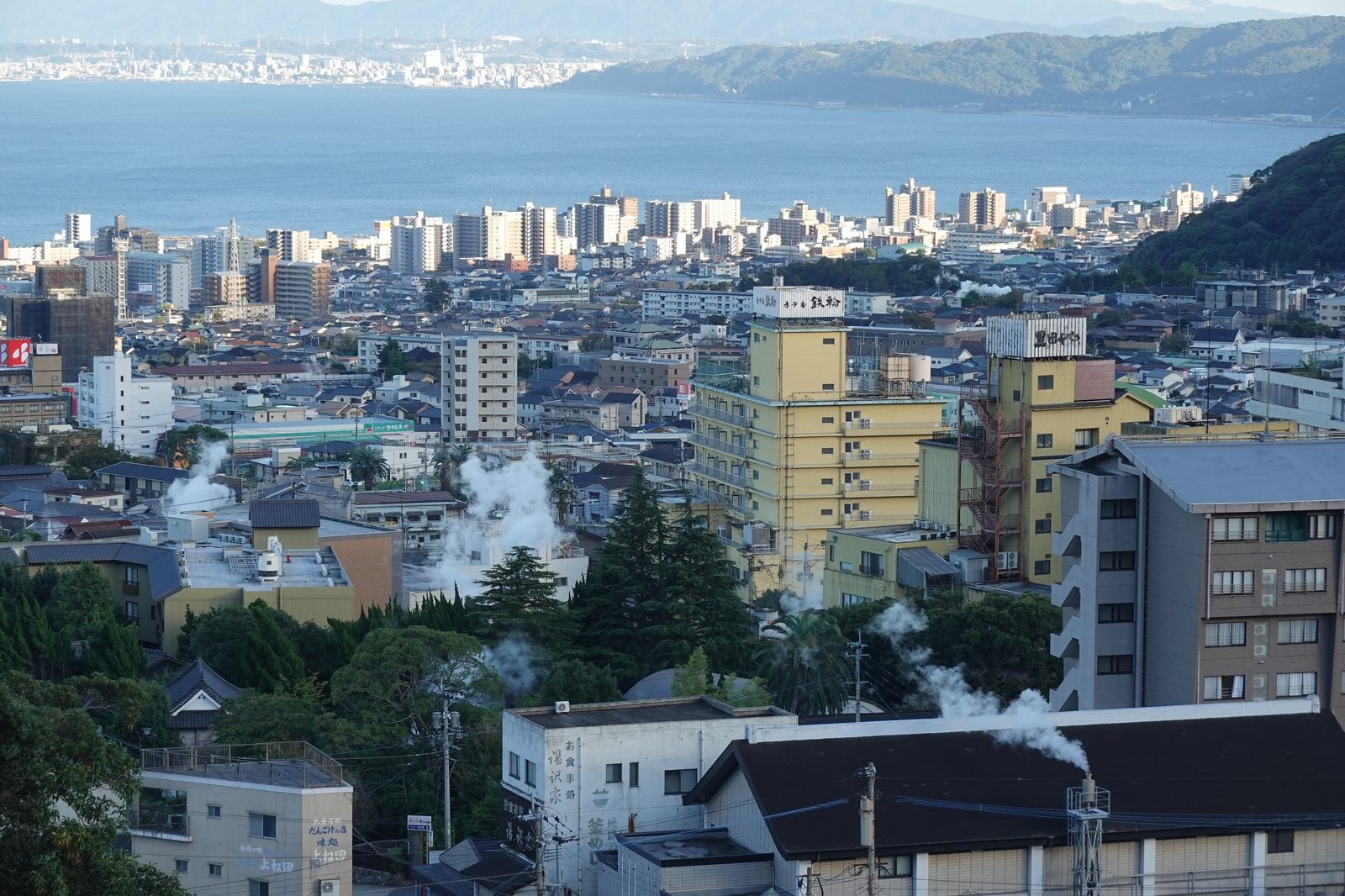
Beppu sits on the northeast coast of Kyushu, which makes it an easy day trip from Fukuoka and a reasonable detour on wider Kyushu itineraries. Here’s what getting there actually looks like with kids in tow.
From Tokyo: Fly, Don’t Train (with Kids)
Tokyo to Beppu by Shinkansen is possible but painful — roughly 6 to 7 hours with transfers at Kokura or Hakata, plus a final leg on the Sonic limited express. With kids, the answer is almost always to fly into Oita Airport (OIT), which is about 45 minutes by airport bus to central Beppu. Flight time from Haneda is around 1 hour 40 minutes, and the bus drops you near JR Beppu Station.
From Fukuoka: The Easiest Option
The Limited Express Sonic runs from Hakata Station to Beppu in about 2 hours with zero transfers. Trains leave roughly every 30 minutes, have generous luggage space at the ends of each car, and make this the smoothest option with small children. If you’re planning multiple Kyushu stops, a rail pass pays for itself quickly — see our write-up on Getting Around Kyushu with Kids: Car vs Train for Family Travel before you book.
Driving takes about 2 hours 15 minutes via the Oita Expressway and is our pick if you also plan to hit African Safari or Harmony Land, both of which are a pain to reach without a car.
From Kumamoto: Scenic but Longer
Kumamoto to Beppu by train is a bit awkward — you either backtrack via Hakata (about 3 hours) or ride the slower Hohi Line through Aso for a beautiful but 3.5 to 4 hour ride. Driving through Aso takes about 2.5 hours and is the classic Kyushu road trip route, with playground stops and volcano views. Parents planning this leg should skim our Kyushu Family Road Trip: How to Plan a Low-Stress Route with Kids for pacing tips.
What Beppu Is Famous For: Onsen, Hells, and Family Food
Beppu is famous for three things, and all of them are surprisingly easy to enjoy with children.
- Onsen (hot springs). Beppu produces more hot spring water per day than any other city in Japan. Families who want a proper ryokan experience without leaving the city will find plenty of options, and our broader Onsen in Kyushu with Kids: The Complete Family Hot Spring Guide (2026) covers tattoo policies, baby rules, and private-bath workarounds you’ll need.
- The Hells (Jigoku). Seven vividly colored geothermal pools that are for looking, not bathing. More on these below.
- Family food. Beppu’s signature dishes are unusually kid-friendly for Japan. Jigoku-mushi (steam-cooked vegetables, seafood, and eggs cooked over natural vents) is mild, soft, and fun to watch. Toriten — Oita’s lightly battered chicken tempura — is essentially Japanese chicken nuggets and universally loved by kids. Beppu reimen, a chewy cold noodle dish, works well on hot summer afternoons. You’ll also find steamed pudding, steamed buns, and soft-serve sold from stalls powered by the same volcanic steam coming out of the ground.
Things to Do in Beppu with Kids: Family-Friendly Attractions
 Oita & Beppu: Hot Springs & Fun
Beppu packs a ridiculous amount of family activity into a compact area. You could easily spend three or four days here and never repeat an experience. Here’s what’s actually worth your time with kids in tow.
Beppu Hells Tour (Jigoku Meguri): A Visual Spectacle for All Ages
The Hells Tour is Beppu’s signature attraction, and it’s genuinely impressive even for young kids. Seven geothermal hot springs — each with a different color or feature (blood-red water, cobalt blue pools, bubbling grey mud, steaming geysers) — spread across two clusters in the Kannawa and Shibaseki districts. The combined ticket is ¥2,200 for adults, ¥1,000 for elementary kids, and free for preschoolers as of 2026.
We’ve broken down the practical side — stroller access, wait times, and which hells to skip with toddlers — in Beppu Hells Tour (Jigoku Meguri) with Toddlers: Stroller Access & Safe Spots. The short version:
- Must-see with kids: Umi Jigoku (Sea Hell) for the vivid blue pool and spacious grounds, Oniishibozu Jigoku for the bubbling mud, and Chinoike Jigoku (Blood Pond Hell) for the dramatic red.
- Worth the stop: Kamado Jigoku — the most interactive hell, with steam demos and free taste tests of steamed eggs and pudding.
- Consider skipping: Tatsumaki Jigoku (geyser only erupts every 30 minutes — brutal with a restless toddler) and Oniyama Jigoku (cramped crocodile enclosures).
- Stroller access: Most hells are navigable with a compact stroller. Umi Jigoku is the easiest; a carrier is handy for the gravelly bits.
- Safety: Railings are everywhere, but the water is genuinely boiling. Hold toddlers’ hands near edges — no exceptions.
Budget two to three hours for all seven, or 90 minutes if you cherry-pick four or five. The Kannawa cluster (five hells within walking distance) is the better choice for families than driving between both areas.
African Safari: The Jungle Bus Is the Main Event
African Safari Ticket + Jungle Bus InfoAfrican Safari Oita is the largest safari park in Japan, about 20 minutes inland from central Beppu. The headline experience is the Jungle Bus — a cage-enclosed bus that drives through enclosures where lions, bears, elephants, and giraffes come right up to the mesh so kids can feed them through special slots. It’s the kind of attraction that earns a place in the family photo album forever.
Our full breakdown lives in African Safari with Kids: Jungle Bus Tips & Discounts. Quick highlights:
- Jungle Bus: Requires a separate reservation (¥1,100 per person on top of admission), fills up fast on weekends, and runs about 50 minutes. Book online in advance.
- Age note: Kids 3+ love it. Under 2s can be startled by large animals pressing against the cage.
- My Car plan: You can also drive your own car through the safari zone. Less interactive but flexible for naps and fussy eaters. Windows stay closed in predator zones — they mean it.
- Beyond the safari: Petting zoo, small amusement area, and a walk-through kangaroo enclosure. Budget 3–4 hours total.
- Admission: Adults ¥2,600, children (4–12) ¥1,500, under 4 free.
Harmony Land (Sanrio Theme Park): Toddler Paradise
If your kids are under 6, Harmony Land might be the single best attraction in the Beppu area. This Sanrio theme park — home of Hello Kitty, My Melody, Cinnamoroll, and friends — sits about 30 minutes south of Beppu in Hiji town, and it’s specifically designed for young children. Almost every ride is aimed at ages 2–8, most have no height restriction, and the daily character parade is genuinely charming.
Torn between this and the safari? We compared both side by side in Harmony Land vs. African Safari: Which is Better for Your Family Trip to Oita?. Families with kids under 4 usually prefer Harmony Land; families with kids 4+ lean safari. With two days, do both.
- Size: Compact — everything is doable in 3–4 hours.
- Food: Limited and overpriced inside. Bring snacks.
- Timing: Weekdays outside school holidays are blissfully uncrowded.
- Cost: Adults and children (3+) ¥3,300, passport (unlimited rides) included.
Foot Baths (Ashiyu): Free Fun on Every Corner
Beppu has dozens of free public foot baths, and they’re the perfect low-stakes toddler activity. No undressing, no cultural protocol, no entrance fee — just roll up your pants, dip your feet in naturally heated water, and relax for ten minutes while the kids splash. The foot baths along Kannawa’s steaming streets are the most atmospheric; the ones at JR Beppu Station and Kamegawa Station are the most convenient for train travelers. Bring a small hand towel.
Beppu Sand Bath with Kids: What to Know
Being buried in naturally heated volcanic sand (sunamushi) is one of those experiences that sounds weird until you try it, and then you want to do it every trip. Attendants shovel warm sand up to your neck while you lie in a shallow trench wearing a provided yukata. Beppu’s tourism association puts the usable range at roughly 40–50°C, and a 15-minute session leaves you feeling like you’ve had a deep tissue massage.
It’s often confused with jigoku-mushi (the food steaming). Different thing: sand bathing is a body treatment, steam cooking is a meal.
Our detailed breakdown is in Sand Bathing in Beppu with Kids: Age Limits, Temperatures & How-To, but here are the essentials:
- Age limits: Both main venues set a hard age-6 minimum — Takegawara Onsen states the sand bath is available from age 6, and Sand SPA does not admit pre-school children aged 5 and under. Babies and toddlers cannot participate at either. Confirm before you book if you have a younger child.
- Where to go: Beppu Beach Sand Bath, rebuilt in 2025 as Sand SPA inside the new TKP SHONIN PARK on Shoningahama, is the most popular — about 4 minutes by train from Beppu Station to Beppu University Station, then a 3-minute walk. Indoor Takegawara Onsen is the historic option near the station. Saraku Sand Bath Hall in neighboring Ibusuki (Kagoshima) is a common search result but is actually 4+ hours south — don’t confuse them.
- Session time: Up to 15 minutes at Sand SPA; Takegawara runs a similar 10–15 minute burial. Attendants will dig you out early if anyone gets uncomfortable.
- What to bring: A change of underwear. Sand gets everywhere. Yukata are provided at both venues; Sand SPA also lends a bath towel and face towel free, while Takegawara sells rather than lends towels.
- Cost: Takegawara is a flat ¥1,500 per person (age 6+). Sand SPA is ¥2,500 for adults and ¥1,800 for children aged 6–12, which also covers the grand bath.
- Booking: Sand SPA takes reservations on its official site (same-day slots are possible but may involve a wait); Takegawara accepts no reservations at all, so arrive early on weekends if you want to avoid a walk-in queue.
Where to Stay in Beppu with Kids
Beppu’s hotel scene leans ryokan — which is good news for families who want tatami rooms, futons spread side-by-side, and in-room meals instead of wrangling toddlers through a restaurant. Our top family pick is reviewed in depth at Suginoi Hotel Beppu Review: Is It the Best Family Hotel in Kyushu?, and if you want a sample itinerary that pairs Beppu with a Yufuin overnight, Steam, Safari, and Street Food: Our 3-Day Family Escape to Beppu & Yufuin shows exactly how we pace the trip.
- Suginoi Hotel — our default pick. Rooftop onsen with ocean views, big family rooms, buffet with kid-safe options, indoor water park (“The Aqua Garden”), and a game arcade. Shuttle from Beppu Station.
- Kannawa district ryokans — more atmospheric, closer to the Hells, smaller. Best for families with older children who enjoy traditional stays.
- Near JR Beppu Station — standard business hotels with twin rooms are the cheap-and-easy option if you’re using Beppu as a base for day trips.
Family Tips for Visiting Beppu
- Don’t try to do everything in one day. Hells + sand bath + safari in a single day with kids is a recipe for meltdowns. Pick two per day max.
- Rent a car if you can. Buses connect the main sights, but Harmony Land, African Safari, and the Shibaseki hell cluster are much easier with a rental.
- Pack swimwear for everyone. Suginoi’s water park and kid-friendly indoor baths are worth a change of clothes.
- Tattoo policy varies. Most large hotels accept guests with tattoos in the public baths, but traditional ryokans may not. Our onsen guide linked above breaks this down.
- Still unsure whether Beppu fits your trip? Read Is Beppu Worth Visiting with Kids? for the honest “should we skip this?” verdict.
More Kyushu Stories for Beppu Trips
- Is Yufuin Worth Visiting with Kids? — the obvious pairing for a Beppu weekend.
- 7-Day Kyushu Family Itinerary: Fukuoka, Beppu, and Kumamoto by Train — if Beppu is one stop on a bigger loop.
- Kyushu with Kids: The Complete Family Travel Guide (2026) — the pillar guide that ties it all together.
 Beppu Onsen Resorts
Not sure where to begin? This free guide helps you pick the right Kyushu trip for your family — from a Fukuoka family who actually lives here.
- ✅A simple “which trip suits us?” chooser — by days, ages & interests
- ✅Snapshots of all 7 prefectures — what’s actually worth it with kids
- ✅Instant PDF download — name your price (free), no spam
Onsen, rail, or a full itinerary? It points you to the right deep-dive guide.
Onsen with kids is a maze of rules. This done-for-you playbook removes the guesswork — written by a Fukuoka family who soaks here year-round.
- ✓Family-bath & private (kashikiri) ryokan — baby-OK, tattoo-friendly, named picks
- ✓Babies & toddlers — water-temp tactics, cribs/baby-bath rentals, what to pack
- ✓Etiquette, made simple — exactly what to do so nobody stares
Instant PDF · written by locals · skip hours of forum-digging