
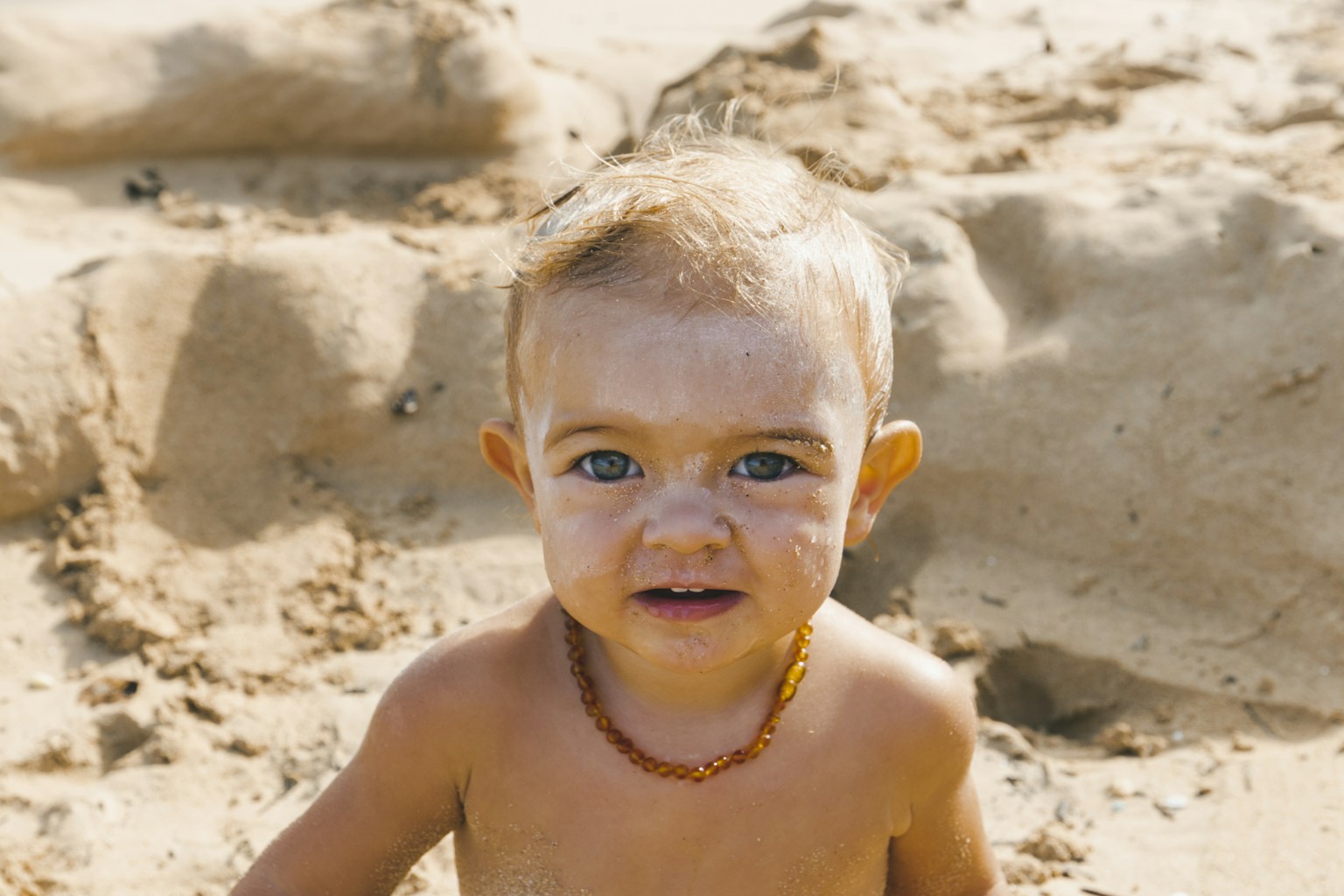
Okinawa’s sun is no joke. The subtropical UV index regularly hits “extreme” from April through October, and a single unprotected beach afternoon can leave little shoulders bright red by dinner.
On top of that, several Okinawa beaches and marine parks now ask visitors to use reef-safe sunscreen. It’s an easy rule to follow once you know what to pack.
Okinawa Reef-Safe Sunscreen: The Quick Answer

Yes, pack reef-safe (mineral) sunscreen for Okinawa. Choose a product whose active ingredients are only zinc oxide or non-nano titanium dioxide, and that is free of oxybenzone and octinoxate. Some beaches, marine parks, and snorkeling tours require it. The most reliable sun protection for kids, though, is a UPF 50+ rash guard plus a hat and shade — sunscreen is the backup, not the main plan.
Why Reef-Safe Matters Here (More Than at Home)

Okinawa’s coral reefs are the whole reason many families come. Chemicals like oxybenzone and octinoxate wash off swimmers and contribute to coral bleaching, so keeping them out of the water protects exactly what you came to see.
Practically speaking, more Okinawa snorkeling operators and roped swim areas now check what you’re wearing. Bringing a reef-safe tube avoids awkward conversations at the boat.
It’s also gentler on kids’ skin. Mineral formulas sit on top of the skin instead of absorbing, which suits sensitive toddlers.
What Actually Counts as “Reef-Safe”

The term isn’t legally regulated, so read the ingredient list, not the marketing. Aim for a mineral (physical) sunscreen and check these points:
- Active ingredients: only zinc oxide and/or titanium dioxide (ideally non-nano).
- Free of: oxybenzone, octinoxate, octocrylene, and parabens.
- Form: lotion or stick, not aerosol spray (spray drifts and coats sand).
- SPF: 30–50 is plenty; higher numbers add little.
Japanese labels often read “ノンケミカル” (non-chemical) or “紫外線散乱剤” (UV-scattering agent) for mineral types. That’s the wording to look for on local shelves.
Reef-Safe vs. Regular Sunscreen at a Glance
| Type | Active ingredient | Reef-safe? | Best for | Note |
|---|---|---|---|---|
| Mineral / physical | Zinc oxide, titanium dioxide | Yes | Kids, snorkeling, roped beaches | May leave a light white cast |
| Chemical | Oxybenzone, octinoxate, octocrylene | No | Rubs in clear | Restricted at some reef sites |
| Aerosol spray (any) | Varies | Discouraged | Quick adult top-ups off the water | Drifts; hard to apply evenly on kids |
Rash Guards: The Real Hero for Kids
Honestly, the best sun strategy for children isn’t sunscreen at all — it’s a UPF 50+ rash guard (called a “ラッシュガード” locally). A long-sleeve top covers the areas you always miss and never needs reapplying.
We pack one rash guard per child per day, since salt water and sand mean at least one is always drying. For toddlers, a two-piece (top plus shorts) is easier for bathroom trips than a full suit.
Add these and you’ve covered the gaps sunscreen leaves:
- Wide-brim or legionnaire hat with a chin strap for windy beaches.
- Water shoes — Okinawa reefs and rocky entries are hard on bare feet.
- UV sunglasses for older kids who’ll keep them on.
Then sunscreen only goes on the truly exposed bits: face, ears, hands, feet, and the back of the neck.
Where to Buy Reef-Safe Sunscreen and Rash Guards in Okinawa
 Top Things to Do in Okinawa
 Instant confirmation for most tickets
You don’t have to bring everything from home. Larger stores in Okinawa stock mineral sunscreen and rash guards, especially in season:
- AEON malls and drugstores (Welcia, Matsumoto Kiyoshi) carry “ノンケミカル” sunscreen — check the active ingredients.
- Sports and swim shops and resort gift stores sell kids’ UPF rash guards, often cheaper than airport prices.
- Don Quijote in Naha stocks both, handy for a late-night arrival.
If you’re planning snorkeling or a glass-bottom boat where reef-safe rules are strictest, it’s worth booking the activity ahead so you know their exact requirements — you can compare kid-friendly Okinawa water tours on Klook and check each listing’s sunscreen policy before you go.
Sun-Smart Beach Days: A Simple Family Routine
Timing beats any product. Okinawa’s UV peaks between 10:00 and 14:00, so we do water in the early morning, break for lunch and shade, then return around 15:30.
A workable rhythm looks like this:
- Before leaving: rash guards on, sunscreen on exposed skin 15–20 minutes early.
- Every 2 hours (or after swimming): reapply to face, ears, and feet.
- Midday: retreat to a beach tent, café, or an indoor stop.
City-access beaches like those near Naha hotels make the midday retreat easy — you can walk back to air conditioning instead of toughing it out. Naminoue Beach in Naha is free to enter (Free) with a netted swim area, and it’s a short taxi from downtown.
A Great Midday (or Rainy-Day) Escape from the Sun
When the UV is brutal or a squall rolls in, we swap the beach for indoors. The Okinawa Churaumi Aquarium is the classic call — fully covered, stroller-friendly, and endlessly interesting for kids.
Useful details: entry is Adults ¥2,180, high school ¥1,440, elementary/junior high ¥710, under 6 free, open 8:30–18:30 (last entry 17:30); 8:30–20:00 Apr 25–May 6 and Jul 18–31, 8:30–21:00 through August; no scheduled closing days through March 2027, with Free (Ocean Expo Park lots, approx. 1,900 spaces; north lot P7 is closest to the aquarium). Address: 沖縄県国頭郡本部町石川424(海洋博公園内).
If you’re building a broader wet-weather plan, our family guide to Kyushu’s rainy season shares the same swap-outdoors-for-indoors logic that works just as well in Okinawa.
Frequently Asked Questions
Is reef-safe sunscreen required in Okinawa?
Not by prefecture-wide law, but individual beaches, marine parks, and snorkeling operators increasingly require or strongly encourage it. To avoid being turned away at a swim area or boat, pack a mineral (zinc oxide or titanium dioxide) sunscreen and leave chemical ones for land days.
What ingredients should I avoid for coral reefs?
Avoid oxybenzone and octinoxate first — these are the two most linked to coral bleaching. Octocrylene and parabens are also best skipped. Choose a product whose only active UV filters are zinc oxide and/or non-nano titanium dioxide.
Can I buy reef-safe sunscreen in Okinawa, or should I bring it?
You can buy it locally. AEON malls, drugstores like Welcia and Matsumoto Kiyoshi, and Don Quijote in Naha stock “ノンケミカル” (non-chemical) mineral sunscreen. Bringing a tube you already trust is still smart for the first beach day before you’ve had time to shop.
Do kids really need a rash guard in Okinawa?
Yes — a UPF 50+ rash guard is the single most effective sun protection for children here. It covers shoulders, back, and arms that sunscreen always misses, never washes off, and means you only reapply lotion to the face, ears, hands, and feet.
When is the sun strongest in Okinawa?
UV peaks between roughly 10:00 and 14:00 from April through October, when the index often reaches “extreme.” Plan water time for early morning or after 15:30, and use the midday hours for lunch, shade, or an indoor stop like the aquarium.
Is spray sunscreen okay for the beach?
It’s discouraged. Aerosol spray drifts in the wind, coats the sand, and is hard to apply evenly on a wriggling toddler. A lotion or stick gives better, more reliable coverage and keeps stray chemicals out of the water and off the beach.
What SPF do I need for Okinawa?
SPF 30–50 is plenty for a family beach day. Higher numbers add very little extra protection while costing more. Consistent reapplication every two hours and after swimming matters far more than the number on the bottle.
What else should I pack for sun protection?
Bring a wide-brim or legionnaire hat with a chin strap, water shoes for rocky reef entries, UV sunglasses for older kids, and a pop-up beach tent for instant shade. Together these do more than sunscreen alone to keep kids comfortable all day.
More Kyushu & Okinawa Family Guides
- Best Air-Conditioned Rest Spots with Kids (Beat the Summer Heat)
- Family Pool Day Pass Guide: Swim Without a Hotel Night
- Best Summer Day Trips with Kids
- Phoenix Seagaia Resort with Kids (Miyazaki Beach Resort)
Which island, how many days, and when to go — the free guide that gets your Okinawa plan started, from a Fukuoka family who travels Japan’s south with kids.
- ✅A “which Okinawa trip suits us?” chooser — by days, ages & whether you’ll drive
- ✅Main island vs the outer islands — what’s actually worth it with kids
- ✅Instant PDF download — name your price (free), no spam
Beaches, ferries, or the aquarium? It points you to the right deep-dive guide.