
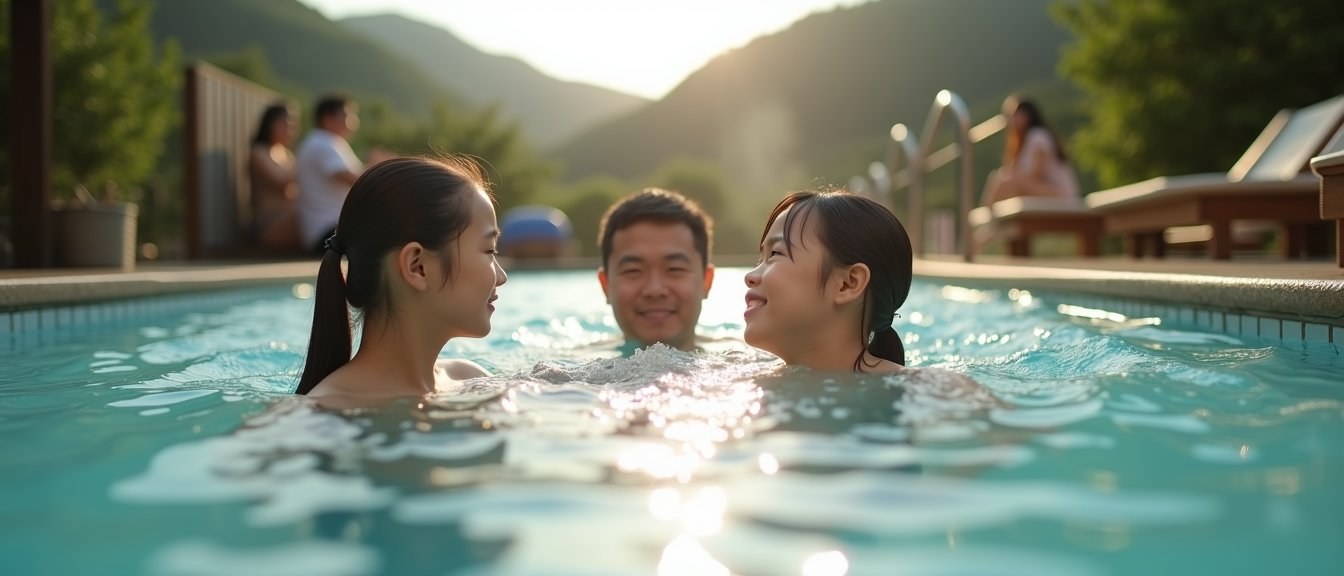
Kyushu is Japan’s Onsen Island. With more hot springs per capita than anywhere else in the country — over 4,700 sources and counting — this southern island is where Japanese bathing culture runs deepest.
Beppu alone pumps out more hot spring water than any other city on Earth. And yet, most English-language onsen guides focus on Hakone or the snow monkeys up north.
We’re expat parents based in Kyushu who’ve dragged car seats, diaper bags, and stubborn toddlers through dozens of onsen towns across the island.
We’ve tested the private baths, negotiated the etiquette with a screaming two-year-old, and figured out which ryokan actually welcomes small children versus which ones merely tolerate them.
This guide distills everything we’ve learned into one practical resource — no fluff, no trip reports, just what you need to plan family onsen experiences across Kyushu with confidence.
 Stay Connected in JapanPre-book your SIM, eSIM, or Pocket WiFi for airport pickup.
Can Families With Tattoos Use Onsen in Kyushu? (Quick Answer)
Yes. While many public baths in Kyushu prohibit visible tattoos, families can still bathe together by booking a private kashikiri (family bath), where tattoo rules never apply.
Reservable private baths are widely available in Beppu, Yufuin, Ureshino, Kurokawa, and other onsen towns — making tattoos a non-issue for family soaks.
Here’s how tattoo policies and private-bath options compare across Kyushu’s main family onsen areas:
| Area (facility type) | Tattoo policy | Private / family bath available | Approx. price (yen) | Booking needed |
|---|---|---|---|---|
| Beppu (resort & public baths) | Resorts often OK / cover stickers; kashikiri always OK | Yes — kashikiri & resort baths | Public from ¥200; kashikiri ¥2,000–¥5,000 | Yes, for kashikiri |
| Yufuin (boutique ryokan) | Public varies; kashikiri always OK | Yes — many ryokan with private baths | Often free with stay; kashikiri ¥2,000–¥3,000 | Yes, esp. peak season |
| Ureshino, Saga (gentle water) | Public varies; kashikiri always OK | Yes — family kashikiri | Often free with stay; day-trip ¥500–¥1,500 | Recommended |
| Kurokawa, Kumamoto (mountain ryokan) | Public varies; kashikiri always OK | Yes — many ryokan offer kashikiri | Often free with stay; kashikiri ¥2,000–¥3,000 | Yes, book ahead |
| Ibusuki, Kagoshima (sand bath) | Sand bath worn in yukata (skin covered) | Sand baths + indoor rinse baths | Day-trip rates ¥500–¥1,500 | Usually walk-in |
| Ukiha / Chikugogawa (day-trip) | Public varies; kashikiri always OK | Yes — family-run ryokan | Day-trip ¥500–¥1,500; budget ryokan | Rarely needed |
Traveling with tattoos? Book a private family bath and skip the worry — find Kyushu ryokan with kashikiri on Agoda →.
Can Kids Use Onsen in Japan?
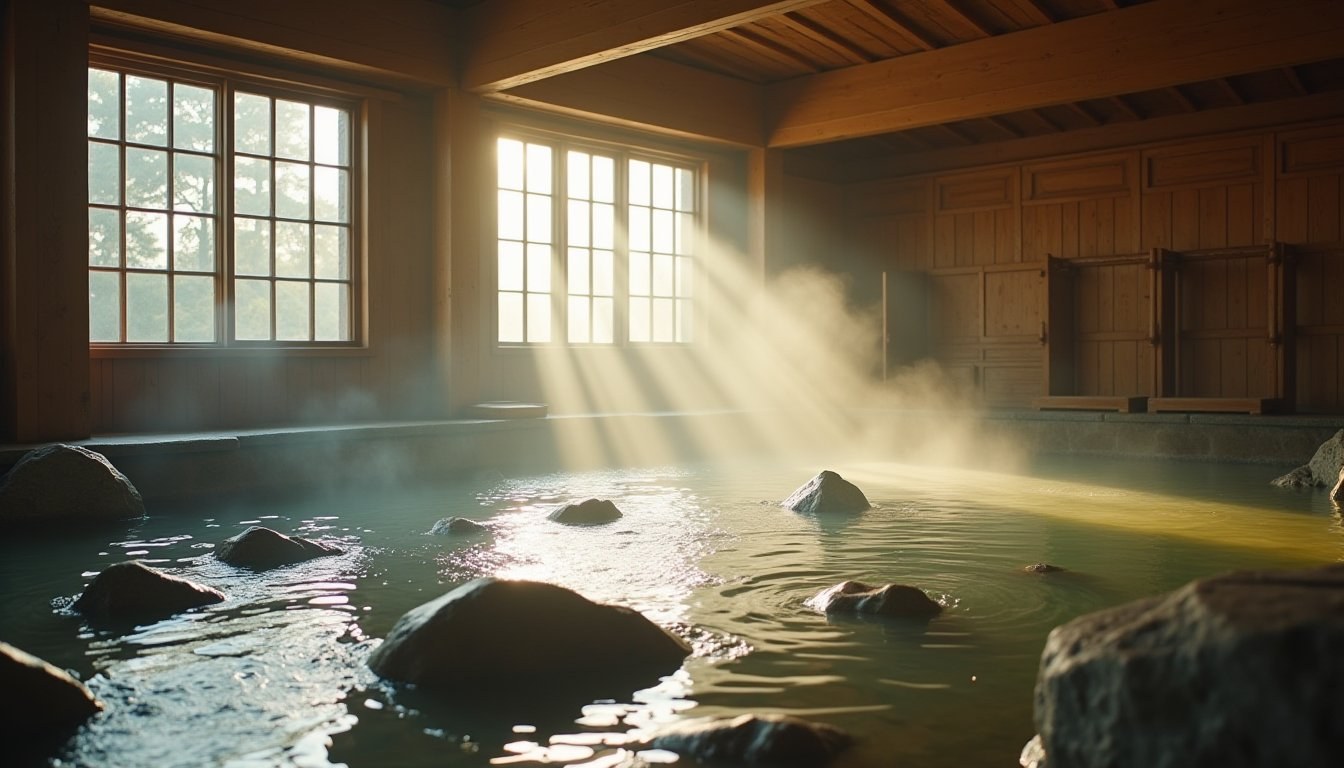
The short answer: yes, children of all ages can use onsen in Japan. There is no national law setting a minimum age.
However, individual facilities set their own rules, and those rules vary widely — especially in Kyushu, where you’ll find everything from ultra-traditional public bathhouses to modern resort-style complexes.
Here’s what you need to know about the key age-related policies:
Diaper Policy
Most public onsen (shared baths) do not allow children who are still in diapers. The concern is hygiene — an accident in a communal bath is a serious issue.
Some facilities post signs explicitly stating “no diaper-age children,” while others leave it to parental judgment. If your child is not fully toilet-trained, private baths (kashikiri) are your safest bet.
A few modern resort onsen in Kyushu, like the one at Suginoi Hotel in Beppu, are more relaxed about young toddlers in their large pool-style baths.
Policies still differ room by room, though, so always ask at reception before you undress.
Gender Separation Age
Japanese onsen separate bathers by gender. Children can enter the opposite-gender bath with a parent, but there’s an age cutoff.
In most prefectures across Kyushu — including Oita, Kumamoto, Saga, and Kagoshima — children aged 7 and older must use the bath matching their gender.
Some prefectures recently lowered this from 10 to 7, following updated national guidelines.
For families with older children where a single parent needs to manage kids of different genders, private baths again solve the problem entirely.
When to Choose Private Over Public
Use a private onsen (kashikiri-buro) when:
- Your child is still in diapers or unpredictably toilet-trained
- Your child is likely to cry, splash, or run — all frowned upon in public baths
- You have children of mixed genders and only one parent is available
- You want to relax without worrying about etiquette enforcement
- Anyone in your group has tattoos (more on this in the FAQ)
The good news: Kyushu has an extraordinary number of private onsen options at every price point, and we’ll cover them next.
Private Onsen (Kashikiri) — Why It’s the Answer for Families
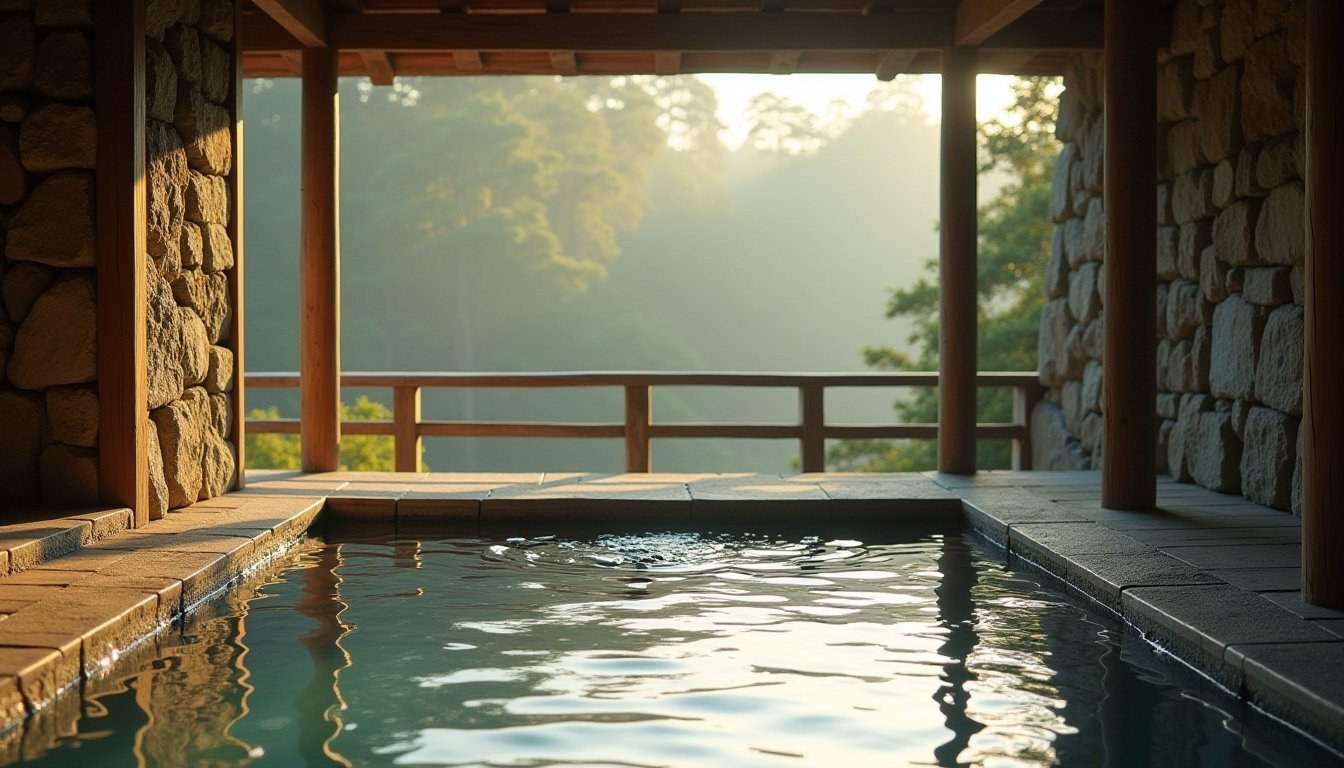
If there’s one piece of advice that changes the entire onsen-with-kids experience, it’s this: book a kashikiri-buro (貸切風呂), which literally means “reserved-for-rent bath.”
This is a private bathing room — sometimes indoors, sometimes an open-air rotenburo — that your family books exclusively for a set time. No strangers, no stress, no etiquette landmines.
How Kashikiri Works
At most onsen facilities and ryokan in Kyushu, you’ll find kashikiri baths available in one of two ways:
- Reservation-based: You book a specific time slot at check-in or in advance. Sessions typically last 45 to 60 minutes.
- First-come, first-served: You check whether the bath is occupied (often indicated by a wooden sign or lock), and use it when it’s free. Common at smaller ryokan.
What It Costs
Pricing varies significantly across Kyushu:
- Free with ryokan stay: Many mid-range and higher-end ryokan include one or more kashikiri sessions per stay. This is common in Kurokawa, Yufuin, and Ureshino.
- ¥2,000–¥3,000 per session: The typical rate at day-trip onsen facilities and budget ryokan. This usually covers 45 minutes for the whole family.
- ¥3,000–¥5,000 per session: Premium kashikiri at resort hotels or facilities with particularly nice rotenburo (outdoor stone baths, garden views).
- In-room private onsen: Some ryokan offer rooms with attached private baths. These cost more per night (often ¥25,000+ per person) but give you unlimited private bathing with zero scheduling pressure — ideal for families with very young children.
Booking tip: filter for “private onsen” or “family bath” before you compare prices — see Kyushu onsen ryokan with kashikiri baths on Agoda →
For families visiting Kyushu, we recommend checking our list of 5 Best Family-Friendly Ryokans with Private Onsen near Fukuoka (Less Than 1 Hour) for tested options near the most common entry point to the island.
Rotenburo (Outdoor Private Baths)
The best kashikiri experience in Kyushu is almost always an outdoor rotenburo.
Picture this: a stone-lined bath surrounded by bamboo, overlooking a mountain valley, with steam rising into cool evening air — and your toddler happily splashing without a care in the world.
Kurokawa Onsen and the ryokan around Aso are particularly famous for stunning rotenburo settings.
The open air also keeps the temperature more comfortable for children, as the water at the edges cools slightly faster than in enclosed rooms.
Best Onsen Towns in Kyushu for Families
Oita & Beppu: Hot Springs & FunKyushu has dozens of onsen towns, but not all are equally suited to families with young children.
We’ve narrowed it down to six that offer the best combination of kid-friendly facilities, accessibility, and overall experience. Here’s how they compare:
| Town (prefecture) | Best for | Access | Price | Vibe |
|---|---|---|---|---|
| Beppu (Oita) | Maximum variety, all ages | ≈2 hrs from Fukuoka (train/car) | ¥–¥¥¥ | Busy, urban, endless options |
| Yufuin (Oita) | Atmosphere over activity | ≈30 min from Beppu | ¥¥–¥¥¥ | Quiet, photogenic, walkable |
| Ureshino (Saga) | Babies & sensitive skin | Saga Prefecture | ¥–¥¥ | Gentle “beauty water,” very quiet |
| Kurokawa (Kumamoto) | Ages 3+ with a car | ≈2.5 hrs by car; no train | ¥¥–¥¥¥ | Atmospheric old-Japan village |
| Ibusuki (Kagoshima) | Unique sand baths (ages 2–3+) | 50 min from Kagoshima City | ¥¥ | Laid-back, beachside |
| Ukiha / Chikugogawa (Fukuoka) | Quick Fukuoka day trip | <1 hr from Fukuoka by car | ¥ | Easy, fruit farms nearby |
Beppu — The Volume Play
Beppu is Japan’s undisputed hot spring capital. With eight distinct onsen districts (known as the “Beppu Hatto”), this city on Oita’s coast produces more hot spring water than any other place on the planet.
For families, that volume translates into options — and options mean you’ll always find something that works for your kids.
Why families love Beppu:
- Variety: Simple public baths from ¥200, luxury resort onsen, mud baths, sand baths, steam baths — Beppu has it all.
- Jigoku Meguri (Hell Tour): The famous “hells” are geothermal sightseeing spots, not baths. Kids love the colorful boiling pools, especially Umi Jigoku (sea hell) and the animal exhibits. See our detailed guide: Beppu Hells Tour (Jigoku Meguri) with Toddlers: Stroller Access & Safe Spots.
- Suginoi Hotel: The giant Tanayu (棚湯) resort bath here is more like a hot spring waterpark. It’s one of the most toddler-tolerant onsen experiences in Kyushu. Full details in our Suginoi Hotel Beppu Review: Is It the Best Family Hotel in Kyushu?
- Sand baths: Beppu’s Shoningahama sand bath is a unique experience we cover in depth in the sand bath section below.
Best for: Families who want maximum choice and don’t mind a busier, more urban onsen town.
Beppu is practical — easy to reach from Fukuoka by train (2 hours) or car, plenty of family restaurants, and convenience stores everywhere.
For a broader look at what to do in the prefecture, see The Ultimate Guide to Oita with Kids: Hot Springs, Sanrio Characters, and Safari Adventures.
Plan your Beppu soak: Compare family-friendly Beppu ryokan on Agoda → · Book Beppu Hells (Jigoku Meguri) tickets on Klook →
Yufuin — The Photogenic One
Yufuin sits in a mountain basin about 30 minutes inland from Beppu, and it could hardly be more different.
Where Beppu is loud and abundant, Yufuin is quiet, curated, and Instagram-ready.
The main street (Yunotsubo Kaido) is lined with cafes, craft shops, and snack stalls leading toward the picturesque Kinrin Lake with Mount Yufu as a backdrop.
Why families love Yufuin:
- Walkability: The town is compact. You can stroll from the station to the lake in 20 minutes, snacking the whole way.
- Street food: Croquettes, soft-serve, pudding, skewered chicken — toddler-friendly fuel everywhere. Check out our Yufuin Street Food Guide for Families: Best Snacks Kids Will Love.
- Boutique ryokan: Many Yufuin ryokan are small and design-forward, with beautiful private baths. They tend to be quieter and less crowded than Beppu’s resort hotels.
- Pace: Yufuin rewards slow travel. There’s no checklist of attractions — you wander, eat, soak, repeat.
Best for: Families who prefer atmosphere over activity.
Yufuin works particularly well as a one-night stop on a Kyushu road trip or combined with a day trip to Beppu.
Plan your Yufuin stay: Find boutique Yufuin ryokan with private baths on Agoda → · Browse Yufuin & Oita day tours on Klook →
Ureshino (Saga) — The Gentle Water
Ureshino is one of Kyushu’s best-kept secrets for families. Located in Saga Prefecture, this small onsen town is famous for its alkaline, silky water (pH 8.5+) that’s exceptionally gentle on skin.
The water is sometimes called “beauty water” (bihada no yu) because it leaves skin feeling soft — and that gentleness is exactly why it’s worth considering for children with sensitive skin.
Why families love Ureshino:
- Water quality: The high-alkaline water is noticeably softer than the sulfur-heavy springs in Beppu. It doesn’t sting eyes or irritate sensitive toddler skin.
- Temperature: Many Ureshino baths run slightly cooler than average (around 38–40°C), making them more comfortable for children.
- Quiet atmosphere: Far fewer tourists than Beppu or Yufuin. You’ll mostly share the town with Japanese domestic travelers.
- Tea culture: Ureshino is also famous for green tea. Many ryokan serve ureshino-cha and tea-infused sweets — a calmer cultural experience for families.
Best for: Families with babies or toddlers with sensitive skin, or parents who want a quieter onsen experience without the tourist crowds.
Plan your Ureshino trip: Book gentle-water Ureshino ryokan on Agoda → · See Saga family activities on Klook →
Kurokawa — The Mountain Escape
Kurokawa Onsen is tucked into a forested valley in Kumamoto Prefecture, about 90 minutes from Aso.
It’s regularly voted one of Japan’s most atmospheric onsen towns, and for good reason — stone-lined outdoor baths peek out from dense forest, connected by walking paths along a mountain stream.
Why families love Kurokawa:
- Rotenburo hopping: Kurokawa’s signature “nyuto tegata” pass (¥1,300) lets you visit three different ryokan baths. While the public baths require standard etiquette, many ryokan also offer kashikiri for families.
- Atmosphere: The entire town feels like stepping into old Japan. No neon, no chain hotels — just wooden ryokan, lantern-lit paths, and the sound of the river.
- Nature immersion: Kurokawa is close to Aso’s volcanic landscape. Combine your onsen stay with a visit to the caldera. See our The Ultimate Guide to Kumamoto with Kids: Nature, Volcanoes & History for the broader area.
Best for: Families with slightly older kids (3+) who can handle some walking on uneven paths, or families with a car who want a memorable overnight.
It is more remote, so see our FAQ note below about getting there.
Plan your Kurokawa escape: Reserve a Kurokawa ryokan with kashikiri on Agoda → · Add Aso & Kumamoto activities on Klook →
Ibusuki — The Sand Bath Town
Ibusuki, at the southern tip of Kagoshima Prefecture, is famous for one thing above all: sunamushi — natural sand baths heated by volcanic steam.
You lie on the beach while attendants bury you in warm black sand.
It’s one of the most unique onsen experiences in all of Japan, and kids tend to love it (or at least find it hilariously weird).
Why families love Ibusuki:
- Novelty: Sand baths are unlike anything else. Even toddlers who resist normal baths often enjoy being “buried” in warm sand.
- Beachside setting: The main sand bath facility (Saraku) is right on the ocean. The combination of beach, sand, and warmth makes it feel like a natural playground.
- Relaxed atmosphere: Ibusuki has a laid-back, southern Kyushu energy. Less touristic than Beppu, less curated than Yufuin.
Best for: Families who want a truly unique experience.
Ibusuki works well as a day trip from Kagoshima City (50 minutes by train) or as part of a southern Kyushu road trip. Read our full guide: Ibusuki Sand Baths: Can Kids Join? A Family Experience Guide
Plan your Ibusuki day: Find Kagoshima & Ibusuki stays on Agoda → · Book Ibusuki sand bath & Kagoshima tickets on Klook →
Chikugogawa / Ukiha Area — The Easy Day Trip
If you’re based in Fukuoka and want an onsen experience without committing to a long drive or overnight stay, the Chikugogawa onsen area — particularly around Ukiha and Kurume — is your answer.
It’s less than an hour from Fukuoka City by car, and offers several excellent day-trip onsen facilities and family-friendly ryokan.
Why families love this area:
- Proximity: Close enough for a half-day outing from Fukuoka. Drive down, soak, eat, drive back — no need to pack overnight bags.
- Fruit picking: The Ukiha area is known for seasonal fruit farms (strawberries, grapes, persimmons) — combine an onsen visit with a farm experience that toddlers enjoy.
- Affordable ryokan: Small, family-run ryokan in this area tend to be significantly cheaper than Yufuin or Kurokawa.
Best for: Fukuoka-based families who want a quick onsen fix, or visitors who only have a day to spare. For accommodation options, see Where to Stay in Ukiha with Kids: A Family Guide to Hotels, Ryokans & The “Roadside” Experience.
For a broader overview of family-friendly hot spring stays accessible from Fukuoka, also check Where to Stay in Fukuoka with Kids: Best Areas, Family Hotels, and Onsen Stays.
Plan your day trip: Compare Ukiha & Kurume family ryokan on Agoda → · Browse Fukuoka-area activities on Klook →
Sand Baths — A Unique Kyushu Experience
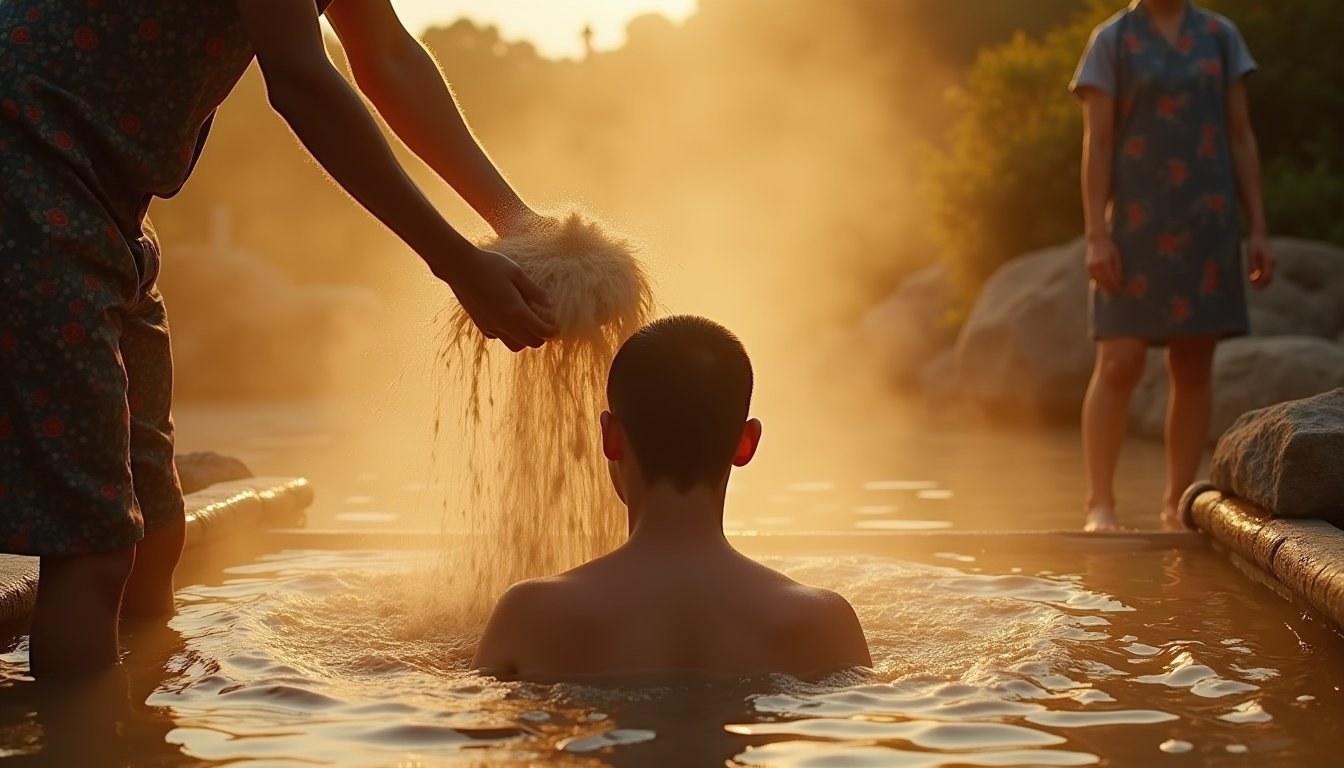
Sand bathing (sunamushi onsen) is something you can only do in a handful of places worldwide, and two of the best are right here in Kyushu.
The concept is simple: naturally heated volcanic sand is shoveled over your body as you lie in a shallow trench.
The gentle weight and warmth create a deeply relaxing sensation — adults often compare it to a heated weighted blanket. Kids usually think it’s hilarious.
How Sand Bathing Works
- You change into a yukata (cotton robe) provided by the facility — you wear this into the sand, not a swimsuit.
- Attendants guide you to a spot, and you lie down on the warm sand.
- They shovel sand over your body up to your neck. The weight is about 20–30 kg for an adult portion.
- You soak for 10–15 minutes. Staff will help you out, and you rinse off in indoor baths afterward.
Beppu Sand Baths (Shoningahama / Beppu Beach Sand Bath “Sand SPA”)
Beppu’s beach sand bath at Shoningahama reopened in 2025 as Sand SPA, part of the new TKP SHONIN PARK. It’s about 4 minutes by train from Beppu Station to Beppu University Station, then a 3-minute walk, and it’s smaller and more controlled than Ibusuki’s open beach setting.
The sand here is heated by underground hot spring steam rather than by direct beach geothermal activity. Note that Sand SPA has a published minimum age — pre-school children aged 5 and under are not admitted — so it doesn’t suit younger toddlers the way the general description above might suggest.
We have a detailed walkthrough in Sand Bathing in Beppu with Kids: Age Limits, Temperatures & How-To.
Ibusuki Sand Baths (Saraku Sand Bath Hall)
Ibusuki’s Saraku is the most famous sand bath in Japan. It sits right on the beach, with waves crashing nearby.
The experience feels more dramatic and natural than Beppu’s indoor-adjacent version.
The sand temperature varies by spot (50–80°C before body contact, cooling significantly once you lie down), and attendants know which areas are best for children.
Age and Weight Limits for Sand Baths
This is where it gets practical for families, and the two venues aren’t the same:
- Minimum age — Beppu (Sand SPA): a published rule, not a judgment call — pre-school children aged 5 and under are not admitted. Budget for a child from age 6.
- Minimum age — Ibusuki (Saraku): no published minimum age; pricing simply splits into an adult rate (junior-high age and up) and a child rate (elementary age and under), so younger children can be present, though staff use judgment on whether a young child should be buried.
- Weight of sand: Attendants will use significantly less sand for children — a thin layer rather than the full burial adults get.
- Duration: Staff typically recommend 5–8 minutes for children versus 10–15 for adults. Always watch for signs of overheating (red face, fussiness, sweating heavily).
- Babies and infants: Not recommended at either venue. A parent can hold a baby while sitting next to the sand bath area, but don’t bury a baby in sand — even lightly.
Pro tip: If your toddler is hesitant, let them watch you get buried first.
Once they see Mom or Dad lying happily in the sand with just a head poking out, most kids want to try it themselves.
If they refuse, don’t force it — you can always just play in the warm sand near the bath area without the full burial.
Onsen Etiquette with Kids
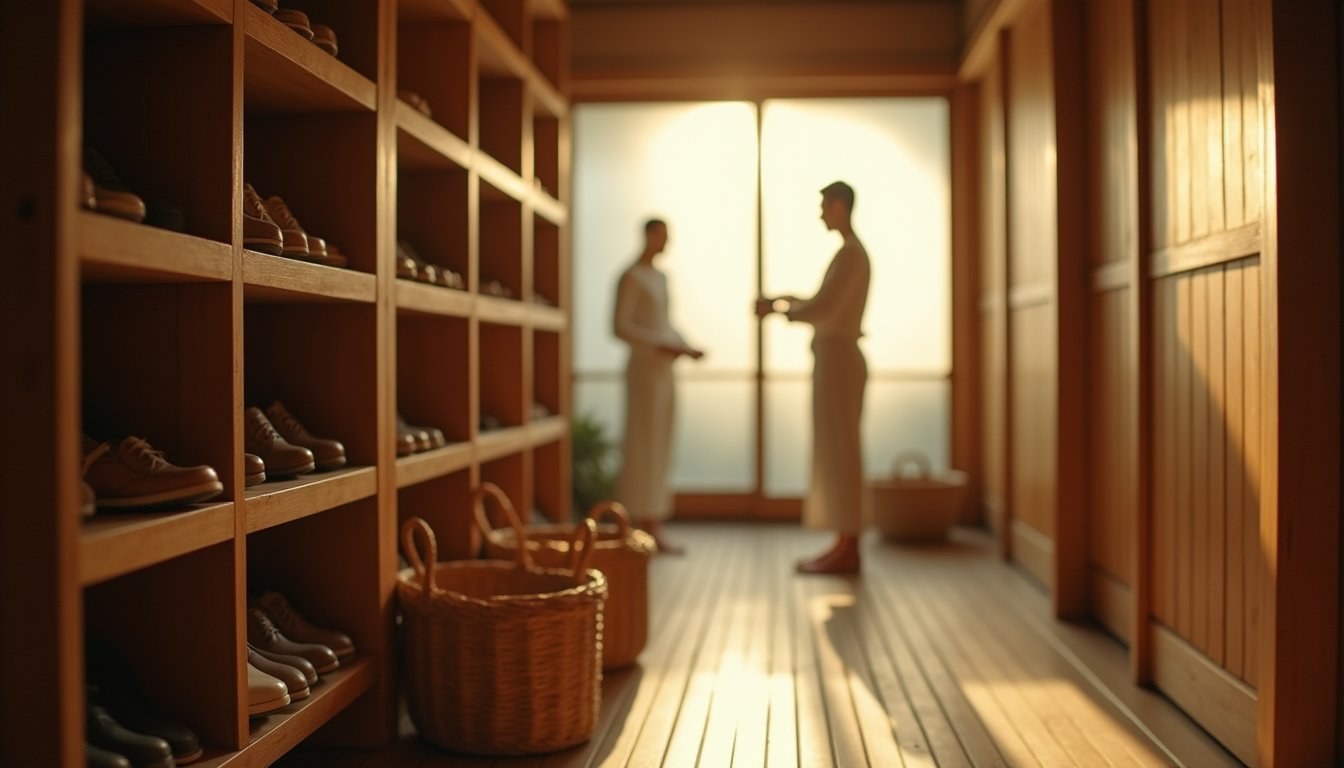
Japanese onsen etiquette exists for good reason — it keeps shared baths clean and peaceful.
When you add kids to the equation, the fundamental rules don’t change, but you’ll need to prepare and manage the experience more carefully. Here’s the step-by-step process:
Before Entering the Bath
- Shoes off at the entrance: Use the shoe lockers provided. Start teaching this habit early — kids pick it up fast in Japan.
- Undress completely in the changing room: Onsen are nude bathing. No swimsuits (unless it’s specifically a mixed-bathing pool that allows them). Store clothes and bags in the baskets or lockers provided.
- Bring only a small towel into the bathing area: Leave large towels in the changing room. The small towel (tenugui) is for washing and can be placed on your head while soaking — but never put it in the water.
Washing Station (Mandatory First Step)
- Sit at a washing station before entering any bath. This is non-negotiable. Wash your body and your child’s body thoroughly with soap and shampoo. Rinse completely.
- Most Kyushu onsen provide body wash, shampoo, and conditioner at the stations. Some budget public baths don’t — bring your own just in case.
- For toddlers, sit them on your lap at the station. Have your small towel ready to keep soap out of their eyes.
In the Bath
- Enter slowly. Test the water temperature first — Kyushu onsen range from 38°C to 44°C, and some are genuinely too hot for small children. If it feels too hot on your wrist, find a cooler bath or wait for a few minutes near the water’s edge.
- No running, jumping, or splashing. This is the hardest rule to enforce with toddlers. If your child can’t stay calm, use a private bath.
- No toys in public baths. Save the rubber ducks for kashikiri. In shared baths, toys are considered disruptive.
- Keep hair out of the water. Tie long hair up — for adults and kids alike.
- Keep soaks short for children: 5–10 minutes maximum for toddlers. Young children overheat much faster than adults. Watch for flushed cheeks and take breaks.
- Quiet voices. You don’t need to be silent, but loud talking or shouting is frowned upon. Whisper to your kids and model the behavior.
After the Bath
- Dry off lightly before returning to the changing room — don’t drip water everywhere.
- Hydrate immediately. Bring water or a drink for your child. Many onsen have vending machines with milk (a classic post-onsen tradition in Japan) and juice.
- Allow time to cool down — don’t rush back into the car. Most onsen have rest areas where you can sit and let your body temperature normalize.
What to Bring to an Onsen with Kids
Most ryokan and larger day-trip facilities provide basics (towels, soap, shampoo), but smaller public baths — especially the beloved ¥200 neighborhood sentos in Beppu — provide almost nothing.
Here’s a family packing checklist:
- Small face towels (tenugui): At least two per person. One for washing, one for drying faces and wiping little eyes.
- Large bath towel: If visiting a budget public bath. Most ryokan provide these in your room.
- Swim diaper (for private baths only): Some kashikiri facilities allow swim diapers as a precaution. Never use these in public baths.
- Favorite bath toys (for private baths only): A couple of small toys can make a kashikiri session much more fun for toddlers. Keep them in a mesh bag for easy transport.
- Change of clothes: A full change for each child. Toddlers often get damp or sweaty even after drying off.
- Plastic bags: For wet towels and clothes.
- Drinks and snacks: Water or barley tea (mugicha) for hydration. Small snacks for the car ride home. Some kids get hungry fast after a warm soak.
- Hair ties: For anyone with hair past the shoulders.
- Waterproof phone case: Only useful in private baths. You won’t be taking your phone into a public onsen (phones are banned in changing rooms to prevent photography).
- ¥100 coins: Lockers at many onsen require coins. Vending machines too. Always have a handful ready.
Onsen Ryokan vs Day-Trip Onsen
When planning onsen time with kids in Kyushu, you have two main options: staying overnight at an onsen ryokan or visiting a day-trip (higaeri) facility.
Both have their place, and the right choice depends on your children’s ages, your budget, and how much onsen time you actually want.
Onsen Ryokan (Overnight Stay)
Pros:
- Multiple bathing sessions: You can soak in the evening, before bed, and again in the morning. This relaxed pacing works beautifully with kids — if the first attempt goes badly, you can try again later.
- Private baths often included: Many ryokan include free kashikiri sessions or offer rooms with attached baths.
- Meals included: Most ryokan serve elaborate multi-course dinners (kaiseki) and breakfast. Having food sorted removes a major stress point when traveling with children.
- Cultural immersion: Sleeping on futons, wearing yukata around the ryokan, the whole ritual — kids absorb it naturally.
Cons:
- Cost: Budget ¥15,000–¥30,000+ per adult per night with meals. Kids’ rates vary but are rarely free for ages 3+.
- Rigid schedules: Dinner is usually at a set time (often 6:00–6:30 PM), and bath hours may be fixed. This can clash with toddler bedtimes.
- Room sharing: Traditional rooms are typically open-plan with tatami floors. No separate bedroom for the kids, which means everyone goes to bed at toddler time.
For tested family-friendly ryokan, see our review of Kamenoi Hotel Aso with Kids: Kumamon Rooms, Crab Buffets, and Zero Stress and the unique dome-hotel experience at Aso Farm Land Guide: The Ultimate Family Stay in Kumamoto’s Dome Hotels.
Day-Trip Onsen (Higaeri)
Pros:
- Low cost: Most day-trip facilities charge ¥500–¥1,500 for adults. Children’s rates are often half or less.
- Flexibility: Pop in for 30 minutes or stay for two hours — no reservation, no schedule, no checkout time.
- Lower commitment: If your toddler melts down after 10 minutes, you leave. No money wasted on an unused room.
- Often have extras: Many Kyushu day-trip onsen include rest rooms, restaurants, massage chairs, and outdoor relaxation areas. Some, like Relaxing Hot Springs and Buffet Fun for Families at Tenpai no Sato in Fukuoka, combine onsen with family dining.
Cons:
- Crowded at peak times: Weekends and holidays can be packed. Aim for weekday mornings or early afternoon.
- No private baths at some facilities: Smaller day-trip onsen may only have communal baths. Check before you go if you need kashikiri.
- Less immersive: You miss the ryokan experience — the meals, the atmosphere, the evening ritual.
Our recommendation: For a first onsen experience with young kids, start with a day-trip onsen that offers kashikiri.
Low stakes, low cost, easy exit strategy. Once your child is comfortable with the routine, upgrade to an overnight ryokan stay.
Ready to lock in the overnight? Check live rates for family onsen ryokan across Kyushu on Agoda → · Add onsen-town day passes & tickets on Klook →
When Are Kyushu Onsen Least Crowded?
Timing matters more than facility choice when you have small children. Quieter water means fewer etiquette worries and far less stress.
| Bath type | Quietest window | Busiest window |
|---|---|---|
| Day-trip onsen (higaeri) | Weekdays, 10:00–12:00 | Weekends & holidays, 15:00–20:00 |
| Ryokan public bath | During dinner service, 18:00–19:30 | Just after check-in, 16:00–17:30 |
| Kashikiri (private) slots | Early morning, 06:30–08:00 | Evening slots, 19:00–21:00 |
| Sand baths (Beppu / Ibusuki) | Opening hour on a weekday | Golden Week, Obon, New Year |
Season matters too: Kyushu onsen towns fill up from late November through February, when cold weather makes hot springs the main event.
Book kashikiri slots at the same time you book the room during those months — the private baths sell out well before the rooms do.
Where to stay in Yufuin Yufuin Ryokan WazanhoCheck availability
 Yufuin HanayoshiCheck availability
 Bessou KonjakuanCheck availabilityHotels via Agoda. We may earn a commission. Tap to see live prices & pick your dates.
Frequently Asked Questions
Can babies go in onsen?
Technically, yes — there’s no law against it. However, most public (shared) onsen prefer that babies in diapers don’t enter communal baths due to hygiene concerns.
Private onsen (kashikiri) are perfectly fine for babies at any age, and many Kyushu ryokan welcome infant guests in their private bathing facilities.
Always test the water temperature carefully — aim for 38–39°C maximum for babies, and keep soaks under 5 minutes.
What age can kids use public onsen alone?
This depends on the child’s maturity and the facility. Most onsen in Kyushu don’t have a specific policy on unaccompanied minors.
As a practical guideline, children who can reliably wash themselves, follow bathing etiquette, and enter/exit the bath safely — usually around age 8–10 — can use public baths independently.
The gender separation rule (opposite-gender children must use their own bath by age 7) may force this transition earlier for some families.
Are tattoos allowed in Kyushu onsen?
Yes — families with tattoos can absolutely enjoy onsen in Kyushu, as long as you book a private bath.
Kyushu is generally more tattoo-tolerant than other parts of Japan: large resort hotels (like Suginoi in Beppu) and modern day-trip facilities increasingly allow tattoos or offer tattoo-cover stickers at the front desk.
Traditional neighborhood baths (sento) and conservative ryokan, by contrast, are more likely to prohibit visible tattoos.
Private baths (kashikiri or family baths) always allow tattoos, so a family with one or more tattooed members can still bathe together.
Reserve a kashikiri room in Beppu, Yufuin, Ureshino, or Kurokawa and the policy simply doesn’t apply. When in doubt, call ahead or check the facility’s website.
Which is best: Beppu or Yufuin for families?
It depends on what you’re looking for. Beppu offers more variety, more budget options, and more things to do beyond bathing (Jigoku Meguri, sand baths, aquarium).
It’s better for families who want activities and flexibility. Yufuin offers a quieter, more scenic experience with great food and a walkable town — better for families who want to slow down.
Many families visit both in a single trip since they’re only 30 minutes apart by car. If you can only pick one and you have toddlers, Beppu’s volume of options gives it the edge.
Can pregnant women use onsen?
Yes. Japan’s Ministry of the Environment updated its guidelines in 2014 to remove pregnancy from the list of onsen contraindications.
Onsen bathing is now considered safe for pregnant women, though you should take common-sense precautions: avoid extremely hot water (over 42°C), limit soak time, stay hydrated, and be careful on slippery floors.
Many ryokan in Kyushu have low-temperature baths and handrails that make bathing more comfortable during pregnancy.
How hot is the water?
Most Kyushu onsen maintain water temperatures between 39°C and 43°C. Some outdoor baths (rotenburo) are slightly cooler due to air exposure, especially in winter.
A few specialty baths — particularly in Beppu — push past 44°C and are labeled as “atsume” (hot). For children, target baths at 38–40°C.
You’ll often find temperature readings posted near each bath. When no reading is displayed, test with your elbow (the same way you’d check a baby’s bath at home) before letting kids enter.
Do I need to book private onsen in advance?
It depends on the facility and the season. During peak periods — Golden Week (late April/early May), Obon (mid-August), New Year, and weekends year-round — yes, book ahead.
Popular ryokan in Kurokawa and Yufuin can have their kashikiri slots filled days in advance. During weekdays and off-peak seasons, walk-in availability is usually fine.
Day-trip onsen with kashikiri options rarely require advance booking. If you want the certainty of a private bath, our 5 Best Family-Friendly Ryokans with Private Onsen near Fukuoka list is the fastest shortlist to book from — or check kashikiri availability for your dates on Agoda →
When in doubt, call the facility on the morning of your visit — most staff can handle basic English or you can use a simple Japanese phrase: “Kashikiri aitemasu ka?” (貸切空いてますか? — Is the private bath available?).
Is Kurokawa too remote for families with toddlers?
Kurokawa is remote — there’s no way around it. It’s about 2.5 hours by car from Fukuoka and roughly 90 minutes from Kumamoto City, mostly on winding mountain roads. There’s no direct train access.
That said, if you have a car and your toddler handles drives reasonably well, Kurokawa is absolutely worth the effort. The atmosphere is unmatched, and most ryokan there are experienced with young families.
Plan to arrive in the afternoon, enjoy an evening soak and dinner, sleep over, and bathe again in the morning.
The drive through the Aso area is scenic, and you can break it up with stops — see Kyushu with Toddlers: Easy Stops, Short Drives, and Low-Stress Family Routes for ideas.
Kyushu’s onsen culture is one of the most rewarding things about living in or visiting this part of Japan with a family.
It takes a bit of preparation and a willingness to adapt, but once your child has their first giggling splash in a warm outdoor mountain bath, you’ll wonder why you ever hesitated.
Start with a private bath, keep expectations realistic, and let Kyushu’s volcanic generosity do the rest.
Next step: pick one town from the table above and lock in a room with a family bath — compare Kyushu onsen ryokan with private baths on Agoda → · book onsen-town tickets & day trips on Klook →
For more on planning your family trip across the island, explore our Kyushu with Kids: The Complete Family Travel Guide (2026) and Where to Stay in Kyushu with Kids: Best Bases for Road Trips and Train Travel.
 Where to Stay in Fukuoka
Not sure where to begin? This free guide helps you pick the right Kyushu trip for your family — from a Fukuoka family who actually lives here.
- ✅A simple “which trip suits us?” chooser — by days, ages & interests
- ✅Snapshots of all 7 prefectures — what’s actually worth it with kids
- ✅Instant PDF download — name your price (free), no spam
Onsen, rail, or a full itinerary? It points you to the right deep-dive guide.
Onsen with kids is a maze of rules. This done-for-you playbook removes the guesswork — written by a Fukuoka family who soaks here year-round.
- ✓Family-bath & private (kashikiri) ryokan — baby-OK, tattoo-friendly, named picks
- ✓Babies & toddlers — water-temp tactics, cribs/baby-bath rentals, what to pack
- ✓Etiquette, made simple — exactly what to do so nobody stares
Instant PDF · written by locals · skip hours of forum-digging